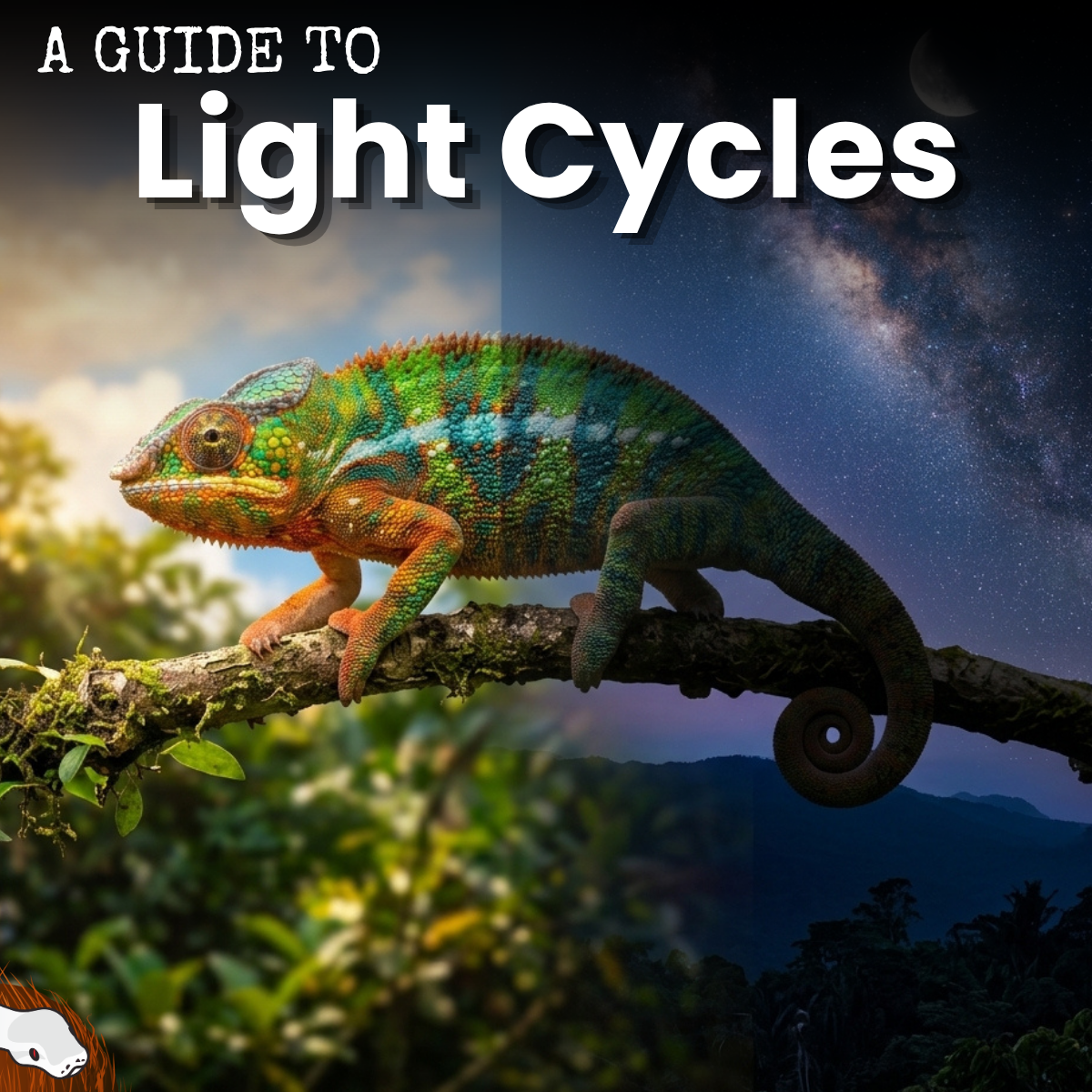

Ever wondered why your bearded dragon seems sluggish or your ball python hides more than usual? Many keepers chalk it up to personality, but the real culprit might be your lighting schedule. The day/night cycle, also called the photoperiod, is one of the most overlooked secrets to happy, healthy herps.
Why Day/Night Cycles Matter
Reptiles and amphibians are hardwired to follow the rhythms of the sun. In the wild, their bodies rely on sunrise and sunset to know when to eat, sleep, bask, or hide. When we keep them under our care, it’s up to us to mimic these natural cycles. Getting it right can mean the difference between a thriving pet and one that just gets by.
Boosts Appetite and Activity
A consistent day/night cycle helps regulate your herp’s internal clock. When lights come on and go off at the same time each day, your reptile knows when it’s time to hunt, bask, or rest. This predictability can spark better feeding responses and more natural behaviors.
“A well-timed photoperiod is like a daily schedule for your herp, it tells them when to shine and when to snooze.”
Supports Shedding and Growth
Lighting isn’t just about seeing your pet better. Proper cycles help herps shed their skin smoothly and grow at a healthy rate. Without a clear distinction between day and night, some species may struggle with incomplete sheds or stunted growth.
Reduces Stress and Promotes Rest
Imagine trying to sleep with the lights on all night. Animals feel the same way! Darkness signals safety and rest. Giving your herp a true night period helps lower stress, supports immune health, and encourages natural sleep patterns.
Encourages Breeding and Seasonal Behaviors
Many reptiles and amphibians use changes in daylight to trigger breeding or brumation (a herps version of hibernation). By gradually shifting the length of day and night, you can encourage these natural cycles, even in your living room.
How to Set Up the Perfect Cycle
- Use a timer to automate your lights. Consistency is key!
- Research your species’ natural habitat. Tropical reptiles may need 12 hours of light, while desert dwellers might prefer up to 14.
- Gradually adjust the photoperiod with the seasons if you want to mimic wild conditions.
- Always provide a true dark period, no bright lights or screens near the enclosure at night.
Customize for Your Herp
Every species is different. Leopard geckos, for example, are crepuscular and thrive with dimmer evenings, while iguanas love a bright, long day. Don’t be afraid to tweak your setup until your pet looks and acts their best. When you dial in the right day/night cycle, you’ll see your herps at their happiest, active, alert, and showing off their natural colors and behaviors.