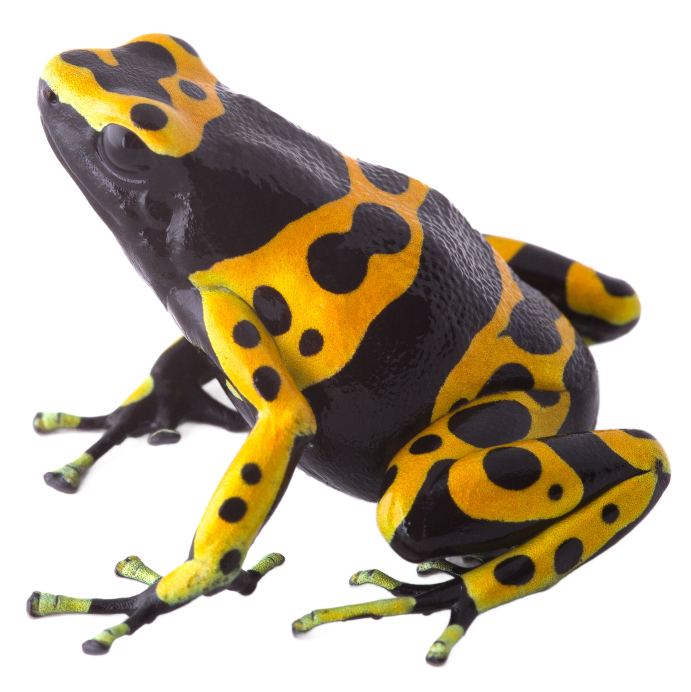
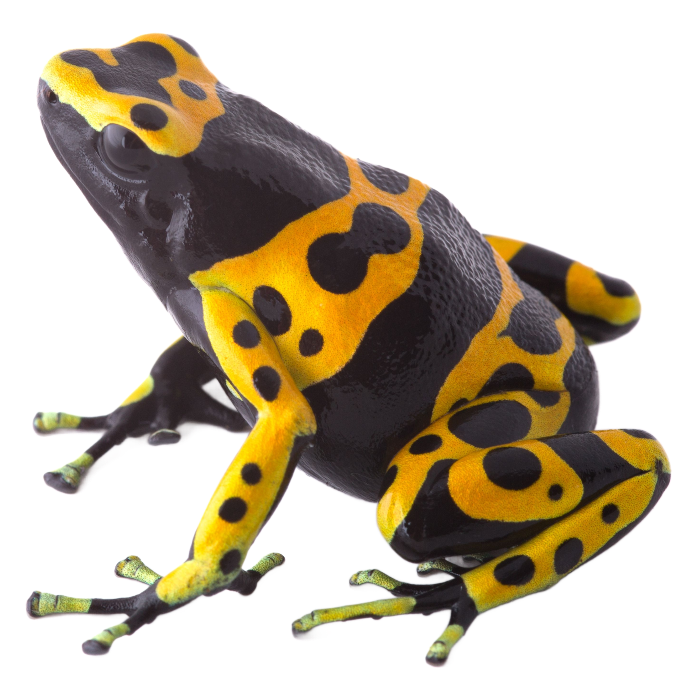
Yellow-banded Dart Frog
Dendrobates leucomelas
Natural History
Yellow-banded Dart Frogs are found in the Neotropical region, in northern South America. Their range includes Venezuela, northern Brazil, Guyana and southeastern Colombia. This neotropical frog is known for producing toxic chemicals in their skin making them poisonous. They display bright aposematic coloration of yellow-orange and black to serve as a warning to would-be predators that they are toxic and would not make a good meal. The skin toxins of this frog are very intense, and are capable of killing, injuring, or impairing humans if the frogs are carelessly handled. The intricate patterns on the back vary widely among individuals, exhibiting a degree of uniqueness akin to fingerprints, allowing for individuals to be identified
Their toes have glandular, adhesive pads that help them climb and cling, living in humid moist conditions allowing them to traverse habitats. Adults are diurnal and can be found on the forest floor, leaf litter, tree roots, and occasionally on tree trunks as they are mostly terrestrial. The frogs are salatorial, meaning their locomotion is specialized for leaping, jumps or hops. Males of this species are very territorial and can result in aggressive behaviors and disputes although the size of territories are unknown. Measuring between 1.5 to 2 inches, making this one of the larger species of Dendrobates. Males tend to be slightly smaller than females, emphasizing sexual dimorphism.
Ecologically, Yellow-banded Dart Frogs occupy mid-level positions in the food chain. As insectivores, they help regulate populations of ants, termites, tiny beetles, crickets, and other small insects and spiders, contributing to pest control. In turn, they are preyed upon by snakes. Along with other poison dart frogs in the family Dendrobatidae, this frog is used in medical research because its complex skin toxins are a possible source of medicines for human diseases. Also, certain Dendrobatid frogs were of importance to the Colombian Choco Indians who used the poisons from the frog's skin to tip their hunting darts.
Some amphibian hobbyists keep and breed these and other poison dart frogs, which may have an economic benefit if such trade can be shown to be sustainable and does not reduce natural frog populations.
Conservation Status
The Yellow-banded Dart Frog is currently classified as “Least Concern” on the IUCN Red List of Threatened Species. This designation indicates that the species is relatively widespread, with stable population trends across most of its native range. While populations are generally considered healthy, localized declines have been documented in some areas, particularly where environmental pressures are more pronounced.
Despite its “Least Concern” classification, the Yellow-banded Dart Frog faces several conservation threats that could impact population health over time. One of the primary concerns is habitat loss due to deforestation, agricultural expansion, and overharvesting for the exotic pet trade. As natural forested areas are converted into farmland or logged, the frog’s breeding and foraging habitats are fragmented or destroyed, limiting reproductive opportunities and increasing mortality risks.
Disease remains another major concern. Like many amphibian species worldwide, the Yellow-banded Dart Frog is susceptible to chytridiomycosis, a fungal infection caused by Batrachochytrium dendrobatidis. This disease attacks the keratinized tissues of amphibians, impairing skin function and leading to systemic failure. Continued presence of this infection in wild populations elevates conservation concerns. Additionally, while the pet trade has not yet caused wide-scale decline, unsustainable or illegal collection in some regions can place localized pressure on wild populations.
A variety of conservation strategies are currently in place to support the long-term survival of not only Yellow-banded Dart Frogs, but all species of dart frogs. Frogs, like all amphibians, are critical to humans’ understanding of nature as they are “indicator species.” They are extremely sensitive to any changes in the environment and provide insight into the health of the ecosystems they inhabit.
Managed breeding programs, particularly in accredited zoos and private hobbyists, have been successful in both maintaining healthy captive populations and contributing to scientific understanding of the species’ reproductive biology, disease resistance, and habitat needs. While reintroduction initiatives are currently limited due to the species' broad distribution and relatively stable status, these programs are valuable for preserving genetic diversity and serving as a safeguard against sudden population declines from disease or environmental catastrophe. Additionally, habitat restoration projects, including reforestation efforts, help to create and reconnect fragmented habitats, supporting amphibian dispersal and population stability.
For reptile keepers, understanding the Yellow-banded Dart Frog’s conservation status reinforces the importance of choosing captive-bred individuals rather than wild-caught specimens. Supporting responsible breeders contributes to the reduction of pressure on native populations and helps ensure the species remains secure both in the wild and in human care. Conservation awareness and ethical husbandry practices are essential components of maintaining healthy ex-situ populations while respecting the long-term ecological needs of the species in the wild.
Native Range
The Yellow-banded Dart Frog is native to parts of the Neotropical region, in northern South America.Within these areas, the species occupies a moderately wide range, habitats span across the Guyana shield and surrounding areas, with significant populations in Venezuela. Populations tend to be associated with regions that are humid, tropical rainforests, particularly areas with dense vegetation, abundant moisture, and ample cover.
In terms of macrohabitat, the Yellow-banded Dart Frog is most commonly associated with tropical rainforests. These ecosystems provide the structural complexity and microclimatic conditions necessary for the species’ survival. The frog is also known to persist in these areas that are warm and humid year-round with little seasonal temperature changes, although daily variation in temperatures can be greater. These frogs are sensitive to high heat while average temperatures range from 78 to 82°F nights still remain warm rarely dropping below 68°F. Frequent rain, dense vegetation, and shaded forest floors maintain moisture perfect for this species. While rain occurs throughout the year there is often a wet season and slightly drier season. Frequent rain, dense vegetation, and shaded forest floors maintain moisture. While dense rainforest canopy filters sunlight, the first floor receives diffused, low-intensity light rather than direct sunlight. All these combined allow for these habitats to maintain moisture and high humidity to support microclimates.
Microhabitats used by the Yellow-banded Dart Frogs are typically humid and sheltered. The species frequently inhabits areas with dense vegetation, such as the foliage and leaf litter on the forest floor. In particular those with broad leaves that can collect moisture, specifically bromeliads.
Individuals are often found concealed in tree hollows, under fallen logs and roots, and among low plants and moss. The species is primarily terrestrial, but can be found favoring vegetation several feet above the ground, especially small water-filled plant structures for tadpoles. It requires microhabitats with consistent humidity and access to moisture-rich substrates, which are critical for its semi-permeable skin and respiratory function.
Climatic preferences of the Yellow-banded Dart Frog include warm temperatures and moderate to high humidity levels throughout much of the year. In its natural range, the forest floor is slightly cooler than the open air, 72 to 79°F, with temperature changes slowly due to shade and moisture with the dense canopy preventing overheating. Temperatures stay consistent throughout the year and the species tends to remain constantly active. Annual precipitation in its native habitats is generally high, often exceeding 140 inches per year, with wet and dry seasons dictating patterns of activity and breeding behavior. The wet season, which typically occurs from February and March, promotes increased reproductive activity and provides suitable aquatic environments for larval development.
Elevation plays a minor but noteworthy role in shaping the White’s tree frog's distribution. It is primarily found at low to mid-elevation ranges, from near sea level up to approximately 2,600 feet. In higher elevations, the species is less common, partly due to cooler temperatures and seasonal variability that limit breeding opportunities. However, where adequate humidity and vegetation cover exist, the frog may occur.
Key environmental factors vital to the Yellow-banded Dart Frog include proximity to stable freshwater sources which are necessary for breeding and hydration. Vegetation density, particularly tree roots, low vegetation and moss, are essential for providing shelter, thermoregulation sites, and access to insect prey. The species also shows a preference for environments with vertical surfaces and crevices for daytime refuge, and it benefits from substrates that retain moisture, such as leaf litter, moss-covered bark, or damp rock faces. Overall, successful survival of this species is tightly linked to a humid, vegetated environment with accessible water and microhabitats offering protection from temperature extremes and desiccation.
Behavior
Yellow-banded Dart Frogs display predominantly diurnal activity patterns, meaning it is most active during the day unlike many other frogs that are nocturnal. In the wild, individuals emerge from their hidden nighttime refuges shortly after sunrise, engaging in foraging and territorial behaviors throughout the day. During daylight hours they remain largely active. Seasonally, behavior shifts depending on temperature and humidity. During the dry season, in the northern part of their range, rainfall decreases for several months but the environment still remains relatively humid compared to many other ecosystems. This species is unique in that they estivate (a form of summer dormancy) during the dry season to survive high temperatures and low moisture. During this time, they congregate in damp, hidden locations, such as under logs or rocks, to escape the dry conditions. The dry season consists of months preceding the breeding season of February and March.
During the breeding season, which aligns with the onset of the rainy period in their native habitat, Yellow-banded Dart Frogs become increasingly vocal and active. Males call loudly to warn other males from the territory they are defending. They will often wrestle or chase rivals from the area. Calling intensifies with rising humidity and ambient temperature, which are cueing mechanisms for reproductive behavior. Once eggs are laid on moist leaves or a sheltered area the males protect the eggs until hatching. Once hatched males carry tadpoles on their back to small pools inside plants, often bromeliads. After depositing the tadpoles adults play no further role in offspring development.
Socially, Yellow-banded Dart Frogs are semi-solitary but several individuals may live within the same area and even territorial males will often ignore nearby frogs. In both wild and managed settings, multiple individuals can coexist peacefully, particularly when they are of similar size. However, minor dominance hierarchies may emerge if resources or space are limited. Larger individuals may consistently compete more successfully for feeding locations but outright aggression is infrequent. In males, mild combat can occur during breeding season over calling spots, but this is typically limited to posturing and wrestling.
In terms of environmental responsiveness, this species is highly attuned to temperature and humidity changes. Because it relies heavily on cutaneous respiration and moisture exchange through its skin, the frog regulates activity based on humidity levels. In dry conditions, it seeks out moist microhabitats and may develop a mild waxy coating to reduce water loss. Ambient temperatures also guide their movement patterns. At optimal temperatures between 75 and 82°F, the frog is most active. When temperatures drop below 65°F, individual frogs become sluggish and may reduce food intake. Light cycles influence their circadian rhythm, and they generally maintain consistent sleep-wake patterns in accordance with a 12-hour day-night cycle.
Their response to prey is guided by visual stimuli. They are active predators, they move and hunt through the forest floor. Prey capture is typically rapid, involving a ballistic tongue projection. Insects, mainly crickets, ants, and other invertebrates constitute the bulk of their wild diet. It is not known what specific diet item gives them their toxicity. They detect predators primarily through visualization, and At a distance, their disruptive patterns can help them blend into the forest. If need be since they are active during the day they can flee to cover, mostly this species only has to worry about a few predators that have adapted to resist their toxins otherwise they do not have to worry about hiding due to the warning from their coloration.
Unique among amphibians, this species exhibits several notable behavioral adaptations. One is their semi-arboreal lifestyle, where their robust toe pads allow them to climb smooth vertical surfaces. In both environments, individuals are adept at gravity-defying perching positions on glass or foliage. Another key trait is their significant antimicrobial defenses, primarily through specialized skin secretions, to protect themselves from bacteria and fungi in their humid, pathogen-rich environments. While not typically referred to as having "antimicrobial resistance" in the sense of antibiotic-resistant bacteria, they have evolved to be resistant to infections from pathogens like the chytrid fungus. Defensive behavior is generally limited to retreating or standing their ground, as their toxicity is a blatant warning to those who may try to consume them.
In captivity, behavioral patterns may alter due to control of environmental variables and reduced stimulus diversity. Stress behaviors, such as excessive hiding, refusal to feed, or skin shedding disorders, may occur if temperature, humidity, or enclosure design are subpar. They are typically more tolerant of cohabitation in vivaria but require careful monitoring to avoid competition or dietary monopolization by dominant individuals. Aggression remains rare unless the ratio of sexes has more males. Feeding responses in captivity can become conditioned. Individuals often learn to associate movements or enclosure opening with feeding, resulting in anticipatory behaviors such as climbing to enclosure fronts or becoming active when the keeper is nearby. Because of the limited environmental variability in captivity, they benefit significantly from enrichment, such as varied perching levels, live plants, and occasional changes in the prey delivery method.
Overall, Yellow-banded Dart Frogs demonstrate a range of behavioral adaptations that reflect its neotropical, terrestrial origins and reliance on environmental moisture. Recognizing and replicating these behaviors in human care is essential for long-term health and well-being.
Husbandry Requirements
Enclosure Design
Yellow-banded Dart Frogs are terrestrial amphibians that inhabit rainforest areas with high humidity, a wide array of vegetation and leaf litter, with some vertical climbing opportunities. In managed care, their enclosures must reflect this ecology to support their physical and psychological well-being.
For juveniles less than a year, the minimum recommended enclosure size is approximately 18 inches tall, 18 inches wide, and 18 inches high. This provides enough vertical space for climbing and activity. For adults, a landscape oriented enclosure measuring at least 24 inches long, 18 inches deep, and 18 inches tall is recommended for one to two frogs. Larger groups will require correspondingly larger enclosures to prevent overcrowding and stress, a 34 inches long, 18 inches deep, and 18 inches tall enclosure is recommended.
Enclosure materials must account for moisture, heat retention, and ventilation. Glass enclosures are commonly used due to their ability to retain humidity while allowing visibility, but they must include a ventilated mesh top or front to ensure proper airflow. Screen enclosures are generally unsuitable due to their inability to hold humidity effectively. Custom enclosures made from sealed PVC with front-opening doors and well-placed ventilation panels are highly durable and maintain humidity levels more consistently than screen or partially open designs.
The internal layout should prioritize terrestrial climbing space. Include sturdy foliage, cork bark rounds, and textured backgrounds that mimic tree trunks and roots to encourage natural climbing behavior. Live or artificial plants can offer both visual cover and climbing options. Provide at least one secure hide at both ground level and elevated positions. A basking area is not needed for this species, but a 6% uvb is recommended for the health of the animals and to replicate a 12 hour photoperiod. Heat sources are not needed for this species unless where they are being housed drops below 65F as lower than that and higher than 80 can be dangerous. Heat from lighting can keep a steady enough ambient temperature if placed appropriately, and a low wattage heat mat on the side of the tank can be placed if in colder climates.
Proper security is essential to prevent escapes. Yellow-banded Dart Frogs are small, agile, and quick. Ensure all access points are sealed, and avoid using equipment that creates small gaps around cords or tubing.
Lighting and Heating
Yellow-banded Dart Frogs are diurnal, and benefit from exposure to low levels of UVB light, which contributes to calcium metabolism and overall health. A 6% UVB linear fluorescent tube is recommended, placed 8 to 12 inches away from the primary area for congregation. The UVB should not be obstructed by glass or plastic. A 12-hour photoperiod should be maintained year-round, using a timer to simulate natural day-night cycles.
Ambient daytime temperatures should range from 70°F to 80°F, while nighttime temperatures can drop to 65°F. Supplemental heating during colder months may be necessary depending on room temperatures, but other heat sources should not be used for this species. If needed a low wattage heat mat on the side of the tank will suffice for their requirements.
It is important to monitor the enclosure with accurate digital thermometers equipped with probes at both ends of the habitat. This ensures that the required temperature is consistently maintained, allowing the frogs to thermoregulate.
Substrate and Enrichment
Yellow-banded Dart Frogs require a substrate that retains moisture without becoming oversaturated or promoting bacterial growth. A deep layer of ReptiEarth and TropicalBase can both be used effectively on their own or mixed to enhance texture and support humidity requirements. TropicalBase supports more bioactive habitats which is preferred by this species. These substrates hold humidity well, are low-dust, and pose minimal risk of impaction when properly maintained. Spot cleaning should be done daily, with full substrate replacement every four to six weeks to reduce waste buildup and prevent mold growth unless utilizing a clean up crew in bioactive settings.
Providing enrichment is essential for encouraging natural behaviors and reducing stress. Yellow-banded Dart Frogs enjoy climbing, hiding, and foraging. Include multiple textured climbing structures such as vertical cork tubes, wood branches, and rooted live plants. Plants like pothos and philodendron are hardy, tolerate humid conditions, and enhance enclosure aesthetics while offering cover. Artificial vines and suction-mounted perches also work well for vertical access. Enrichment can come in many forms and is for the stimulation of your animal. The five types of enrichment you can offer are food related, sensory, physical habitat, cognitive, and social. These categories have a vast variety of options to choose from that are appropriate for the species being enriched.
Use at least two to three hides at varying elevations. These can be made from half logs, leaf clusters, or foam caves incorporated into the background. A shallow water dish large enough for full-body soaking is also an essential element, functioning both as a hydration site and to encourage soaking behavior, particularly during shedding periods.
Humidity and Hydration
Maintaining appropriate humidity is critical for the health of Yellow-banded Dart Frogs. Ideal relative humidity should be maintained between 70% and 100%, with the higher spikes during morning and evening misting sessions.
Humidity can be maintained using a combination of daily misting and humidity-retaining substrates. Mist the enclosure lightly once or twice daily, depending on your local climate and season. Use dechlorinated or distilled water to avoid residue on glass and potential skin irritation. An automated misting system or handheld pressure sprayer offers good control, while a humidifier can be used to boost ambient humidity.
Substrates like TropicalBlend mixed with ReptiEarth help maintain consistent humidity by gradually releasing moisture. Adding a drainage layer beneath the substrate can prevent saturation and reduce the risk of mold or anaerobic bacterial growth. In taller enclosures, maintaining airflow while keeping humidity stable can be challenging, so partially covering the mesh top with acrylic or glass panels will help reduce evaporative loss without compromising ventilation entirely.
Yellow-banded Dart Frogs typically drink by absorbing water through their skin while soaking or by licking water droplets from leaves and enclosure surfaces. As such, providing clean, fresh water daily is crucial. A wide, shallow dish large enough for soaking should be placed at ground level and cleaned regularly. Ensure the dish is not too deep for younger frogs.
Hydration should also be encouraged through enclosure design. Position misted plants or smooth plastic leaves in climbing zones to simulate rainwater availability. Monitor humidity with a reliable digital hygrometer placed in the middle of the enclosure at mid-height. This ensures accurate readings where the frog spends most of its time.
Stable humidity and hydration are vital to maintaining proper skin function, shedding, and general health. Regular observation and adjustments to misting, airflow, or substrate moisture will ensure optimal living conditions for this hardy, yet sensitive amphibian.
Diet & Supplementation
In its natural habitat, the Yellow-banded Dart Frog is a carnivorous, opportunistic feeder that primarily consumes a variety of invertebrates. This terrestrial frog typically preys on insects such as ants, termites, mites, and spiders. Its carnivorous diet reflects its role as a mid-level predator within its ecosystem, helping to regulate insect populations
Feeding patterns and dietary composition in human care can vary with age and season. Juvenile frogs require more frequent feedings and generally consume smaller, soft-bodied invertebrates such as fruit flies, pinhead crickets, and small roaches. Their metabolic rate is higher during growth phases, necessitating a near-daily feeding schedule. As they mature, their dietary needs shift toward larger prey items and reduced frequency of feeding, often only two to three times per week. Seasonal variation in food intake may also occur in the wild. During cooler or drier periods activity levels and feeding rates decline. In managed care, these seasonal fluctuations are typically less pronounced due to consistent environmental conditions.
Replicating the natural diet in captivity presents some challenges, but Yellow-banded Dart Frogs adapt well to a carefully managed feeding regimen. In a captive setting, their diet should consist of gut-loaded and dusted live insects with small crickets and flightless fruit flies being the staple. It is essential to gut-load feeder insects with nutritious diets 24–48 hours before feeding to enhance their nutritional value. Supplementation with a high-quality calcium powder (preferably without D3 if UVB lighting is provided, or with D3 if not) should be applied to food items at least twice weekly for adults and more frequently for juveniles. A multivitamin supplement may also be used once weekly to prevent nutrient deficiencies, particularly in frogs that are not fed a diverse range of prey types.
Several feeding-related issues may arise. One common problem is obesity. Due to their sedentary nature and relatively low energy expenditure, adult Yellow-banded Dart Frogs can easily become overweight if fed too frequently or provided with excessively fatty prey. To prevent this, feeding should be restricted to two or three times per week for adults, with portion control based on body condition. Food refusal can occur in cases of stress, illness, inadequate environmental parameters, or during breeding season. Ensuring proper humidity, lighting, and enclosure layout can help minimize these issues. Malnutrition is often the result of feeding an unvaried diet or failing to provide appropriate supplements. Offering a variety of prey items on a rotational basis, including different types of insects can more closely mimic the nutritional complexity of the wild diet.
To encourage natural foraging behavior, keepers can introduce environmental enrichment strategies. These may include scattering live prey throughout the enclosure to stimulate tracking behavior, offering prey at varied times to mimic irregular wild feeding schedules, or offering timed feeders to release prey slowly. Additionally, placing feeder insects in climbing areas or among foliage can encourage natural hunting behaviors and provide the animal with mental stimulation. Such practices not only help prevent obesity by promoting exercise, but also support overall behavioral health by aligning feeding opportunities more closely with the frog’s innate predatory instincts.
Reproduction
Yellow-banded Dart Frogs reach sexual maturity between one and two years of age, with males typically maturing slightly earlier than females. Males typically start calling to establish territory and attract mates as early as six to eight months of age, though it can sometimes take up to a year. While they can breed around 12 months, full maturity and maximum reproductive output often occur around 18–24 months. Sexual dimorphism is evident in adult specimens with females generally larger and more robust. In addition to size, mature males emit chirps, buzz, trills, and hums during the breeding season. These vocalizations serve both to attract females and to establish presence in a territory. Courtship behavior begins with males calling persistently. Females may fight for a male, and a receptive female will tap the male's snout to initiate mating. This mating embrace is called amplexus where the male grasps the female just behind her forelimbs.
Breeding under human care requires simulation of the seasonal environmental changes that occur in the frogs’ natural habitat, primarily mimicking the wet season. In the wild, reproductive behavior is triggered by rising humidity levels and increased rainfall often preceded by a dry period. To replicate these conditions, keepers must implement gradual environmental changes over a period of one month. Temperatures can remain stable but lower humidity and less feedings will simulate the dry season. This period helps condition the frogs for reproduction. Afterward, an artificial rainy season can be initiated by increasing ambient humidity to 80–100%, introducing a 12 to 14-hour photoperiod, regular misting simulated “rainfall”, using a drip or misting system and increasing feedings. Many successful breeding attempts coincide with frequent misting and sudden humidity spikes, which appear to act as breeding cues.
Yellow-banded Dart Frogs are oviparous, meaning they lay eggs externally. In natural conditions, the females deposit clutches on terrestrial vegetation. In enclosures, an appropriate breeding setup should include real or artificial plants for egg adhesion. Pairings are typically done with one male and one female, though two males per female have been used to increase the likelihood of amplexus in cases of low male enthusiasm. Group breeding is not recommended due to the potential for competition-related stress.
Breeding challenges in managed care include incompatible pairings, in which neither vocalizations nor amplexus are observed despite ideal environmental conditions. In such cases, rotating individuals among potential partners can help identify compatible pairs. Stress-induced reproductive failure can result from frequent handling, insufficient environmental change, or cohabitation outside the breeding season, particularly in smaller enclosures. Isolating frogs prior to breeding may increase receptivity. Additionally, inadequate temperature and humidity adjustments often result in failure to trigger reproductive responses. Use of automated misting systems, dedicated timers for lighting, and precise temperature controllers can help mitigate environmental inconsistency. Lastly, malnourishment or suboptimal health can prevent breeding altogether. Conditioning frogs in the weeks prior to breeding with a diet rich in calcium-dusted insects, including gut-loaded crickets and roaches, is necessary to promote reproductive readiness in both sexes.
By closely replicating the natural wet-season environment and ensuring optimal health and compatibility among breeding frogs, successful reproduction of Yellow-banded Dart Frogs in managed care can be achieved with consistency and care.
Incubation & Neonate Care
The Yellow-banded Dart Frog is an oviparous species, meaning it reproduces by laying eggs rather than giving live birth. Once a successful amplexus occurs, where the male clasps the female to fertilize the eggs externally, the female deposits her eggs on terrestrial vegetation. In the wild the males will stay and guard the eggs until they hatch, then take them
Clutches of two to twelve eggs are laid on the forest floor, frequently on the underside of leaves, in crevices, or in moist, secluded spots. Eggs can be left with the males but cannibalism has been recorded in this species from females consuming eggs of potential competition. For successful artificial incubation, eggs are typically collected soon after laying and transferred to a clean, incubation container, usually a petri dish. Optimal incubation temperatures range between 70°F and 80°F. Hatching commonly occurs within 10 to 14 days, though temperature and humidity fluctuations can slightly extend this window. About 90–100% relative humidity should be kept when incubating the eggs. This level keeps the eggs constantly moist but not submerged in water, which is essential for proper embryo development. Stagnant conditions should be avoided to reduce the risk of fungal or bacterial infections. While temperature-dependent sex determination is present in some amphibians, this species sex is determined genetically.
Hatching occurs when fully formed tadpoles break free of their egg casings using an enzymatic secretion.The exposed tadpoles are highly vulnerable to poor water quality, temperature extremes, and microbial contamination. During this stage, a shallow aquatic setup with clean, dechlorinated water, stable temperatures around 70°F to 78°F, and gentle aeration is essential. Tadpoles begin feeding on finely powdered algae wafers, blanched leafy greens, or specialized tadpole diets after they fully absorb their yolk sacs, typically within 2 to 3 days of hatching. Regular partial water changes are critical, as ammonia buildup is the leading cause of early mortality during this life stage. If in the same pool, the stronger tadpoles may consume weaker ones, it is suggested that they are separated into their own environments.
Metamorphosis into froglets usually takes 70 to 90 days, depending on temperature, diet, and water quality. During this time, the tadpoles develop back legs, followed by front limbs, and resorb their tails. As metamorphosis progresses, their respiratory system transitions from gill-based to lung-based function, necessitating access to a terrestrial area. A gradual emergence platform using floating cork bark, moss-covered ramps, or sloped gravel is important to facilitate safe transition from water to land. Tadpoles should be removed from the water and placed into a terrestrial juvenile setup once they complete tail resorption, as prolonged immersion can lead to drowning or infection.
Neonates (post-metamorphic froglets) should be housed separately from adults to prevent accidental predation, stress due to size disparity, or competition for food. A straightforward, hygienic enclosure with a moist paper towel or sphagnum moss substrate, small water dish, and gently sloped climbing surfaces is best. Temperatures should remain between 70°F at night and up to 80°F during the day, with ambient humidity around 70% to 100%, maintained through daily misting. While Yellow-banded Dart Frogs are generally hardy, neonates are more sensitive to temperature and hydration fluctuations.
The first feeding usually occurs 1 to 2 days after tail absorption, once the mouthparts are fully formed and the froglet exhibits predatory behavior. Appropriately sized food items, such as fruit flies, pinhead crickets, or springtails, should be offered every day. All food should be dusted with a high-quality calcium and vitamin D3 supplement several times a week, with multivitamin supplementation once weekly. Neonates can suffer from metabolic bone disease, dehydration, impaction, and bacterial infections if environmental and dietary conditions are suboptimal.
Handling neonates should be minimized during the early weeks of development. Their delicate skin is highly permeable and susceptible to damage from contaminants, desiccation, or trauma. If handling is necessary, clean, wet, latex-free gloves should be worn, and the sessions should be kept brief. By around three months of age, juveniles will have grown large enough to transition into slightly larger enclosures and begin to exhibit the robust and adaptable nature that characterizes adult Yellow-banded Dart Frogs. With proper environmental management and early care, survival rates under human care can be consistently high.
Conclusion
In summary, the successful managed care of Yellow-banded Dart Frogs depends on closely replicating the environmental, dietary, and behavioral conditions found within their native range. These frogs are remarkably adaptable and resilient, making them suitable for both novice and experienced keepers, provided their specific needs are understood and consistently met. Environments should prioritize terrestrial space, stable temperature and stable humidity, and enrichment that encourages natural behaviors. Proper lighting, including low-level UVB exposure, supports physical health, particularly calcium metabolism and skin function. A well-ventilated yet humid enclosure, along with an appropriate substrate, helps prevent common husbandry-related ailments.
From a nutritional standpoint, offering a diverse range of gut-loaded invertebrate prey, supplemented with essential vitamins and minerals, mirrors their opportunistic diet in the wild and helps prevent obesity or deficiency-based conditions. Juveniles and neonates require more frequent feeding and heightened attention to hydration, while adults benefit from enrichment that promotes natural foraging strategies.
Understanding their life cycle, from aquatic eggs and tadpoles to adults, allows for the thoughtful design of breeding and rearing protocols in captivity. Successful reproduction requires environmental manipulation to simulate natural wet-season cues, careful monitoring of egg and tadpole development, and meticulous husbandry for post-metamorphic froglets. Though relatively common in nature and currently classified as a species of least concern, conservation threats such as habitat degradation, disease, and climate change remain relevant. For that reason, ethical sourcing is crucial for supporting the species’ long-term stability both in the wild and in managed care.
By aligning care with the physiological and behavioral adaptations that define this species, keepers not only promote longevity and vitality in individual frogs but also contribute to broader conservation and educational efforts. With responsible management, Yellow-banded Dart Frogs can thrive, serving as an excellent ambassador species for amphibian awareness and stewardship.