Natural History
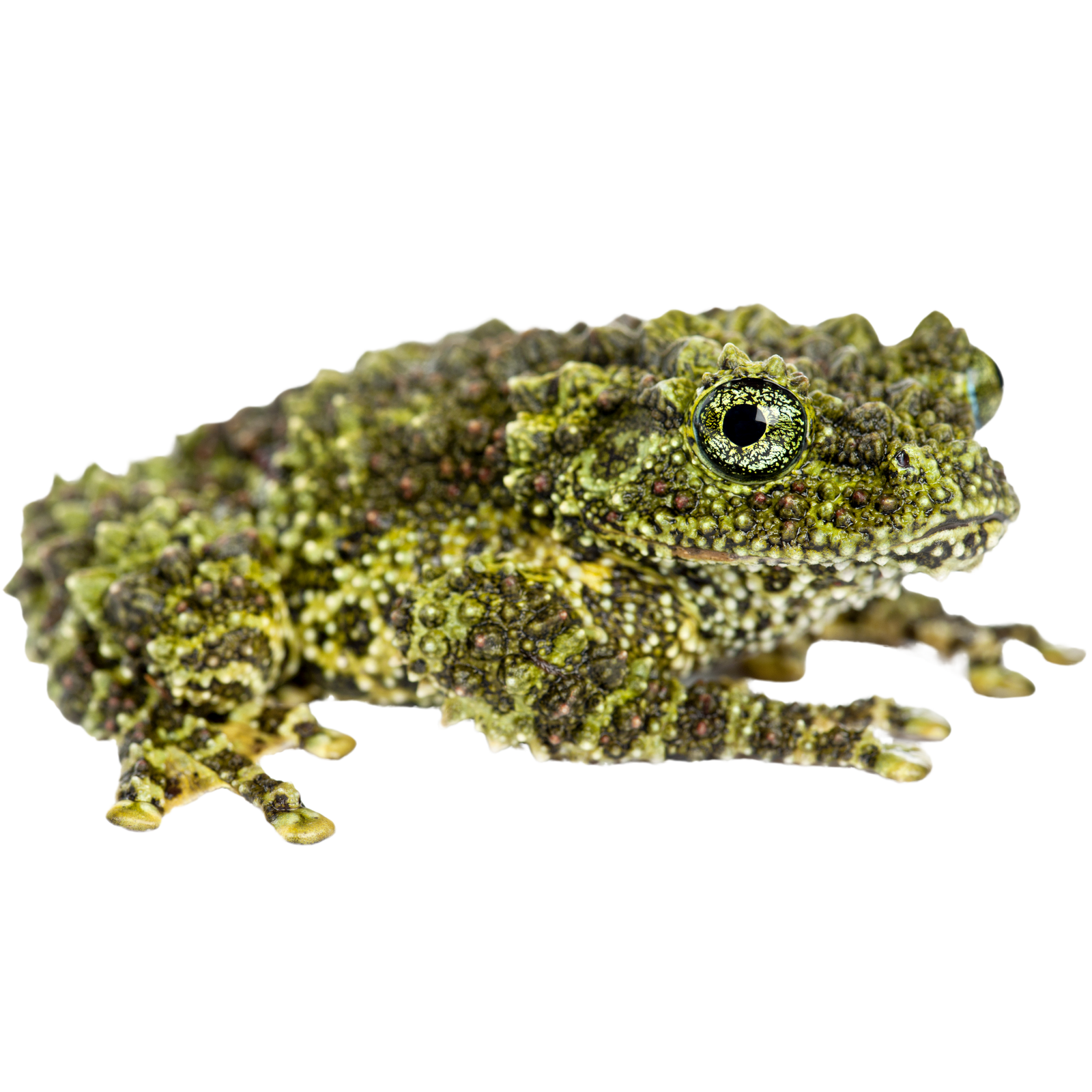
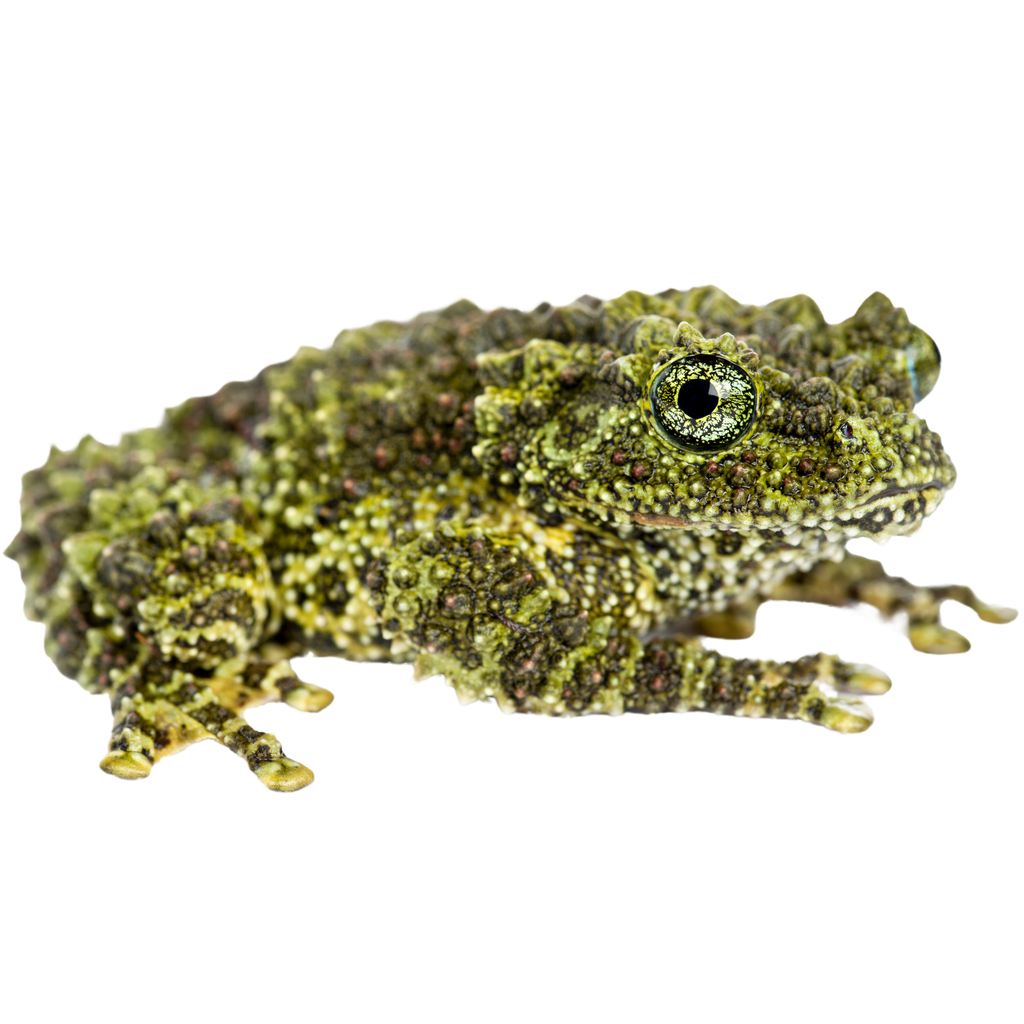
The Vietnamese mossy frog, also known as the tonkin bug-eyed frog, is native to northern Vietnam and parts of southern China. Under human care and in the wild, individuals can live well over a decade when maintained in stable, clean conditions. This species is primarily nocturnal, emerging at night to forage across wet rocks, moss-covered surfaces, and stream banks. During the day, it remains motionless, relying on extraordinary camouflage to avoid detection. Its skin patterning closely resembles patches of lichen and moss, complete with irregular bumps and mottled green and brown coloration.
Ecologically, this frog plays a significant role as both predator and prey within its native forest stream habitats. By consuming insects and other small invertebrates, it contributes to controlling arthropod populations, including species that affect vegetation and nutrient cycling. In turn, it serves as prey for snakes, birds, and small mammals, forming part of a balanced food web. Its reliance on clean, well-oxygenated water makes it sensitive to pollution and habitat disturbance, positioning it as an important indicator species for ecosystem health. Adaptations such as expanded toe pads for gripping slick rock surfaces, cryptic coloration for camouflage, and a strong affinity for high humidity allow it to thrive in shaded, rocky ravines. Understanding these natural life history traits is essential for keepers, as they highlight the importance of moisture, environmental complexity, and low-stress conditions when maintaining this highly specialized amphibian.
Conservation Status
The Vietnamese mossy frog is currently classified as “Least Concern” on the IUCN Red List. This classification suggests that, at present, the species does not face an immediate risk of extinction across its natural range, although population trend is currently in a decline. Such a status indicates a relatively stable overall population and the presence of these frogs in several locations within their native habitat in northern Vietnam, but that the number of mature individuals is lacking. Primarily in karst forest areas characterized by abundant limestone formations and aquatic environments. The assessment was last updated in 2022.
Despite being categorized as “Least Concern”, the Vietnamese mossy frog still faces several ecological threats. Habitat destruction is a significant issue, largely due to deforestation for agriculture, urban development, and infrastructure expansion that disrupts their natural woodland and wetland ecosystems. Encroachment by human activities reduces the available habitat and often degrades the quality of the remaining areas. Additionally, climate change poses a potential threat by altering precipitation patterns and temperature regimes, which can affect the delicate balance of moisture and temperature these amphibians rely on for survival. The impacts of illegal wildlife trade are less pronounced for this species compared to others, but any demand for the pet trade can pose additional risks if not properly managed.
Conservation efforts for the Vietnamese mossy frog involve multiple strategies aimed at ensuring its long-term preservation. National parks and wildlife reserves within the frog's natural habitat play a critical role in providing protected areas where they can live with minimal human disturbance. These areas not only preserve crucial ecosystems but also serve as centers for ecological research and monitoring. Specific conservation programs include habitat restoration initiatives aimed at rehabilitating areas degraded by human activity. These projects often involve reforestation and the revival of natural water systems to sustain the frog's aquatic and terrestrial habitats. Legal protections for wildlife, under Vietnamese national legislation, help curb habitat destruction and potentially illegal activities.
Breeding programs have seen successes in replicating the mossy frog's natural environment, which is notoriously complex due to temperature and humidity requirements. These initiatives contribute significantly to our understanding of the species’ reproductive biology and have led to deeper insights into optimal care conditions that can assist future reintroduction efforts if necessary. While reintroduction into the wild has not been a primary focus due to their current status, maintaining a healthy population ensures that genetic diversity is preserved and serves as a safeguard against possible future population declines in the wild. This comprehensive approach aids in protecting the Vietnamese mossy frog and helps maintain the ecological integrity of its habitat.
Native Range
The Vietnamese mossy frog is native to northern Vietnam and parts of southern China, where it inhabits a relatively restricted range compared to many other Asian amphibians. Its distribution centers in montane and submontane regions, particularly in the provinces surrounding Hanoi and extending toward the border regions of Guangxi in China. Within this range, populations are often localized and closely tied to specific forested watersheds. The species does not have a broad continental distribution; instead, it is associated with intact forest systems and is typically absent from heavily urbanized or extensively modified agricultural landscapes.
At the macrohabitat level, this frog is most commonly found in evergreen and semi-evergreen subtropical forests. These forests may be primary old-growth stands or mature secondary growth with closed canopies. The landscape is typically characterized by rugged limestone karst formations, forested hillsides, and fast-flowing mountain streams. The presence of rocky ravines and shaded stream corridors is a defining feature of much of its habitat. These ecosystems maintain relatively stable microclimates with high humidity and reduced temperature fluctuation due to dense canopy cover and proximity to water.
Within these broader forest systems, the frog relies heavily on specific microhabitats. It is strongly associated with rocky stream margins, moss-covered boulders, and limestone outcrops. Individuals are frequently found clinging to vertical rock faces beside small waterfalls, tucked into crevices in karst rock, or resting among leaf litter and moss mats near slow-moving pools. The species’ cryptic, lichen-like skin pattern provides camouflage among wet rocks and vegetation. For breeding, it requires shallow, clean pools or slow-moving sections of forest streams, where eggs are deposited in water or attached to submerged surfaces. The availability of clean, well-oxygenated freshwater is critical for larval development.
Climatically, the species inhabits regions that experience a humid subtropical climate with pronounced seasonal variation. Average daytime temperatures during the warmer months typically range from about 75℉ to 88℉, while cooler winter temperatures may drop to between 50℉ and 60℉, particularly at higher elevations. Humidity levels remain high for much of the year, often exceeding 70% and frequently approaching saturation near streams and waterfalls. Annual precipitation is substantial, often totaling 60 to 80 inches or more, with the majority falling during a monsoon-influenced wet season. During this period, stream levels rise and breeding activity increases. In the cooler, drier months, activity levels may decrease, and individuals retreat deeper into sheltered crevices where moisture is retained.
Elevation plays a significant role in the frog’s distribution. It is most commonly found at lowland to mid-elevation sites, generally ranging from a few hundred feet above sea level to elevations exceeding 3,000 feet. In these higher-altitude environments, cooler and more stable temperatures prevail, and persistent cloud cover or mist can further elevate local humidity. The species is rarely encountered in open lowland plains or in high-altitude zones lacking forest cover and perennial water sources.
Several environmental factors are essential for the survival of this species. Constant access to clean, unpolluted freshwater is critical for both adult hydration and successful reproduction. The presence of limestone karst geology is particularly important, as it creates the vertical rock faces, crevices, and shaded grotto-like environments that provide shelter from predators and temperature extremes. Dense vegetation and closed canopy cover help maintain stable humidity levels and protect against desiccation. Moss growth on rocks and logs is common in occupied habitats and contributes to both camouflage and moisture retention. Overall, the Vietnamese mossy frog is a habitat specialist that depends on cool, humid forest environments with intact stream systems and complex rocky terrain.
Behavior
The Vietnamese mossy frog is a predominantly nocturnal amphibian that exhibits peak activity during the evening and nighttime hours. In its native habitat of humid, forested limestone karst regions and slow-moving mountain streams, it spends daylight hours concealed among moss-covered rocks, tree roots, and crevices adjacent to water. Its activity level is closely tied to moisture, rainfall, and temperature. During periods of heavy rain and high humidity, individuals become more active and may be observed foraging or calling earlier in the evening. In cooler or drier conditions, activity decreases significantly, and frogs retreat deeper into protected microhabitats to conserve moisture and energy. Seasonal variations are closely linked to rainfall patterns. Breeding activity intensifies during the wet season, when water levels rise and suitable oviposition sites become abundant. In cooler months or during extended dry stretches, individuals may enter a period of reduced activity resembling brumation, remaining hidden and feeding minimally until environmental conditions improve.
This species is largely solitary outside of the breeding season. Individuals maintain loosely defined home areas centered around reliable water sources. They are not strongly territorial in the aggressive sense, but males establish calling positions during the reproductive season and may space themselves to maximize acoustic clarity and attract females. Male vocalizations are soft, bird-like or chirping calls emitted from concealed perches near water. Physical combat is uncommon; spacing and vocal competition typically suffice. Females select mates based on call characteristics and proximity to suitable egg-laying sites. After mating, females deposit eggs in water-filled depressions, shallow pools, or slow-moving stream margins. There is no true parental care, but the selection of highly concealed, stable aquatic sites enhances offspring survival. Tadpoles are fully aquatic and develop in calm water, often in areas shaded by dense vegetation or rock formations.
The Vietnamese mossy frog responds acutely to environmental stimuli. As a moisture-dependent amphibian, it is extremely sensitive to humidity changes. A drop in humidity triggers immediate retreat to humid refuges. It regulates body temperature behaviorally, moving between shaded rock surfaces, moss, and shallow water to remain within a suitable thermal range. Because it inhabits relatively stable, humid microclimates, it does not tolerate rapid or extreme environmental fluctuations. Light cycles strongly influence its circadian rhythm; bright light induces immobility and concealment, while low light stimulates foraging and exploration.
Prey detection is primarily visual and motion-based. The frog remains stationary for extended periods, relying on camouflage until small invertebrates come within striking distance. It then employs a rapid tongue projection typical of many frogs. Vibrational sensitivity also plays a role, as individuals can detect subtle movements in their immediate environment. In the presence of potential predators, including snakes, birds, or mammals, the Vietnamese mossy frog relies first on crypsis. Its highly textured skin, mottled green and brown coloration, and irregular posture mimic clumps of moss or lichen-covered stone. When threatened, it often freezes completely, reducing detectable movement. If physical contact occurs, it may leap into water and submerge, remaining motionless at the bottom or wedged into submerged crevices. Unlike many amphibians, it does not rely heavily on toxic secretions or bright warning coloration; its primary defense is camouflage and sudden escape.
One of the species’ most notable behavioral traits is its exceptional morphological and behavioral mimicry. Even under human care, individuals instinctively position themselves in ways that break up their body outline, tucking limbs and flattening against textured surfaces to enhance the illusion of moss. This adaptive stillness can persist for hours. Additionally, their toe pads are well-developed for climbing, and they move with deliberate, careful steps across wet rock and vegetation. Though capable of strong jumps, they typically prefer short, controlled movements within complex terrain.
Many natural behaviors persist, but certain differences emerge. Individuals may become more visible during daylight hours once acclimated and secure, though they generally remain most active after lights dim. Feeding behavior often becomes more predictable; frogs may learn to associate enclosure access or routine disturbances with food and respond more quickly to prey introduction. However, excessive human presence, enclosure vibration, or abrupt environmental changes can result in prolonged hiding and refusal to feed.
Aggression in a managed setting is uncommon when individuals are maintained in adequately sized, well-structured enclosures with abundant visual barriers. Overcrowding or limited hiding spaces can induce stress, competition for shelter, and decreased feeding response. Unlike some amphibians, this species does not thrive in sparse or minimalist enclosures. Complex environmental enrichment that replicates vertical and horizontal structure, such as cork bark, live moss, rockwork, and shallow water features, encourages natural climbing, perching, and concealment behaviors.
Stress behaviors include persistent immobility outside of typical resting periods, failure to feed, attempts to escape, or excessive time spent submerged without normal postural variation. Proper humidity, stable temperatures, consistent photoperiods, and environmental complexity are critical for maintaining normal behavioral expression. When environmental parameters closely mimic those of their native habitat, Vietnamese mossy frogs display natural foraging, climbing, calling, and breeding behaviors comparable to those observed in the wild.
Husbandry Requirements
Enclosure Design
The Vietnamese mossy frog is a semi-aquatic, arboreal species native to humid, forested karst environments with abundant rock faces, tree branches, and slow-moving pools. Its enclosure must replicate a cool, shaded forest stream microhabitat with both vertical structure and access to clean water.
For juveniles, a minimum enclosure size of 18 inches long by 18 inches wide by 24 inches tall is appropriate. However, because this species is arboreal and highly active at night, larger is always preferable. For a small group of adults (which is ideal for this social species), a minimum enclosure of 24 inches long by 18 inches wide by 36 inches tall is recommended. Larger vertical enclosures, such as 36 inches long by 18 inches wide by 36 inches tall, provide more stable humidity and better behavioral expression. Horizontal floor space is less important than vertical climbing capacity, though a water area must be included.
Glass terrariums with front-opening doors are preferred due to superior humidity retention and ease of maintenance. PVC enclosures may also be used if properly ventilated and sealed against moisture damage. Screen-top enclosures alone are not recommended, as they allow excessive humidity loss. Partial screen ventilation combined with solid sides provides optimal airflow without compromising moisture levels.
The layout should include a substantial vertical hardscape composed of cork bark flats, ghost wood, and artificial or well-secured live branches. Secure climbing structures are essential because this species often perches several feet above ground in the wild. Multiple elevated perches should be positioned near, but not directly under, lighting.
At least two to three hides per enclosure should be provided, including elevated cork rounds and ground-level retreats. Moss-covered decor, rock ledges, and dense plant clusters help these frogs feel secure. Live plants such as pothos, philodendron, and ferns improve humidity stability and create visual barriers that reduce stress.
A shallow water feature is beneficial and may consist of a removable basin occupying roughly one-third of the enclosure floor. Water depth should not exceed three to four inches unless the enclosure is specifically designed for aquatic filtration. Water areas must be easy to remove and disinfect.
Security is critical. These frogs are strong climbers and capable of squeezing through narrow openings. All doors must latch tightly, ventilation gaps should be screened with fine mesh, and cable ports must be sealed. Any opening larger than one-quarter inch should be addressed to prevent escape.
Lighting and Heating
Vietnamese mossy frogs come from shaded forest environments with moderate temperatures. They require gentle daytime heating and moderate UVB exposure to maintain long-term skeletal health and natural behaviors.
Daytime ambient temperatures should range between 72℉ and 78℉. A mild basking zone of 80℉ to 82℉ may be provided on an elevated perch, but this species does not require intense basking like desert reptiles. Overheating is a significant risk; temperatures above 85℉ can cause stress and immune suppression.
Nighttime temperatures should drop to between 65℉ and 72℉. A modest nighttime drop supports natural metabolic rhythms and long-term health. If supplemental heating is needed, use overhead radiant heat panels or low-wattage ceramic heat emitters. All heating elements must be connected to a reliable thermostat to prevent overheating. Heat rocks must never be used, as they can cause burns and do not provide appropriate ambient warmth.
Although historically classified as low-UVB amphibians, controlled UVB exposure has been shown to support vitamin D synthesis and calcium metabolism. A linear T5 UVB bulb providing 7% UVB output is appropriate. The bulb should span at least half the enclosure length and be placed above a mesh top. Basking perches should be positioned 8 to 12 inches below the bulb to provide safe exposure. UVB bulbs should be replaced every 10 to 12 months according to manufacturer guidelines.
A 12-hour light and 12-hour dark photoperiod is appropriate year-round. Seasonal adjustments may be introduced for breeding groups, with slightly shorter daylight hours during a simulated winter period. Consistent light cycles regulate feeding behavior, hormone production, and overall immune function.
Substrate and Enrichment
This species thrives in moist, forest-type substrates that retain humidity without becoming waterlogged. A base layer of ReptiChip can be used to promote airflow and drainage. Above this, a moisture-retentive layer composed of ReptiEarth mixed with TropicalBase works well to replicate forest floor conditions. Leaf litter and other botanicals placed on top further enhances environmental realism and encourages natural hiding behavior. Another great substrate mixture would be TropicalBase with Terra Flora, especially if the enclosure is bioactive in any way. Terra Flora adds organic nutrition to the enclosure and allows for air pockets to support plant growth and populations of isopods and springtails.
The substrate should be kept damp but never soaked. Improperly drained substrate promotes bacterial growth and skin infections. Spot cleaning should occur several times per week, with full substrate replacement every four to six weeks or as needed.
Enrichment is extremely important. Vietnamese mossy frogs are nocturnal hunters and ambush predators. Offering vertical complexity encourages climbing, while placing feeder insects at varying heights stimulates natural foraging behavior. Rotating branch placement and rearranging decor periodically can reduce habituation and encourage exploration.
Mossy cork bark, rock-textured backgrounds, and dense plants allow the frogs to exhibit camouflage behaviors. Providing several elevated resting platforms enables them to perch as they would along forest stream edges. Gentle water movement from a small filtration outlet can also stimulate natural responses, but flow must be minimal to avoid stress.
Enrichment can come in many forms and is for the stimulation of your animal. The five types of enrichment you can offer are food related, sensory, physical habitat, cognitive, and social. These categories have a vast variety of options to choose from that are appropriate for the species being enriched.
Humidity and Hydration
Vietnamese mossy frogs require consistently high humidity, typically between 70% and 90%. Brief fluctuations are tolerated, but prolonged exposure below 60% can result in dehydration and shedding issues.
Humidity should be monitored using a high-quality digital hygrometer placed at mid-level height. Manual misting once to twice daily is usually required, depending on enclosure ventilation. Automated misting systems are highly effective for maintaining stable humidity. Foggers may be used during nighttime hours but should not saturate the enclosure continuously.
The substrate should remain damp, and live plants significantly aid moisture retention. Partial covering of the screen top with acrylic or PVC panels can reduce excessive ventilation and stabilize environmental conditions.
A shallow, wide water dish must be provided at all times. These frogs will both soak and drink from standing water. Water must be dechlorinated and changed daily if not filtered. If using a larger water feature, a small aquarium-grade filtration system is recommended, and water parameters should be monitored regularly to prevent bacterial buildup.
Hydration also occurs through skin absorption. Regular misting encourages natural drinking behavior, as frogs often lap water droplets from leaf surfaces. Observing active nighttime movement and firm body condition indicates adequate hydration.
Proper humidity, stable temperatures, clean water, and environmental complexity collectively support strong immune health, successful shedding, and natural behavioral expression in this species. Careful environmental monitoring is essential, as amphibians are highly sensitive to changes in microclimate and water quality.
Diet & Supplementation
The Vietnamese mossy frog, known for its unique camouflage ability, primarily thrives on an insectivore diet in its natural habitat. Native to the subtropical moist lowland forests and freshwater marshes of Vietnam, these frogs primarily feast on a variety of insects. Their natural diet primarily includes arthropods such as crickets, locusts, moths, and beetles. Occasionally, they may also consume smaller invertebrates, like worms, which contribute to their protein intake. The Vietnamese mossy frog's diet makes them crucial for maintaining the ecosystem balance by controlling insect populations.
In the wild, mossy frogs employ a sit-and-wait strategy rather than actively hunting. Their remarkable camouflage allows them to remain undetected by both predators and prey. The frogs rely heavily on visual cues to spot movement in their prey, capitalizing on their excellent night vision given their nocturnal nature. Once a potential meal comes into range, they exhibit quick tongue action to secure their prey. This effective hunting strategy reduces energy expenditure while maximizing their feeding success.
There are also several nuances to their dietary habits based on their life stage and conditions in the wild. Juvenile frogs have a higher metabolism and thus require more frequent feeding intervals compared to adults. During the wet season, when insect availability is higher, these frogs may experience greater dietary variety and abundance, which can slightly shift their prey preference to encompass more opportunistic feeding. During drier periods, their diet may become restricted due to decreased insect activity, impacting their overall nutritional intake.
Replicating the diverse wild diet of the Vietnamese mossy frog can pose a challenge, but it is essential for their health and well-being. Their diet should primarily consist of feeder insects such as crickets, dubia roaches, and occasionally waxworms. It is paramount to provide properly gut-loaded feeder insects to ensure the frogs receive adequate nutrition. Supplementation plays a crucial role, and caretakers should dust their food with calcium and vitamin D3 powder regularly to prevent metabolic bone disease, a common deficiency in captive amphibians. Additionally, vitamin and mineral supplements offered once or twice a week can help mimic the nutritional profile they would obtain naturally.
Managed care also involves addressing potential feeding challenges, such as food refusal, a problem that may arise from stress, improper enclosure setup, or health issues. To encourage natural feeding, providing environmental enrichment is critical. This may include varied hiding spots and live plants to stimulate a naturalistic environment. Offering prey at night, which aligns with their nocturnal feeding schedule, and introducing prey variety can help rekindle interest in eating. Monitoring the quantity and type of food also prevents obesity, a potential risk when frogs are overfed or receive nutrient-poor, high-fat prey like waxworms too frequently.
Overall, understanding and replicating the dietary habits of the Vietnamese mossy frog requires attention to both the nutritional quality of the diet and the environmental conditions that support natural feeding behaviors. By mimicking aspects of their wild hunting strategies and nutritional intake, caretakers can ensure that these frogs thrive, maintaining their health and contributing to their on-going conservation.
Reproduction
The Vietnamese mossy frog reaches sexual maturity at approximately two to three years of age, depending on nutrition, growth rate, and overall health. Females are generally larger and more robust than males, often reaching lengths of three to three and a half inches, while males typically remain slightly smaller. Sexual dimorphism is also evident during the breeding season when males develop darker, more swollen nuptial pads on their forelimbs, which assist in grasping females during amplexus. Males possess internal vocal sacs and produce loud, resonant advertisement calls to attract females. These calls are typically emitted at night and increase in frequency and intensity during peak reproductive periods. Courtship is predominantly auditory; females select mates based on call quality, duration, and persistence. Prior to amplexus, males may position themselves in elevated or semi-submerged perches near water features, calling from moss-covered rocks or ledges that resemble their natural habitat.
Environmental cues are critical in stimulating reproductive behavior in captivity. In the wild, breeding coincides with seasonal rainfall and fluctuating temperatures. To replicate this, keepers should establish a gradual cooling period lasting six to eight weeks, reducing daytime temperatures to 68℉ to 72℉ and nighttime temperatures to 65℉ to 68℉. Relative humidity should remain consistently high, between 80% and 100%, but with slightly reduced misting frequency during this cooling phase to simulate seasonal variation. Photoperiod should be shortened to approximately 10 hours of light per day. After this simulated “winter,” temperatures should slowly increase back to 72℉ to 78℉ during the day, with nighttime temperatures of 70℉ to 72℉. At this time, daily heavy misting and the addition of frequent rainfall simulation using automated misting systems can effectively mimic monsoon conditions. Increasing the photoperiod to 12 to 13 hours of light further reinforces the seasonal transition. The sound of running or dripping water also stimulates calling behavior and increases reproductive activity.
This species is oviparous and requires access to a properly designed aquatic environment for reproduction. Breeding typically occurs in group settings, with one female introduced into an enclosure containing one or two males. Enclosures used for breeding should measure at least 24 inches long, 18 inches wide, and 24 inches tall, with significant vertical structure provided by cork bark, rock ledges, and dense mossy cover. A shallow water feature with gently circulating, well-oxygenated water is essential, as amplexus often occurs near or partially within water. Males grasp females in axillary amplexus, holding them securely as eggs are released and externally fertilized. Multiple spawning events may occur throughout the breeding season if environmental conditions remain optimal. Providing secluded zones and visual barriers reduces stress and allows females to avoid persistent males when not receptive.
Breeding can present several challenges. Incompatibility between individuals is common, particularly if animals are not conditioned properly prior to pairing. Males may call without initiating amplexus if environmental parameters are inadequate, especially if humidity is too low or there is insufficient seasonal temperature fluctuation. Conversely, overly high temperatures above 80℉ can suppress reproductive behavior and increase physiological stress. Stress-related reproductive failure may also occur in enclosures that lack sufficient cover, leading to chronic elevation of corticosterone levels that inhibit ovulation. Ensuring dense vegetation, minimal handling, and low-disturbance environments greatly improves success rates.
Another common issue is male aggression or excessive harassment of females. Introducing multiple males may stimulate competition and calling, but overcrowding should be avoided. If a female appears persistently stressed or loses body condition, separation and reconditioning with enhanced feeding may be necessary before reintroduction. Nutritional status plays a major role in reproductive health; females require ample calcium reserves and varied insect prey in the months leading up to breeding attempts. Inadequate supplementation frequently results in failed oviposition or egg retention.
Careful attention to seasonal simulation, environmental complexity, hydration cycles, and nutritional preparation is essential for consistent breeding success. When these biological and ecological requirements are precisely replicated, captive reproduction of the Vietnamese mossy frog becomes both achievable and sustainable.
Incubation & Neonate Care
Vietnamese mossy frogs are oviparous amphibians, meaning they reproduce by laying eggs externally rather than giving live birth. In nature, breeding typically occurs during periods of high humidity and rainfall in cool, forested habitats near slow-moving streams or rocky water features. Successful reproduction depends on mimicking these seasonal environmental cues, particularly increased humidity, stable cool temperatures, and access to clean, well-oxygenated water suitable for egg deposition.
After successful amplexus, the female deposits clusters of eggs in shallow water, usually attaching them to submerged vegetation, mossy rock surfaces, or debris. Clutch sizes generally range from 8 to 30 eggs, though this can vary based on the size, age, and health of the female. The eggs are gelatinous and semi-translucent, with a protective jelly layer that absorbs water and swells after deposition. Because the species inhabits cooler environments than many tropical frogs, optimal incubation temperatures should be maintained between 68℉ and 72℉. Temperatures consistently above 75℉ can increase embryonic mortality, accelerate development abnormally, and encourage fungal growth. Lower temperatures slightly prolong incubation but often result in more robust hatchlings if maintained within the safe range.
Humidity must remain high, typically between 80% and 100% relative humidity, while ensuring adequate ventilation to prevent stagnant air and mold growth. For eggs laid in a controlled breeding enclosure, they may be left in place if water quality can be maintained at high standards. Alternatively, eggs can be carefully transferred to a separate rearing container using gloved hands or a soft spoon to avoid damaging the jelly coat. The rearing container should contain shallow, dechlorinated water at a depth of one to three inches, with gentle aeration but minimal current. Strong water flow can dislodge embryos or exhaust developing tadpoles.
Incubation typically lasts 7 to 14 days, depending on temperature. Warmer conditions within the safe range will shorten the incubation period, while cooler conditions lengthen it. This species does not exhibit temperature-dependent sex determination; sex is genetically determined at fertilization. However, incubation temperature still significantly affects developmental rate and hatchling vigor. Environmental factors such as poor water quality, fungal contamination, or temperature fluctuation are the primary causes of egg loss in captivity. Infertile eggs often appear cloudy and should be removed promptly to prevent fungal spread to viable embryos.
Hatching occurs when the fully developed tadpole uses specialized mouthparts and body movements to rupture the surrounding jelly and emerge into the water. There is no parental care following egg deposition. Adults may consume eggs or tadpoles if given access, so breeding adults should be separated from the clutch once spawning is complete. Newly hatched tadpoles are free-swimming within a short period and begin grazing on biofilm, algae, and organic material.
Tadpole rearing requires excellent water quality management. Water depth can gradually be increased to three to six inches as the tadpoles grow. Temperature should remain between 68 and 72℉, and a gentle sponge filter is strongly recommended to provide biological filtration without strong suction. Partial water changes of 10% to 20% should be performed several times per week using dechlorinated water matched in temperature. Sudden shifts greater than 2℉ can cause stress.
Feeding should begin once tadpoles are actively swimming and absorbing remaining yolk reserves, typically within 24 to 48 hours post-hatch. Offer finely powdered spirulina-based foods, blanched leafy greens, or high-quality commercial tadpole diets. As they grow, they will also consume soft algae and vegetable matter. Overfeeding is a common cause of fouled water and mortality, so food should be offered in small quantities and adjusted according to consumption and water clarity.
Metamorphosis generally occurs within 6 to 10 weeks but can vary depending on diet, density, and environmental stability. As hind legs and then forelimbs develop, reduce water depth gradually and provide sloped surfaces, floating cork bark, or smooth stones to allow emerging froglets to leave the water easily. During this transitional phase, maintain high humidity above 80% and provide temperatures between 68℉ and 75℉. Froglets may drown if they cannot exit the water, so access to land is critical.
Newly metamorphosed froglets should be housed in a separate, secure rearing enclosure with abundant moss, leaf litter, and hiding spaces. A small group can be housed together if space and resources are sufficient, but overcrowding increases stress and competition. For a group of up to six froglets, a well-ventilated enclosure measuring at least 12 inches by 12 inches with a height of 12 inches is appropriate initially. Shallow water dishes should be provided, though most hydration will occur through skin contact with moist substrates.
Froglets should begin feeding on appropriately sized live prey within several days of completing metamorphosis, once the tail has fully resorbed. Suitable first foods include flightless fruit flies, pinhead crickets, and small springtails. Prey items must be no larger than the width between the froglet’s eyes. Feed daily in small portions, ensuring all prey is gut-loaded and periodically dusted with a high-quality amphibian calcium and vitamin supplement. Consistent access to varied, appropriately sized prey is critical during the rapid growth phase.
Handling of neonates should be minimized due to their highly permeable skin and susceptibility to dehydration and chemical contamination. If handling is necessary, use powder-free nitrile gloves rinsed in dechlorinated water. Common health concerns during early development include failure to thrive due to poor nutrition, limb deformities associated with water quality or nutritional imbalance, fungal infections of eggs, and drowning during metamorphic transition.
When properly incubated and raised under stable, cool, and clean conditions that replicate natural habitat parameters, Vietnamese mossy frog offspring can develop steadily into robust juveniles with high survival rates in captivity. Careful attention to environmental stability and hygiene during these early stages is the most significant determinant of long-term health and viability.
Conclusion
In conclusion, the Vietnamese mossy frog, with its intricate camouflage and highly specialized habitat requirements, presents both unique challenges and rewards. This species' survival depends significantly on the recreation of its natural environment, emphasizing the importance of a cool, humid setting with abundant vertical structures and clean water sources. The frog's life cycle from egg to adult encompasses distinct phases each requiring specific environmental parameters, underscoring the necessity of precise husbandry practices rooted in its natural history.
For reptile keepers, maintaining the Vietnamese mossy frog requires dedication to replicating its native habitat's complexity, from microclimatic consistency to ecological mimicry in enclosure design. With thoughtful care and management, these captivating amphibians can thrive, contributing to both personal enjoyment and broader conservation efforts. Such commitment also ensures that the ecological integrity of their native habitats remains respected and protected.