Natural History
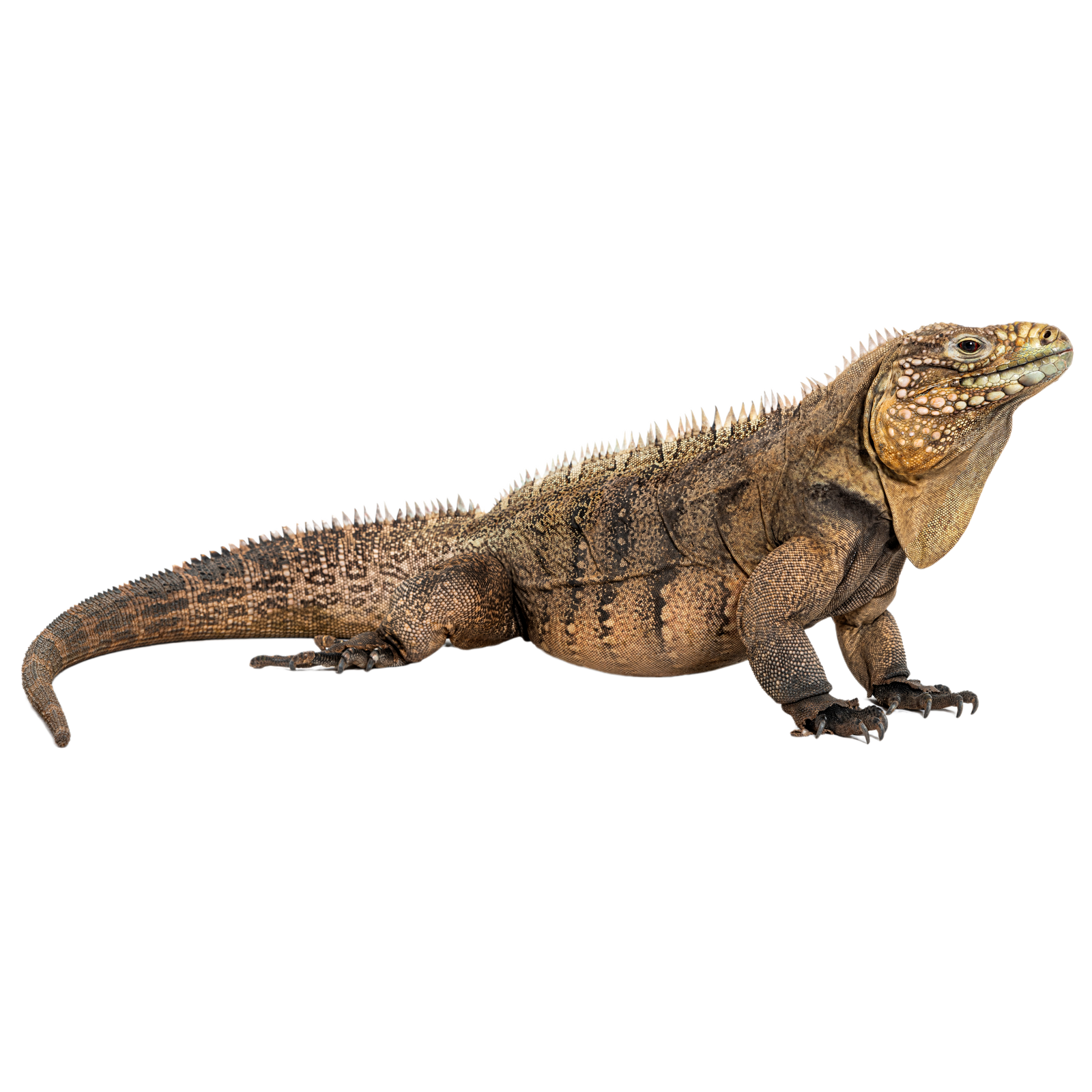
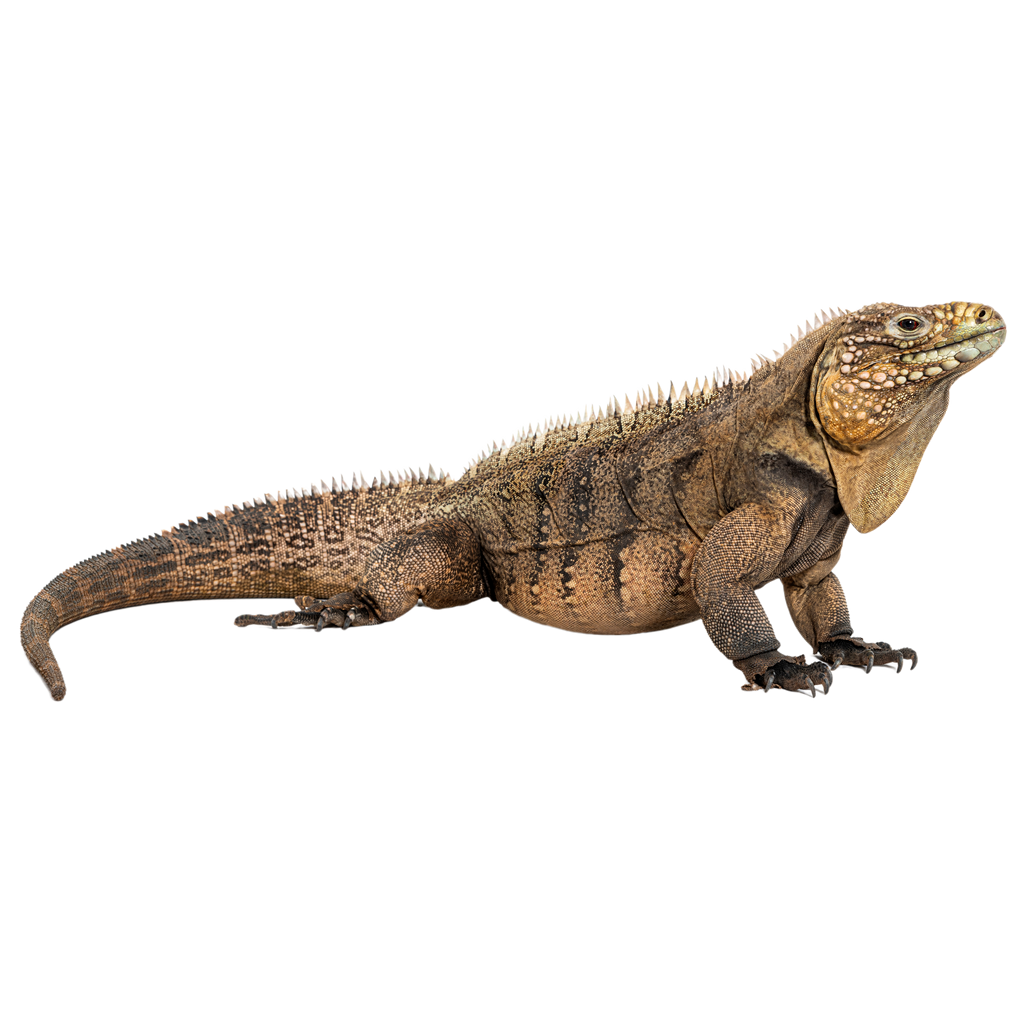
The Cuban rock iguana is a remarkable species, endemic to the Cuban archipelago, known for its stocky build and unique adaptations suited to its rocky, coastal habitat. These iguanas can grow up to 5 feet long and often weigh over 15 pounds, making them one of the largest in the Cyclura genus. Young iguanas are also more agile climbers than heavy adults and may use shrubs and low trees as feeding sites, lookout points, and escape routes. A typical potential lifespan is approximately 40 to 60 years under favorable conditions, with exceptional individuals possibly living longer.
The species plays an important role as a large terrestrial herbivore. By consuming fruit and moving between feeding and resting sites, it disperses seeds in its droppings. Passage through the digestive tract may help prepare some seeds for germination, while fecal material deposits nutrients that can support early growth. Browsing can influence the density and shape of vegetation, and the consumption of flowers, fallen fruit, and foliage helps channel plant energy into the wider food web. Opportunistic feeding on insects also contributes modestly to control of invertebrate populations. Burrowing and repeated movement disturb and aerate soil, redistribute organic matter, and create sheltered spaces that may later be used by smaller animals.
Several physiological and behavioral adaptations allow the Cuban rock iguana to thrive in hot, seasonally dry landscapes. It obtains much of its water from succulent leaves and fruit, limits activity when conditions become unfavorable, and regulates body temperature by moving precisely between sun and shade. Nasal salt glands help remove excess mineral salts, which may appear as pale residue around the nostrils after sneezing. Its heavy build, digging strength, cryptic coloration, and dependence on secure rocky refuges are all parts of the same survival strategy. Rather than specializing in speed or constant aggression, it succeeds through efficient herbivory, careful thermoregulation, strong spatial memory, and intimate familiarity with the structure of its environment.
Conservation Status
The IUCN Red List classifies the Cuban rock iguana as “Vulnerable”, based on an assessment completed in 2016, and records its population trend as “Decreasing”. “Vulnerable” status signifies a high risk of extinction in the wild if existing pressures continue. Although the species occurs in several parts of Cuba and on nearby islands, its distribution is fragmented, with many colonies confined to coastal scrub, rocky shorelines, dry forest, and isolated cays. Some local populations remain substantial, but others are small or poorly connected. This uneven distribution, continuing decline, and dependence on increasingly disturbed habitats indicate that the species is not secure across its range.
Habitat destruction and degradation are major threats. Coastal development, tourism infrastructure, agriculture, mining, road construction, and other land-use changes can eliminate shelter, nesting sites, and movement corridors. Climate change adds long-term pressure through sea-level rise, stronger storms, coastal erosion, and changes to vegetation, particularly where colonies occupy low-lying cays or narrow coastal zones. Severe hurricanes can damage habitat and cause abrupt local losses, while fragmentation may prevent depleted colonies from recovering through natural immigration.
Introduced mammals are another serious concern. Feral dogs and cats prey upon iguanas, especially younger individuals, while pigs may consume eggs, disturb nests, and damage vegetation. Rats can prey on eggs and small juveniles, and free-ranging livestock may degrade habitat through grazing and trampling. Hunting for meat, opportunistic killing, road mortality, and illegal collection also affect some populations. These pressures are most damaging where colonies are already small, isolated, or dominated by older animals because juvenile survival is low.
Conservation measures include protection within Cuba’s network of national parks, ecological reserves, and other managed areas. Effective protection depends on enforcement against hunting and collection, restrictions on destructive development, habitat restoration, control of invasive predators, and continued population monitoring. Programs involving local communities, researchers, and land managers also help identify nesting areas and reduce preventable mortality. Some intensively managed sites, including protected government lands, have supported valuable long-term research and localized population protection.
International commercial trade is tightly restricted through listing under Appendix I of the Convention on International Trade in Endangered Species. Captive breeding programs maintained by zoological institutions provide an additional safeguard by preserving genetically managed populations and supporting research, education, and conservation expertise. Their principal value has been as assurance populations rather than as a substitute for wild habitat protection, and captive propagation has not yet produced a species-wide reversal of the IUCN’s decreasing trend. Long-term recovery therefore depends chiefly on protecting connected habitat and reducing invasive-species impacts throughout the native range.
Native Range
The Cuban rock iguana is native to the Cuban archipelago and occurs nowhere else naturally. Its global range is therefore restricted to a single island nation, although within Cuba it is geographically widespread compared with many other Caribbean rock iguanas. Populations occur on the main island, Isla de la Juventud, and numerous offshore islands and cays. The distribution is discontinuous rather than uniform, with the largest concentrations associated with coastlines, karst districts, and relatively dry satellite islands. An established population on Isla Magueyes, Puerto Rico, originated through human introduction and is not part of the native range.
Important areas include the Guanahacabibes Peninsula at the western end of Cuba, coastal sections of the Zapata Peninsula, and dry southern districts extending through central and eastern Cuba. The species also occupies islands in the Canarreos Archipelago, including Cayo Largo, as well as cays of the Jardines de la Reina and parts of the northern Sabana and Camagüey archipelagos. In eastern Cuba it occurs in the dry coastal landscapes of Guantánamo and adjacent provinces. Its patchy distribution reflects the scattered placement of suitable limestone, dry scrub, and undisturbed coastal terrain rather than an association with every part of the country.
At the macrohabitat level, the Cuban rock iguana is primarily an inhabitant of tropical and subtropical dry environments. Typical ecosystems include xeric coastal scrub, cactus and thorn scrub, dry semi-deciduous forest, low coastal woodland, limestone terraces, and open areas within dry forest mosaics. It can also occur along the elevated margins of mangroves and wetlands, especially where dry hammocks or rocky ridges rise above seasonally flooded ground. It is not fundamentally a marsh or rainforest species. Dense, continuously wet forest and deeply inundated wetlands generally provide fewer of the exposed rocky openings and dry refuges characteristic of its strongest populations.
Limestone is one of the most important landscape features throughout the range. Much of coastal Cuba and many offshore cays consist of highly weathered coral limestone, with fissures, cavities, solution holes, ledges, and small caves. These formations create a complex mixture of exposed surfaces and protected underground spaces. At the microhabitat level, iguanas use crevices beneath boulders, shallow caves, hollows in eroded rock, and natural chambers within karst. Where sufficient soil is available, they also occupy self-excavated or preexisting burrows in sandy ground, compact earth, or deposits accumulated between rocks. Hollow logs, root cavities, and spaces beneath dense vegetation provide additional shelter in wooded areas.
The favored habitat is usually a mosaic rather than a uniformly open or densely vegetated landscape. Exposed rock, bare ground, and sunny clearings absorb heat rapidly, while nearby thickets, woodland edges, and crevices offer shade and more stable conditions. Vegetation commonly includes prickly pear and columnar cacti, agaves, palms, sea grape, thorny shrubs, vines, and drought-deciduous trees. On larger islands, dry forest may form a relatively closed canopy in places, but openings created by rock outcrops and shallow soils remain important. On small cays, vegetation may be only a few feet tall and shaped by salt spray, strong wind, and limited freshwater.
The species is overwhelmingly associated with low elevations. Most populations live from sea level to several hundred feet above sea level, particularly on coastal plains, marine terraces, low limestone ridges, and offshore cays. Local populations extend inland into modest limestone uplands where similar dry, rocky conditions persist, but the iguana is not characteristic of Cuba’s cool, high mountain environments. Elevation itself is less decisive than the combination of exposed terrain, suitable refuges, warm temperatures, and dry forest or scrub vegetation. Low wet plains without elevated rocky islands are generally less suitable, even when they lie close to occupied districts.
Cuba has a warm maritime climate, with annual mean temperatures in much of the iguana’s range lying in the upper 70s to low 80s. Typical daytime air temperatures range from the upper 70s during the cooler season to the upper 80s and low 90s during summer. Exposed limestone can become substantially hotter than the surrounding air, while caves and deep fissures remain cooler and fluctuate less. Winter cold fronts occasionally lower nighttime temperatures into the upper 50s or 60s, particularly on the main island, but prolonged cold is unusual in coastal districts. Offshore cays experience especially strong maritime moderation.
Relative humidity across coastal Cuba is often approximately 70% to 85%, yet the iguana’s immediate surroundings can be ecologically dry. Porous limestone drains rainfall rapidly, shallow soils retain little water, and constant sun and wind increase evaporation. Humidity may rise sharply overnight, after rain, or within shaded cavities, while exposed surfaces become hot and dry during the day. This contrast between humid tropical air and drought-prone ground conditions is a defining feature of many occupied habitats. Deep rock shelters and burrows provide more stable humidity than the surface and reduce exposure to rapid environmental changes.
Rainfall is strongly seasonal. Most areas receive the majority of their precipitation from May through October, when showers, thunderstorms, and tropical weather systems are frequent. November through April is generally drier. Annual rainfall varies widely across the range, from roughly 25 to 35 inches in the driest southeastern rain-shadow districts to more than 50 or 60 inches in wetter western and central localities. Tropical storms and hurricanes can deliver intense rainfall within a short period, temporarily filling rock pools and saturating soils, while extended dry-season intervals may leave little free water at the surface.
Permanent freshwater is not required in every occupied locality, particularly on small cays where ponds and streams may be absent. Moisture is instead available through rainfall, dew, temporary pools, succulent vegetation, and water retained in shaded rock depressions. Successful habitat nevertheless depends on access to some dependable environmental moisture and vegetation capable of persisting through drought. The essential landscape combines warm lowland conditions, seasonally dry but humid air, sturdy xeric vegetation, and terrain containing secure retreats. Limestone karst is especially valuable because it supplies thermal variety, shelter from severe weather, and protected pockets of moisture within an otherwise exposed Caribbean environment.
Behavior
The Cuban rock iguana is a diurnal species. During the hottest part of the day, an iguana may become relatively inactive, resting in shade or withdrawing into a rock crevice or burrow. Activity often resumes later in the afternoon before the animal returns to shelter for the night. Cloud cover, wind, and abrupt weather changes can shorten or interrupt this daily pattern.
Activity varies seasonally. Warm, bright conditions generally promote basking, movement, and feeding behavior, while cool or persistently overcast weather reduces them. In cooler months, individuals may remain sheltered for extended periods and emerge only during favorable intervals. This reduced winter activity is sometimes described as brumation, although it is not always a continuous, deep dormancy. An iguana may periodically surface to bask or move between refuges. As the reproductive season approaches, mature males become more conspicuous and spend additional time displaying, patrolling, and investigating other iguanas. Females may also become restless and more defensive when preparing to nest.
Adults are primarily terrestrial and closely associated with rocky terrain, but they are capable climbers. They move with a deliberate, heavy gait while foraging, yet can accelerate into a surprisingly rapid sprint when alarmed. Strong limbs and claws allow them to scramble over irregular rock, excavate soil, and brace themselves inside narrow retreats. Juveniles tend to be more agile, secretive, and inclined to use elevated escape routes. Cuban rock iguanas can also swim when necessary, although swimming is not usually the dominant form of locomotion in their ordinary daily routine.
These iguanas are not social in the cooperative sense. Adults usually maintain individual space, and mature males can be strongly territorial, especially during the breeding season. A dominant male may occupy and patrol an area that overlaps the activity ranges of one or more females. Other males are challenged through visual displays before physical combat occurs. Head bobbing, body elevation, lateral presentation, and changes in posture communicate confidence, submission, or escalating aggression. A subordinate animal commonly lowers its body, avoids eye contact, turns away, or retreats. If neither male yields, they may circle, shove, bite, and strike with the tail. Such encounters can produce serious injuries.
Females may also defend preferred retreats, feeding locations, or nesting areas. Their aggression is generally more localized than the broad territorial behavior of adult males, but it should not be underestimated. During courtship, a male approaches with repeated head movements and close visual inspection. He may circle the female, follow her persistently, and restrain her by gripping the skin around the neck or shoulder during mating. Females can reject advances by fleeing, twisting, biting, or striking. After nesting, a female may guard the nest vicinity and challenge intruders for a limited period. There is no enduring pair bond and no prolonged parental care after hatching.
Communication is dominated by vision. Cuban rock iguanas readily perceive movement, body orientation, and the rhythmic head displays of conspecifics. Their well developed color vision helps them distinguish food items and recognize environmental details. Chemical information is gathered by tongue flicking and transferred to the vomeronasal system in the roof of the mouth. This allows an iguana to investigate unfamiliar objects, food, scent trails, and the recent presence of another animal. Hearing appears less important than vision for many routine interactions, but sudden noises and vibrations can still trigger alertness or escape.
Temperature strongly governs behavior because the iguana depends on external heat to regulate body function. It actively alternates between exposed and sheltered locations, changes body orientation toward the sun, and flattens or angles the torso to control heat gain. Darkening of the body can assist warming, while moving into shade, elevating the body, or opening the mouth can help prevent overheating.
Light cycles help organize emergence, basking, and retreat. Unexpected darkness often causes an iguana to seek shelter, while morning illumination encourages alertness and basking. Humidity and rainfall also influence activity without controlling it as rigidly as temperature and light. After rain, individuals may emerge to drink, investigate fresh plant growth, or explore newly moistened ground. Heavy rain and strong wind usually send them into protected retreats. Weather changes can also intensify scent investigation and digging behavior.
Cryptic gray, olive, and brown coloration allows a resting Cuban rock iguana to blend with limestone and weathered vegetation. When a threat is first noticed, the animal may freeze and rely on camouflage. If approached more closely, it commonly runs for a crevice, burrow, or dense cover. An animal unable or unwilling to escape may turn sideways, raise its body, compress or inflate its torso, extend the dewlap, gape, hiss, and lash its tail. The heavy tail can deliver a forceful blow, and the jaws can inflict a deep bite. Large adults are more likely than juveniles to stand their ground, particularly when guarding a retreat or when escape routes appear blocked.
Cuban rock iguanas often learn routines quickly under human care. They may recognize familiar people, approach in anticipation of food, investigate tools, and follow a visual target. Their feeding response can become more immediate than it is in the wild because food arrives predictably and requires less searching. Some individuals become calm during routine care, but mature males may show renewed territorial aggression during the breeding season. Familiarity does not eliminate the risks presented by powerful jaws, claws, and tail strikes.
Chronic stress may appear as persistent hiding, frantic escape attempts, repeated pacing, rubbing against boundaries, reduced feeding response, unusual immobility, or heightened aggression. A lack of behavioral choice can also lead to inactivity and excessive attention to food. Useful enrichment encourages natural decision making through opportunities to climb, dig, explore changing scents, search for food, investigate novel but safe objects, and choose between exposed observation and seclusion. Enrichment should invite voluntary interaction rather than force contact. Regular changes in presentation are valuable, but constant disruption can be stressful because these iguanas also depend on familiar routes, refuges, and predictable daily cues.
Husbandry Requirements
Enclosure Design
A juvenile Cuban rock iguana requires a secure enclosure measuring at least 4 feet long, 2 feet wide, and 2 feet high. This size is suitable only during early growth, and upgrading before the animal becomes crowded is essential. Adults need substantially more room. The minimum enclosure for one adult should measure 8 feet long, 4 feet wide, and 4 feet high, although an enclosure measuring 10 feet long, 6 feet wide, and 6 feet high is preferable. Larger walk-in enclosures provide better opportunities for exercise, climbing, and effective thermal gradients. Floor space is especially important because this is a heavy bodied iguana, but vertical space should not be neglected.
PVC panels, sealed plywood, masonry, and other rigid materials offer good durability and heat retention. Wood must be sealed with a nontoxic, water resistant coating, particularly around floor seams and misting areas. Glass can be used for juveniles, but an all glass adult enclosure is usually impractical, heavy, and inefficient to heat. Large custom enclosures benefit from solid sides and a solid back, with ventilation panels positioned low on the cool side and high on the warm side. This arrangement promotes air exchange without allowing all heated air to escape. Screen topped enclosures generally lose too much heat and humidity unless the room itself is carefully controlled.
Provide at least two appropriately sized retreats, including one on the warm side and another on the cool side. Each should allow the iguana to enter completely and rest without being tightly wedged. A third retreat containing slightly damp substrate can help with localized humidity. Visual barriers made from cork, artificial rockwork, sturdy plants, or partition walls reduce exposure and make a large enclosure feel secure. Keep enough open floor area for unrestricted walking and turning.
Doors must have sturdy hinges, positive latches, and locks that cannot be pushed or lifted open. Cover ventilation openings with rigid metal mesh securely attached from the outside, and protect electrical cord openings with fitted grommets or sealed channels. Outdoor enclosures require a roof or heavy mesh ceiling, a buried perimeter barrier at least 18 inches deep, and protection against digging beneath doors. All lamps and electrical equipment inside the enclosure must have guards that prevent direct contact.
Lighting and Heating
Cuban rock iguanas require intense, full spectrum lighting and a strong basking zone. The basking surface should reach approximately 100℉ to 110℉. Measure this surface with an infrared thermometer rather than relying only on air temperature. Warm side ambient temperatures should remain around 85℉ to 90℉, while the cool side should offer approximately 75℉ to 82℉. At night, temperatures may fall to 70℉ to 78℉. Supplemental nighttime heat is generally unnecessary when the room remains within that range. If heat is required after dark, use a radiant heat panel or deep heat projector rather than a colored bulb.
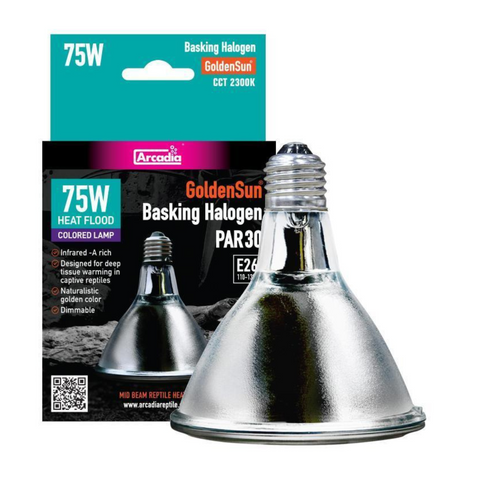
Halogen flood lamps are effective for creating a broad basking zone. Large adults usually need a bank of two or more lamps so the entire body warms evenly. A single concentrated bulb can produce a dangerously hot spot while leaving much of the animal cool. Heat rocks must never be used. Every heating element must be controlled by a reliable thermostat. Place the thermostat probe where it accurately controls the intended heated area, secure it against displacement, and verify temperatures independently with digital thermometers and an infrared thermometer.
Provide a high output T5 fluorescent UVB fixture producing approximately 10% to 12% UVB. A typical high output fixture may need to be about 12 to 18 inches above the basking surface when mounted over mesh, or approximately 18 to 24 inches away when unobstructed, but manufacturer guidance and meter readings should determine final placement. Fine mesh can substantially reduce UVB transmission. Lamps mounted inside the enclosure need sturdy wire guards. Replace UVB tubes according to the manufacturer’s effective life even if they continue producing visible light.
12 hours of light and 12 hours of darkness is suitable for much of the year. A gradual seasonal range of about 10 hours of light during the shortest winter period and 13 to 14 hours during summer can provide useful annual variation. Make changes in small increments rather than abruptly. Complete darkness at night supports normal resting cycles, so avoid red, blue, or purple nighttime bulbs. Bright visible light during the day, provided by daylight LED bars in addition to heat and UVB lamps, improves enclosure illumination and helps establish a clear day and night rhythm.
Substrate and Enrichment
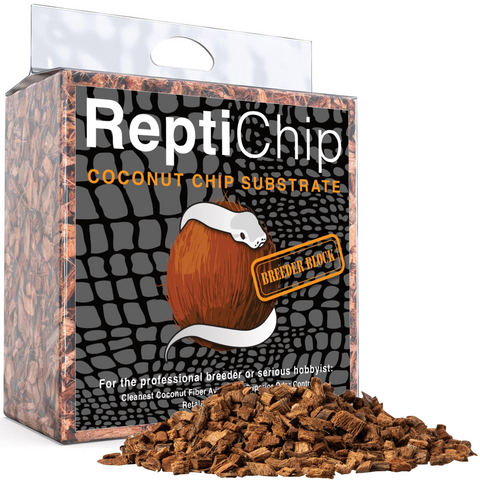
For most indoor enclosures, use four to eight inches of a well drained mixture. ReptiChip products are appropriate as a durable base, especially when blended with ReptiEarth. Avoid aromatic cedar or pine, crushed walnut shell, sharp gravel, corn cob, and excessively dusty sand. Reptile carpet should not be used. It offers no digging value, becomes difficult to sanitize thoroughly, and can catch claws. Bare sealed flooring may be useful temporarily during enclosure maintenance, but it is not an enriching permanent surface.
Spot clean waste and saturated substrate promptly. Stir and inspect deeper layers regularly, replacing portions that develop persistent odors or remain waterlogged. The substrate should be slightly moist below the surface but comparatively dry on top. Heavy stone features must rest directly on the enclosure floor or on a rigid support, not on loose substrate, because digging can undermine them.
Create varied terrain with low mounds, broad rocks, logs, cork bark, and stable ramps. Rearranging selected lightweight features periodically introduces novelty without removing all familiar landmarks. Multiple basking shelves encourage movement between elevations and thermal zones. Thick branches placed at shallow angles are safer than narrow vertical limbs. Platforms should have textured surfaces that provide traction.
Dig boxes filled with deeper ReptiEarth and topsoil mixture allow concentrated excavation. Cork tubes, large hollow logs, and partially buried shelters provide opportunities for exploration. Sturdy puzzle objects, such as large movable balls or securely mounted panels with different textures, can encourage investigation. All interactive items must be too large to swallow, free of small detachable parts, and strong enough to withstand forceful pushing. Maintain clear travel routes and avoid overcrowding the enclosure with decorations.
Enrichment can come in many forms and is for the stimulation of your animal. The five types of enrichment you can offer are food related, sensory, physical habitat, cognitive, and social. These categories have a vast variety of options to choose from that are appropriate for the species being enriched.
Humidity and Hydration
Maintain general relative humidity around 50% to 70%, with short rises into the 70% to 80% range after misting. The enclosure should not remain wet or stagnant. Provide a humid retreat containing lightly damp ReptiEarth or a ReptiEarth and ReptiChip mixture so the iguana can select a more humid microclimate without forcing the entire enclosure to stay moist.
Lightly mist enclosure walls, plants, and part of the substrate in the morning several times per week, adjusting frequency according to measured conditions. In a dry heated room, brief daily misting may be necessary. Allow most exposed surfaces to dry during the day. Do not continually soak basking shelves or hides. Automated misting systems should use short cycles and must be positioned so water does not spray hot bulbs or electrical fixtures.
Provide a heavy water basin large enough for the iguana to lower its head comfortably and, where space permits, partially soak. Place it on a stable surface where it cannot be overturned or undermined. Replace the water daily and whenever contaminated. Some individuals readily drink from bowls, while others respond to droplets on leaves, enclosure walls, or rocks. Morning misting can stimulate this natural drinking response, but it should supplement rather than replace constant access to clean water.
Measure humidity with at least two accurate digital hygrometers, placing one near the warm side and another near the cool side. A third probe inside the humid retreat is useful. Analog dial gauges are often imprecise. Review both daytime and nighttime readings, because humidity typically rises as temperatures fall. Adjust ventilation, misting, and substrate moisture gradually while preserving dry resting surfaces and steady airflow.
Diet & Supplementation
Cuban rock iguanas are predominantly herbivorous. In the wild, they consume a broad assortment of leaves, flowers, fruits, tender shoots, and fallen plant material. Important foods include the foliage and fruit of native shrubs, trees, vines, cacti, and palms. Flowers and ripe fruit may be selected whenever seasonally abundant, but leaves provide the dependable foundation of the diet. Seeds are swallowed with fruit and often pass through the digestive tract intact. Animal matter is secondary and opportunistic rather than a major requirement. Juveniles take more insects and other small invertebrates than adults, while adults may occasionally consume insects, land crabs, carrion, eggs, or other readily available animal material.
Food is found primarily through keen vision, supplemented by smell and tongue sampling of chemical cues. Bright flowers, ripe fruit, fresh foliage, and moving invertebrates are readily detected. Plant material is cropped with the teeth and powerful jaws, then swallowed after limited chewing. Small animal prey is seized directly with the mouth and crushed or swallowed. These iguanas are active foragers rather than specialized pursuit predators, and animal prey should not be regarded as necessary for healthy adults under human care.
Young juveniles require proportionally more energy and protein for growth and are more likely to exploit insects in nature. Even so, their captive diet should remain predominantly plant based. With maturity, the proportion of leaves and other fibrous vegetation should increase, while animal matter becomes uncommon. Seasonal availability also changes the wild diet. Flowers, soft shoots, and fruit are favored when rain and plant growth make them abundant. During drier periods, tougher leaves, cactus material, and other persistent vegetation become more important. Captive variety should imitate this continual rotation rather than relying on one or two favorite foods.
A suitable menu should consist mainly of calcium rich leafy greens and edible browse. Good staples include collard, mustard, turnip, and dandelion greens, escarole, endive, cactus pads, mulberry leaves, grape leaves, and pesticide free hibiscus leaves and flowers. Squash, green beans, bell peppers, okra, and similar vegetables can provide additional variety. Fruit should generally comprise no more than about 5% to 10% of the total diet because excessive fruit supplies too much sugar and too little fiber. Figs, papaya, berries, prickly pear fruit, and melon are reasonable choices in rotation. Spinach, beet greens, and Swiss chard should not be staples because their oxalate content can reduce calcium availability.
Growing juveniles should receive fresh plant food every day, usually in one or two meals. Small amounts of captive bred insects may be offered once or twice weekly, with the overall diet remaining at least 85% to 90% plant matter. Appropriate insects include roaches, crickets, grasshoppers, silkworms, hornworms, and black soldier fly larvae. Each insect should be no wider than the space between the iguana’s eyes, and very large, hard bodied, or heavily chitinous prey should be avoided. Adults should be offered a varied plant meal daily or on five to seven days each week, with portion size adjusted to body condition.
Healthy whole invertebrate prey does not normally require vitamin dusting, although conventional crickets and roaches may receive a light coating of plain calcium immediately before feeding. The plant portion of the diet should also be lightly dusted with a phosphorus free calcium supplement several times weekly for growing juveniles and about twice weekly for adults. A reptile multivitamin can be used sparingly, generally once weekly for juveniles and every one to two weeks for adults. Products containing high concentrations of vitamin D or preformed vitamin A should not be combined indiscriminately, since both can be toxic in excess. Supplement use should be adjusted with veterinary guidance when disease, unusual growth, or a medically prescribed diet is involved. Fresh greens may be chopped or torn into pieces readily swallowed, mixed thoroughly to prevent selective feeding, and presented while crisp rather than wilted. Following a substantial meal, the iguana must be able to attain a body temperature of approximately 88°F to 92°F for efficient digestion.
Body condition should guide portions more reliably than appetite alone. A well conditioned iguana has muscular limbs, a solid but not swollen tail base, and a smooth body contour without sharply projecting pelvic or spinal bones. Underconditioned animals develop a narrow tail base, hollow flanks, prominent hips, and reduced limb musculature. Obesity produces a pendulous abdomen, excessive deposits around the neck, limbs, and tail base, skin folds, and reduced mobility. Regular weighing under consistent conditions helps identify gradual gain or loss before visual changes become severe.
Reproduction
Cuban rock iguanas are oviparous, producing shelled eggs after internal fertilization. In captivity, females may become reproductively capable at about three to four years of age, while males often mature somewhat later, commonly around four to six years. Age alone is not a sufficient breeding criterion. Skeletal development, adult body size, physical condition, and established seasonal reproductive behavior are more reliable indicators. Breeding animals that are still growing rapidly can compromise the female’s development and reduce fertility. Most mature females produce one clutch during a breeding season. Clutch size varies with the female’s age and size, but approximately 5 to 20 eggs is common, with unusually large females sometimes producing more.
Adults exhibit pronounced sexual dimorphism. Mature males are generally larger and more heavily built, with broader heads, fuller jowls, taller dorsal crests, prominent femoral pores, and conspicuous bulges at the base of the tail associated with the hemipenes. Females usually have narrower heads, smaller pores, and less massive bodies, although old or dominant females can develop substantial crests and jowls. These differences may be indistinct in juveniles, so uncertain animals should be sexed by an experienced reptile veterinarian or breeder rather than paired according to appearance alone.
Reproductive activity follows a seasonal pattern. Rising spring temperatures, lengthening days, and changes in rainfall stimulate hormonal activity, territorial behavior, courtship, ovulation, and sperm production. Animals maintained under nearly identical conditions throughout the year may breed inconsistently because they receive no clear seasonal signal. Cycling should be gradual rather than abrupt and should be attempted only with mature, well established animals.
During the cooler season, the photoperiod may be reduced gradually to approximately 10 hours of light each day. Daytime ambient temperatures can fall into the upper 70s to low 80s, with nighttime temperatures generally between 68°F and 75°F. A warm basking area should remain available, although its duration and peak temperature may be modestly reduced. Cuban rock iguanas should not be subjected to severe chilling or prolonged inactivity. After several cooler weeks, increase the day length gradually to 13 or 14 hours and restore daytime ambient temperatures to roughly 82°F to 90°F. Basking surfaces during the active breeding season can reach approximately 105°F to 115°F, provided cooler retreats remain accessible.
Humidity should also reflect seasonal change. The cooler period can be somewhat drier, followed by a moderate rise in humidity and more frequent misting as temperatures and day length increase. Relative humidity around 50% to 70% percent, with temporary increases after misting, is generally more appropriate than continuously saturated conditions. Moisture changes appear to reinforce the arrival of the warmer, wetter reproductive season. Standing water, persistently wet floors, and stagnant air are not beneficial substitutes for a seasonal humidity increase. The combined progression of longer days, warmer conditions, and intermittent rainfall cues is more effective than changing any single variable.
As breeding conditions develop, males become more territorial and visually demonstrative. A male may patrol repeatedly, perform exaggerated head bobs, extend the dewlap, flatten the body laterally, and orient himself broadside to a female. He may circle her, follow closely, lick near her body or cloaca, and attempt to block her movement. Females assess both the male and the security of the surroundings. A receptive female may remain nearby, reduce escape attempts, and tolerate close investigation. An unreceptive female often runs, lashes with the tail, bites, hides continuously, or throws herself against enclosure barriers. Controlled pairing is safer than group breeding. Adult males should not be housed together for reproductive purposes because territorial contests can become severe. One male may be introduced to one female at a time, or a male may be rotated among compatible females with rest periods between introductions.
A dedicated breeding enclosure is useful because it permits close observation and rapid separation. For an adult pair, a secure area approximately 12 feet long, 8 feet wide, and 6 feet high should be regarded as a practical starting point rather than an ideal maximum. Larger quarters are preferable. The enclosure should contain strong visual barriers, more than one basking position, separate retreats, and no narrow corners where a female can be trapped. Removable partitions or adjacent compartments are especially valuable. Some established pairs breed in their normal quarters, but introductions in an enclosure strongly defended by either animal may provoke aggression. A neutral or rearranged space can reduce territorial certainty.
A suitable nesting site is essential, the female should have access to a secluded container or soil bank at least 2 feet deep, and preferably closer to 3 feet deep for a large individual. It should also be broad enough for her to turn and construct a tunnel without repeatedly striking solid walls. A cohesive mixture of soil and sand that holds a tunnel but is not waterlogged is appropriate. The interior should remain humid and warm, generally in the low to upper 80s, while offering some variation so the female can select a location. Several nesting options may be necessary because females can be highly selective about depth, moisture, temperature, privacy, and entrance orientation.
Failure to nest is often associated with inadequate substrate, excessive exposure, unsuitable moisture, or male harassment. Adding a deeper, more private nesting area and minimizing traffic around the enclosure can restore normal digging behavior. Persistent straining, repeated unsuccessful digging, marked weakness, or prolonged failure to lay after obvious reproductive development requires prompt evaluation by a reptile veterinarian. Successful breeding depends less on forcing contact than on providing clear seasonal cues, compatible partners, secure mating conditions, and a nesting site that the female is willing to accept.
Incubation & Neonate Care
The Cuban rock iguana is oviparous, meaning the female deposits shelled eggs that complete development outside her body. Once the clutch has been laid, the eggs must remain in a stable, warm, humid environment until hatching. In human care, eggs are usually removed for controlled incubation, although naturally deposited eggs may be left in place when the nest location is secure and its temperature and moisture can be monitored.
A suitable artificial incubation medium is fine vermiculite or perlite mixed with clean water at approximately a 1:1 ratio by weight. The finished medium should clump when squeezed but should not release free water. Maintain incubation temperatures between 86°F and 90°F, with approximately 87°F to 89°F providing a practical target for most clutches. Prolonged exposure above 91°F can cause deformity, developmental failure, or death. Internal humidity is generally maintained around 80% to 95%. The eggs should remain full and firm without sitting on a saturated medium. Severe denting usually indicates excessive water loss, while sweating shells, standing condensation, or swollen translucent areas can indicate excessive moisture.
Incubation commonly lasts about 75 to 100 days, although hatching may occur somewhat earlier or extend beyond 100 days depending on temperature, nest conditions, and individual development. Cooler incubation generally lengthens the period. Temperature dependent sex determination applies to this species. Incubation temperature can influence the sex ratio, with warmer viable conditions generally producing a greater proportion of females and cooler viable conditions tending to produce more males. The transition is not perfectly predictable, and pivotal temperatures can vary with incubation method, population, and thermal fluctuation. Temperature should therefore be selected primarily for safe embryonic development rather than to guarantee a particular sex. Large daily swings, localized hot spots, poorly calibrated equipment, overly wet substrate, dehydration, contamination, and repeated handling all reduce hatching success. A backup thermostat, an independent thermometer, and protection from power interruptions are valuable safeguards.
Near the end of incubation, an egg may dimple slightly before the hatchling cuts a slit with its egg tooth. After pipping, a hatchling may remain inside for 12 to 48 hours while breathing air, absorbing residual yolk, and separating from the shell membranes. This pause is normal. Do not enlarge the opening or pull the hatchling out merely because progress appears slow. Premature assistance can tear blood vessels or leave a large external yolk sac. Intervention is justified only when a clearly distressed hatchling has made no progress and should ideally be directed by a reptile veterinarian or an experienced propagation specialist. Hatchlings from the same clutch may emerge over several days.
A simple neonate enclosure makes observation and sanitation easier. A single hatchling can initially be maintained in a secure enclosure about 3 feet long, 2 feet wide, and 2 feet high, with upgrades provided as growth requires. Use paper towels or another nonparticulate surface during the first several weeks. Loose substrates can adhere to the navel or be swallowed with food. Provide a snug hide, stable low branches, and textured surfaces that allow climbing without long falls. All furnishings must be firmly anchored. Individual housing is preferable because it permits accurate monitoring of food intake, feces, growth, and injuries. Small groups require abundant space and close supervision for chasing, biting, basking exclusion, or unequal growth.
Provide a basking surface around 95°F to 100°F, with a warm ambient zone near 82°F to 86°F and a cooler retreat around 78°F to 82°F. Night temperatures can fall to approximately 72°F to 78°F. Measure the actual surfaces accessible to the hatchling, since small bodies can overheat quickly beneath an intense lamp. A high quality ultraviolet B source should cover the basking area while still allowing complete retreat into shade. Follow the lamp manufacturer’s distance guidance and replace the lamp at the recommended interval. Neonates require a regular day and night cycle, generally about 12 hours of light daily. Avoid colored night bulbs and heat rocks, which can disturb rest or cause burns.
Maintain general humidity around 60% to 75% while allowing surfaces to dry between light mistings. A humid hide containing slightly damp paper or moss can provide a localized area near 75% to 85%, especially during shedding. Constantly wet conditions encourage skin infections, while excessively dry air contributes to dehydration and retained shed. Offer a shallow, stable water dish that the hatchling can enter and leave easily. Refresh it at least daily and whenever contaminated. Light misting may stimulate drinking from leaves and enclosure surfaces. Routine forced soaking is unnecessary, but a short, closely supervised soak in shallow lukewarm water may help a mildly dehydrated animal. The nostrils must always remain above water.
Offer the first meal after the hatchling has emerged fully, the navel is closing, and most residual yolk has been absorbed, usually within one to three days. Provide fresh food every morning, finely chopped to pieces smaller than the width between the hatchling’s eyes. Appropriate first foods include tender dark leafy greens, edible weeds, squash, green beans, and small amounts of other vegetables. Remove uneaten food before it spoils. Healthy neonates should begin eating within several days, although individuals with substantial residual yolk may wait longer. Record body weight at emergence and then weekly with a gram scale. Failure to eat by about five to seven days, continuing weight loss, weakness, or a sunken appearance warrants evaluation of temperature, hydration, lighting, and health.
Common neonatal problems include dehydration, retained shed around toes or the tail tip, navel infection, external yolk complications, intestinal parasites, thermal burns, and metabolic bone disease associated with inadequate ultraviolet B exposure or poor calcium balance. Warning signs include persistent lethargy, tremors, swollen limbs, a soft jaw, repeated straining, diarrhea, wheezing, nasal discharge, or failure to gain weight. Veterinary examination and fecal screening are advisable for compromised hatchlings. Handling should be minimal during the first week. When handling is necessary, approach slowly, support the entire body and all four limbs, and never restrain the animal by its tail. Sessions should remain brief to prevent chilling and stress.
Conclusion
Successful care of a Cuban rock iguana begins with good husbandry and also respects the species’ intelligence, territoriality, and reliance on familiar refuges. Opportunities to bask, dig, climb, forage, investigate safe objects, and choose between exposure and seclusion help prevent chronic stress. Slow, predictable interactions are safer than forced handling. Familiarity should never be mistaken for tameness, particularly with mature males or animals that feel cornered. Persistent hiding, pacing, boundary rubbing, frantic escape attempts, unusual immobility, reduced feeding, or heightened aggression should prompt a review of the enclosure and daily routine.
Veterinary attention is warranted for persistent food refusal, roughly 10% body weight loss, weakness, abnormal feces, abdominal swelling, repeated regurgitation, blood, foul material, wheezing, nasal discharge, tremors, swollen limbs, a soft jaw, repeated straining, or collapse. Reproductive females showing unsuccessful digging, persistent straining, marked swelling, or cloacal tissue protrusion require urgent care. With appropriate housing, nutrition, environmental monitoring, enrichment, and medical support, this iguana can thrive, but its potential lifespan of approximately 40 to 60 years makes ownership a serious multidecade commitment.