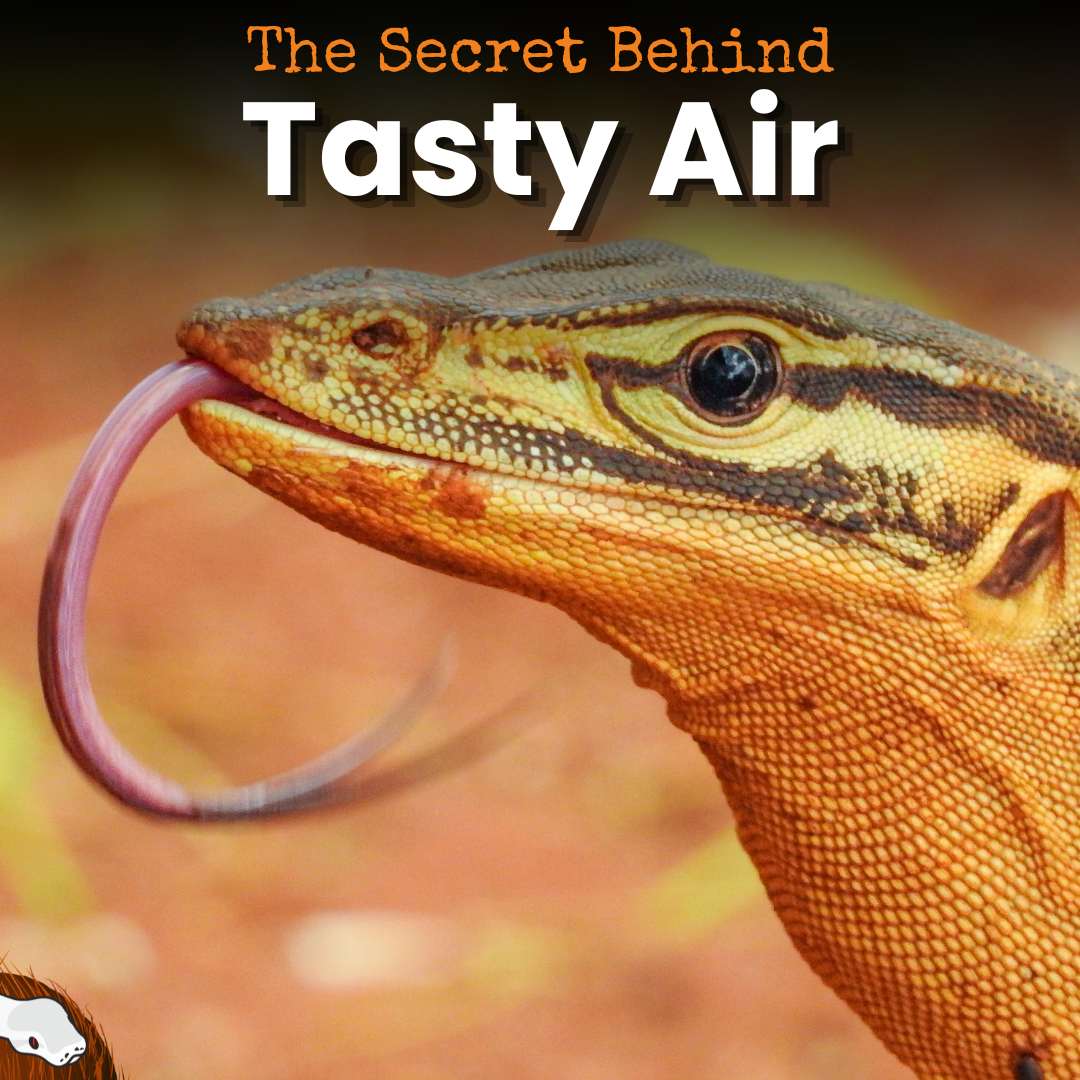

Ever watched your snake or lizard flick its tongue and wondered what’s really going on? Maybe you’ve heard the myth that reptiles “taste” the air, but the truth is even cooler. There’s a secret organ at work that lets reptiles sense their world in a way we can only imagine.
Why does this matter? Understanding how reptiles “smell” with their tongues isn’t just a fun fact, it’s key to creating a more enriching, natural environment for your scaly friends. When you know how they explore, you can help them feel right at home.
Meet the Jacobson’s Organ: The Reptile Superpower
Hidden in the roof of a reptile’s mouth is the Jacobson’s organ, also called the vomeronasal organ. When your snake or lizard flicks its tongue, it’s collecting tiny scent particles from the air or ground. The tongue then delivers these particles straight to the Jacobson’s organ, which analyzes the scents and helps the reptile “see” its world through smell.
“A snake’s tongue is like a GPS for scent, guiding it to food, mates, and even away from danger.”
Why Is This Organ So Important?
For reptiles, the Jacobson’s organ is a game-changer. It helps them:
- Track prey with pinpoint accuracy
- Find mates during breeding season
- Detect predators or rivals nearby
This sense is so sharp that some snakes can follow a scent trail left hours earlier. Imagine being able to “see” a mouse hiding under leaves just by flicking your tongue!
How Can Keepers Use This Knowledge?
Knowing about the Jacobson’s organ can help you create a more stimulating enclosure. Try these tips:
- Offer a variety of natural substrates for scent trails (like coconut husk, leaf litter, or moss)
- Rotate hides and décor to introduce new smells
- Use scent enrichment, such as placing a shed skin or a dab of prey scent in the enclosure (always safe and species-appropriate)
Every species is different, so experiment to see what your reptile responds to best.
Fun Fact: Not Just for Snakes!
While snakes are famous for their tongue-flicking, many lizards and even some amphibians use the Jacobson’s organ too. Next time you see your monitor lizard flicking its tongue, you’ll know it’s not just being curious, it’s gathering a world of information.
Conclusion
Understanding the Jacobson’s organ opens up a whole new way to connect with your reptiles. By catering to their incredible sense of smell, you’ll keep them active, engaged, and thriving.