

Free Shipping to the Lower 48!
Free Shipping to the lower 48!
ReptiTips
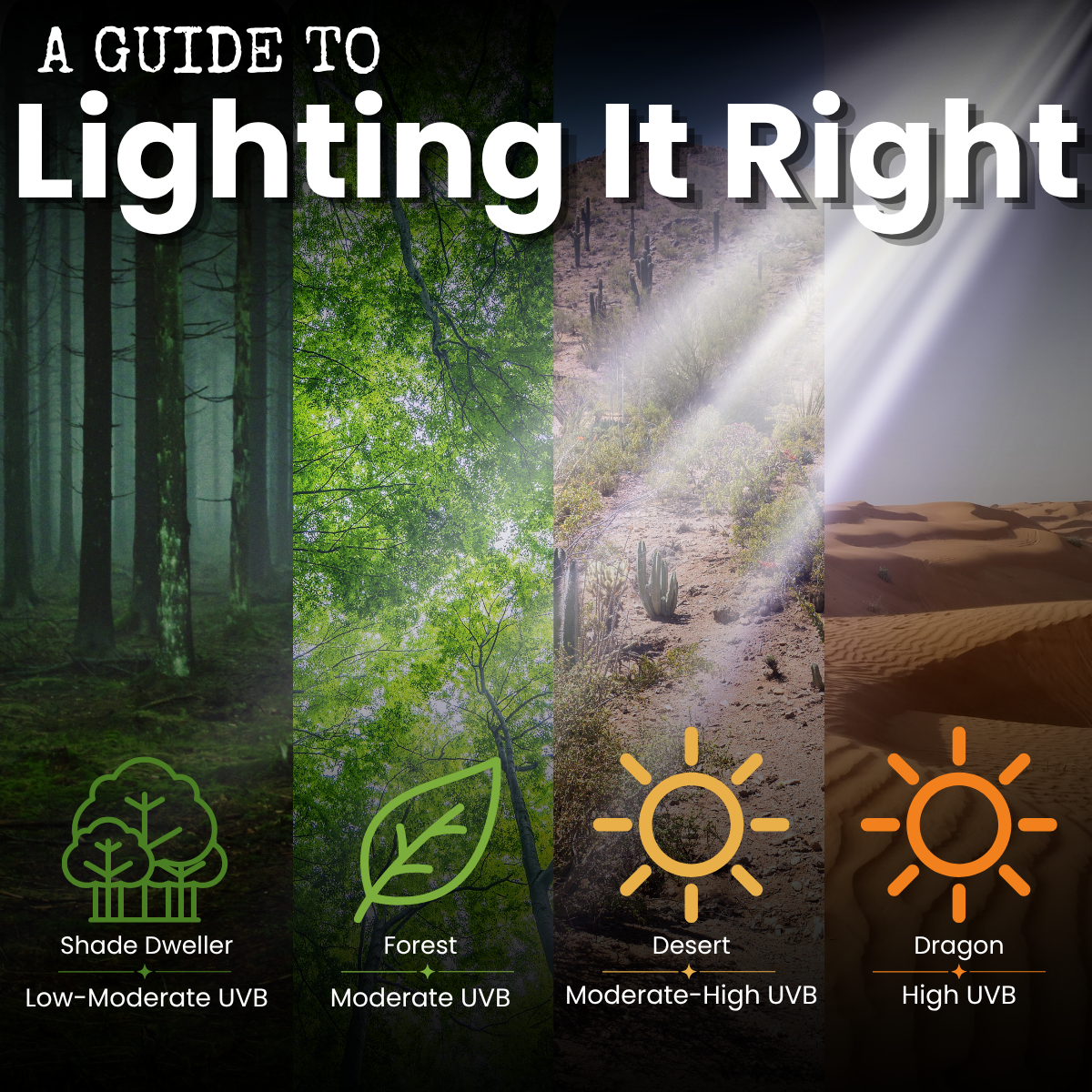

Some might say “Reptiles and amphibians don’t need special lighting, they’re just fine with a regular bulb.” If only it were that simple! Lighting is one of the most misunderstood parts of care for herps, and getting it wrong can mean a stressed, unhealthy pet. But don’t worry, choosing the right lighting doesn’t have to be a mystery.
Why Lighting Matters More Than You Think
Lighting isn’t just about making your enclosure look good. For reptiles and amphibians, it’s a lifeline. The right light helps them see, hunt, digest food, and even produce vital vitamins. Without proper lighting, even the best diet and enclosure can fall short.
UVB: The Secret Ingredient
UVB light is a game-changer for most animals. It helps them synthesize vitamin D3, which is crucial for absorbing calcium and keeping bones strong. Without UVB, reptiles can develop metabolic bone disease, a very painful and often fatal condition.
“An animal's health starts with the right light, think of it as their daily dose of sunshine.”
Not all reptiles or amphibians need the same amount of UVB. Desert dwellers like bearded dragons crave high levels, while forest species like crested geckos need much less. UVB bulbs have different percentages of output so always check what your specific species requires.
Basking Bulbs and Heat Lamps
Reptiles and amphibians are cold-blooded, or exothermic, so they rely on external heat to regulate their body temperature. Basking bulbs create a warm spot for your pet to soak up heat, just like they would in the wild. The trick is to create a temperature gradient, one side warm, the other cooler, so your animals can move around and self-regulate.
- Place the basking bulb at one end of the enclosure.
- Use a thermometer to monitor temps, guesswork leads to unhappy reptiles!
- Adjust bulb wattage or height to dial in the perfect basking spot.
Daylight and Nighttime Lighting
Reptiles and amphibians need a clear day-night cycle to stay healthy. Use a bright, full-spectrum bulb during the day to mimic natural sunlight. At night, turn off the lights, most reptiles need darkness to rest. Avoid colored bulbs at night, as they can disrupt sleep and stress your pet.
Choosing the Right Setup for Your Reptile
Every species is different, so there’s no one-size-fits-all solution. Here’s how to get it right:
- Research your reptile’s natural habitat and daily routine.
- Match UVB strength and basking temps to their needs.
- Replace UVB bulbs every 6–12 months, even if they still look bright, UVB output fades over time.
- Use timers to keep lighting consistent.
A Few Surprising Tips
- Mesh lids can block up to 50% of UVB, make sure to mount bulbs inside the enclosure if possible.
- Reflectors boost light output and efficiency.
- Some animals need less UVB but still benefit from a natural day-night cycle.
Customize for Success
No two enclosures are exactly alike. Experiment with bulb placement, wattage, and timers until you find what works best for your pet. Watch their behavior for basking, hiding, or avoiding certain areas as it can tell you a lot about their comfort.
Lighting isn’t just a box to check, it’s the foundation of a thriving habitat. When you get it right, you’ll see brighter colors, more natural behaviors, and a happier, healthier pet. Ready to light up their world? Your pets will thank you!
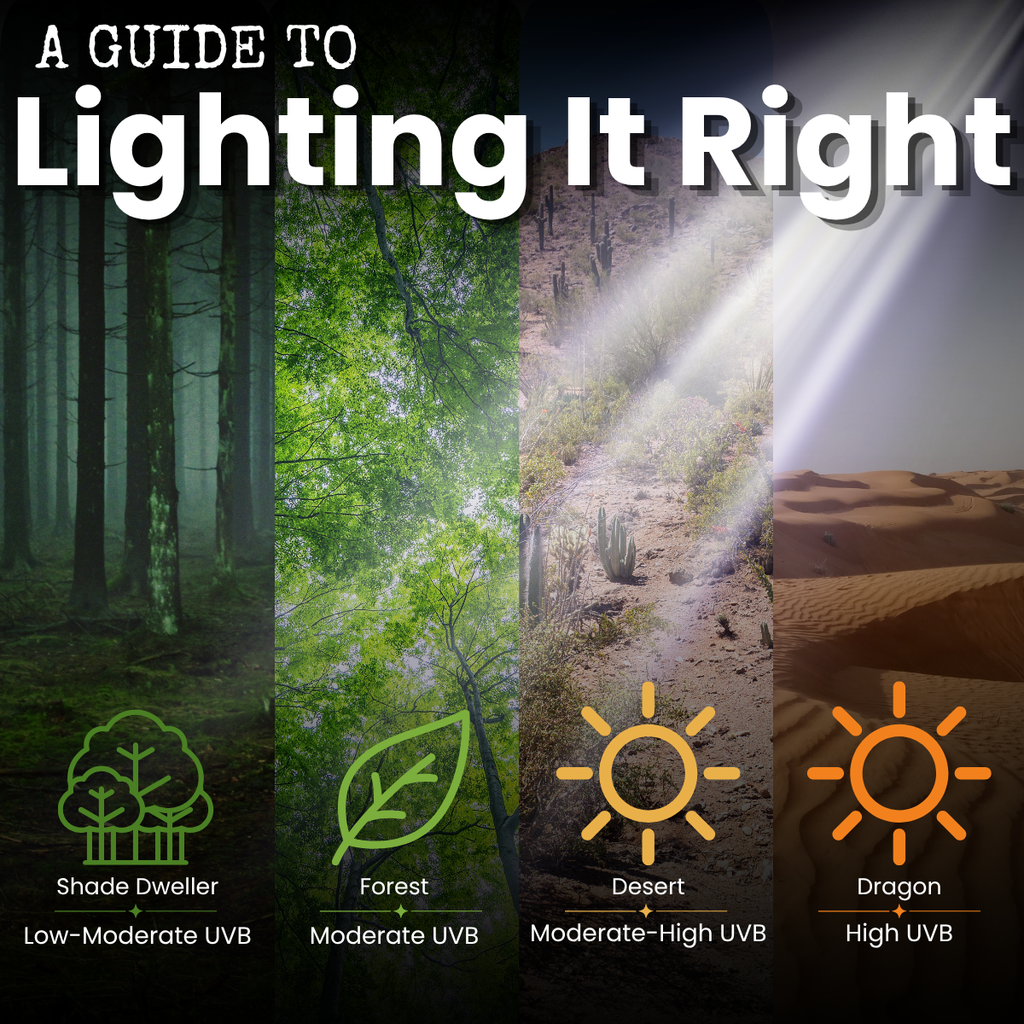
Some might say “Reptiles and amphibians don’t need special lighting, they’re just fine with a regular bulb.” If only it were that simple! Lighting is one of the most misunderstood parts of care for herps, and getting it wrong can mean a stressed, unhealthy pet. But don’t worry, choosing the right lighting doesn’t have to be a mystery.
Why Lighting Matters More Than You Think
Lighting isn’t just about making your enclosure look good. For reptiles and amphibians, it’s a lifeline. The right light helps them see, hunt, digest food, and even produce vital vitamins. Without proper lighting, even the best diet and enclosure can fall short.
UVB: The Secret Ingredient
UVB light is a game-changer for most animals. It helps them synthesize vitamin D3, which is crucial for absorbing calcium and keeping bones strong. Without UVB, reptiles can develop metabolic bone disease, a very painful and often fatal condition.
“An animal's health starts with the right light, think of it as their daily dose of sunshine.”
Not all reptiles or amphibians need the same amount of UVB. Desert dwellers like bearded dragons crave high levels, while forest species like crested geckos need much less. UVB bulbs have different percentages of output so always check what your specific species requires.
Basking Bulbs and Heat Lamps
Reptiles and amphibians are cold-blooded, or exothermic, so they rely on external heat to regulate their body temperature. Basking bulbs create a warm spot for your pet to soak up heat, just like they would in the wild. The trick is to create a temperature gradient, one side warm, the other cooler, so your animals can move around and self-regulate.
- Place the basking bulb at one end of the enclosure.
- Use a thermometer to monitor temps, guesswork leads to unhappy reptiles!
- Adjust bulb wattage or height to dial in the perfect basking spot.
Daylight and Nighttime Lighting
Reptiles and amphibians need a clear day-night cycle to stay healthy. Use a bright, full-spectrum bulb during the day to mimic natural sunlight. At night, turn off the lights, most reptiles need darkness to rest. Avoid colored bulbs at night, as they can disrupt sleep and stress your pet.
Choosing the Right Setup for Your Reptile
Every species is different, so there’s no one-size-fits-all solution. Here’s how to get it right:
- Research your reptile’s natural habitat and daily routine.
- Match UVB strength and basking temps to their needs.
- Replace UVB bulbs every 6–12 months, even if they still look bright, UVB output fades over time.
- Use timers to keep lighting consistent.
A Few Surprising Tips
- Mesh lids can block up to 50% of UVB, make sure to mount bulbs inside the enclosure if possible.
- Reflectors boost light output and efficiency.
- Some animals need less UVB but still benefit from a natural day-night cycle.
Customize for Success
No two enclosures are exactly alike. Experiment with bulb placement, wattage, and timers until you find what works best for your pet. Watch their behavior for basking, hiding, or avoiding certain areas as it can tell you a lot about their comfort.
Lighting isn’t just a box to check, it’s the foundation of a thriving habitat. When you get it right, you’ll see brighter colors, more natural behaviors, and a happier, healthier pet. Ready to light up their world? Your pets will thank you!


