

Ever looked into your animal's enclosure and wondered, “Why does it smell a little funky in here?” Or maybe you’ve heard the myth that bioactive setups are just for show and not actually practical. If you’ve ever struggled with keeping your animal’s home clean and healthy, you’re not alone. The secret weapon? A tiny, hardworking clean-up crew: isopods and springtails.
Why does this matter? Because a thriving bioactive enclosure isn’t just about looking good, it’s about creating a self-sustaining ecosystem that keeps your animals happy and you stress-free. Choosing the right clean-up crew can make all the difference between a smelly, high-maintenance tank and a vibrant, low-effort paradise.
Meet the Clean-Up Crew
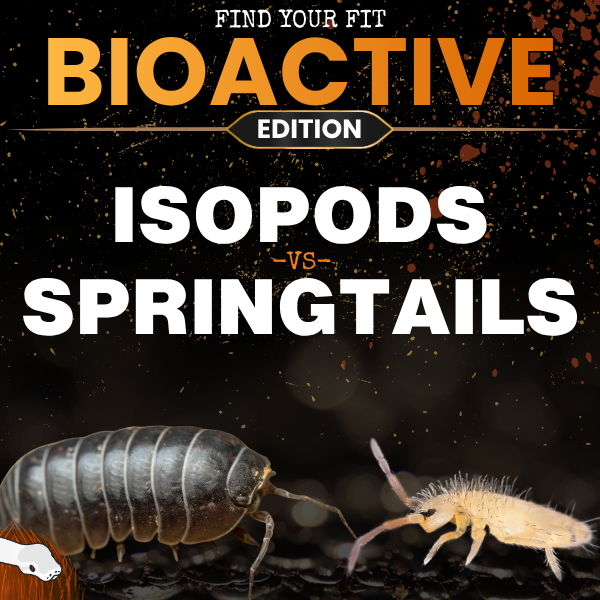
Isopods and springtails are the dynamic duo of the bioactive world. Isopods, sometimes called “roly-polies,” are little armored crustaceans that munch on decaying plant matter, leftover food, and even shed skin. Springtails are tiny, almost invisible insects that specialize in breaking down mold and fungus.
“Think of isopods as the janitors and springtails as the detail cleaners; together they keep your animal's home spotless.”
Isopods: The Heavy Lifters
Isopods come in all shapes and sizes, from chunky Porcellio laevis to the tiny Dwarf White. They’re great at breaking down larger waste and aerating the substrate. If you have a messy eater or a reptile that sheds often, isopods are your best friends. They also add a bit of movement and interest to the enclosure, which can be fun to watch.
- Best for: Larger enclosures, messy reptiles, and tanks with lots of leaf litter.
- Pro tip: Some isopods, like Dairy Cows, reproduce quickly and can become a snack for curious reptiles.
Springtails: The Mold Busters
Springtails are the unsung heroes of humidity. They thrive in moist environments and are experts at keeping mold and fungus in check. If you’ve ever battled white fuzz on your substrate, springtails are the answer. They’re so small that most reptiles ignore them, making them perfect for delicate species or dart frog setups.
- Best for: Humid enclosures, amphibians, and tanks prone to mold.
- Pro tip: Add springtails to your substrate mix before introducing your reptile for a head start on mold control.
Why Not Both?
Here’s the real magic: isopods and springtails work even better together. Isopods handle the big messes, while springtails polish off the leftovers. This tag-team approach keeps your enclosure cleaner, reduces odors, and helps maintain a balanced ecosystem.
- Combine both for maximum efficiency.
- Adjust the ratio based on your reptile’s needs and enclosure size.
- Monitor populations and supplement with leaf litter or calcium if needed.
Customizing for Your Animal
Every animal is different, and so is every enclosure. For arid setups, choose isopod species that tolerate drier conditions, like Porcellio pruinosus. For tropical tanks, go wild with springtails and moisture-loving isopods. Don’t be afraid to experiment—bioactive is all about finding what works for you and your pets.
Final Thoughts
A thriving bioactive enclosure isn’t just a trend, it’s a game-changer for your animals and amphibians. With isopods and springtails on your team, you’ll spend less time cleaning and more time enjoying your pets. Plus, they will benefit from a cleaner, more natural environment.
Ready to level up your pets’s home? Give your clean-up crew a promotion and watch your bioactive setup come to life.