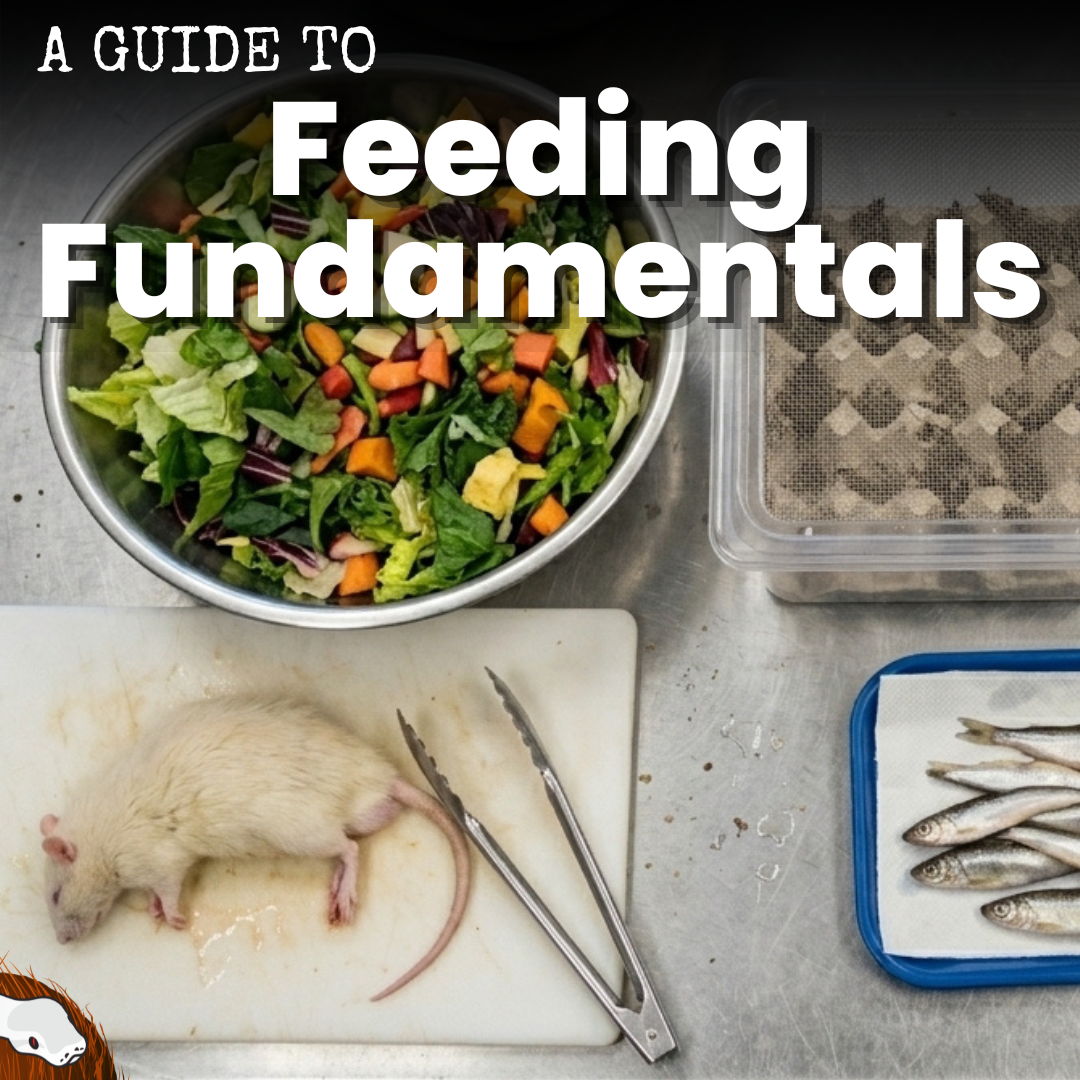

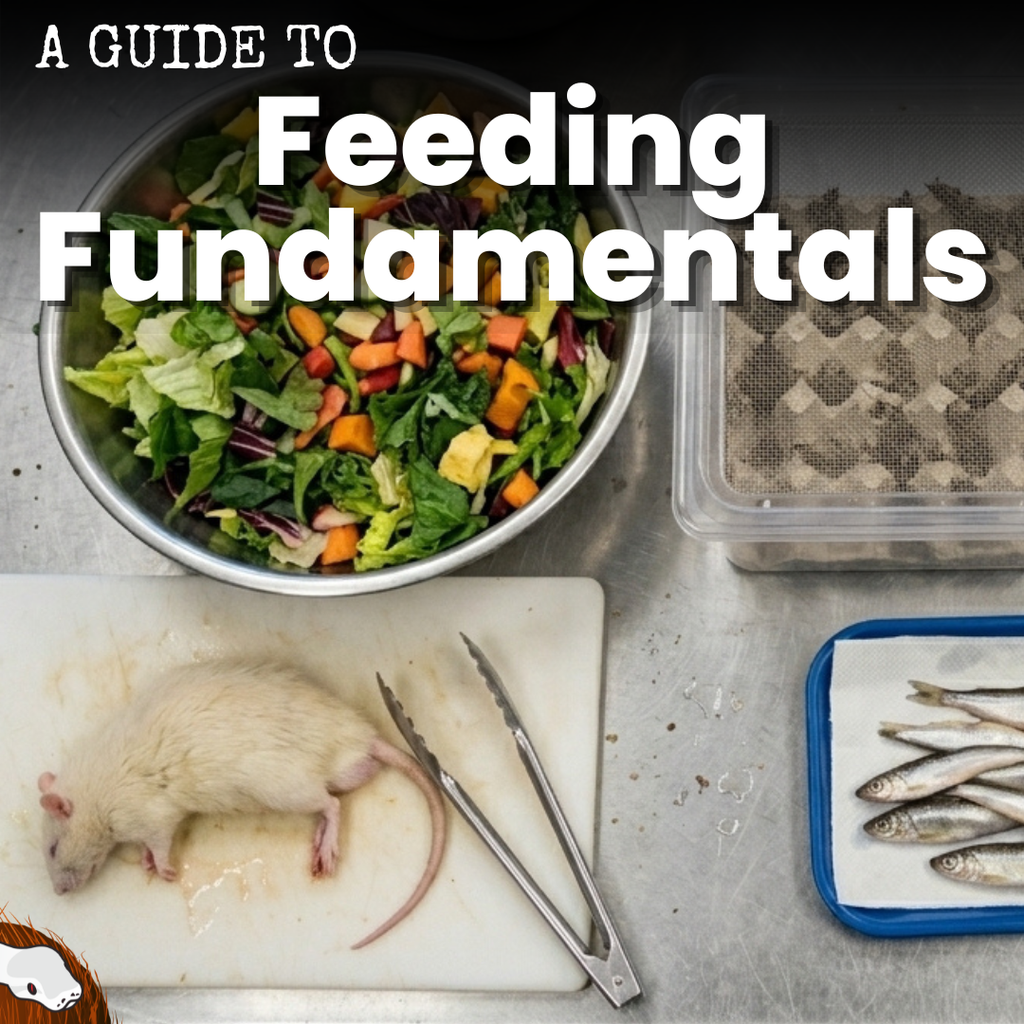
Ever heard someone say, “Reptiles don't need to eat anything fancy, right?” If only it were that simple! Feeding herps (that’s reptiles and amphibians) under human care is a wild world of its own, full of myths, surprises, and a lot more variety than most people expect. Whether you’re a new keeper or a seasoned herp enthusiast, dialing in your pet’s diet is one of the most rewarding, and sometimes puzzling parts of the hobby.
Why Feeding Matters More Than You Think
A healthy diet is the backbone of a thriving reptile and amphibian. The right food fuels growth, boosts immunity, and even brings out those jaw-dropping colors we all love. But get it wrong, and you might see sluggish behavior, poor sheds, or worse, a visit to the vet. Feeding isn’t just about filling bellies, it’s about unlocking your herp’s full potential.
One Size Does NotFit All
Forget the “one food fits all” approach. Each species has its own unique needs, and then dig deeper and each individual of that species may also have different needs. Leopard geckos crave insects, while green iguanas are all about leafy greens. Some snakes eat rodents, but others might prefer fish or even eggs. The trick is to research your specific species and mimic their natural menu as closely as possible while being responsible enough to make sure they don't get overweight as some food may be fattier and higher in calories than others.
“A varied, species-appropriate diet is the secret sauce for happy, healthy herps.”
The Power of Variety
Imagine eating the same meal everyday, boring, right? Reptiles and even amphibians feel the same way. Mixing up their diet keeps them interested and ensures they get a full spectrum of nutrients. Try rotating between different feeder insects, greens, or protein sources. For insectivores, gut-loading bugs with nutritious veggies before feeding is a game-changer.
Practical Feeding Tips
- Dust insects with calcium and vitamin supplements to prevent deficiencies.
- Offer fresh, pesticide-free greens and veggies for herbivores.
- Feed at the right time of day, many reptiles are more active and hungry at dawn or dusk.
- Remove uneaten food to keep the enclosure clean and safe.
- Use safe thawing practices when feeding items such as rats and chicks
- Don’t forget the protein for omnivorous species such as blue tongue skinks or box turtles
Customize for Your Herp and Setup
No two enclosures, or animals, are exactly alike. Some lizards love hunting live prey, while others prefer pre-killed meals. Amphibians might need food presented in slow feeders to get them engaged. Watch your pet’s behavior and adjust your approach. If your snake refuses food, try offering it at a different time or switching prey types, some may even like them a little more warmed up than others.
Surprising Details That Make a Difference
Did you know that some animals can recognize their favorite foods and even show excitement at feeding time? Or that overfeeding is a common problem, leading to obesity and health issues? Paying attention to portion sizes and feeding frequency is just as important as what you feed. Using a simple tracker of feedings, refusals, or even to keep track of days to feed can help you monitor. Examples include:
Feeding: M W F
-Monday: Crickets- Amount consumed: 8/10
-Wednesday: Superworms-Amount consumed 5/5
-Friday: Crickets- Amount consumed: 4/10
Even something as simple as this can be a wealth of information.
Conclusion
Feeding herps under human care is part science, part art, and all about connection. When you take the time to understand your pets needs and offer a varied, nutritious diet, you’ll see them thrive in ways that are truly rewarding.
What’s the most surprising thing you’ve learned about your herp’s eating habits? Give your friends something new to try this week, you might just discover their new favorite snack!