Natural History
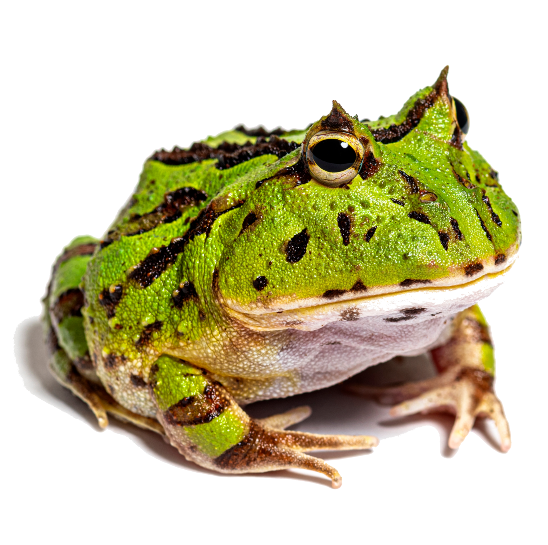
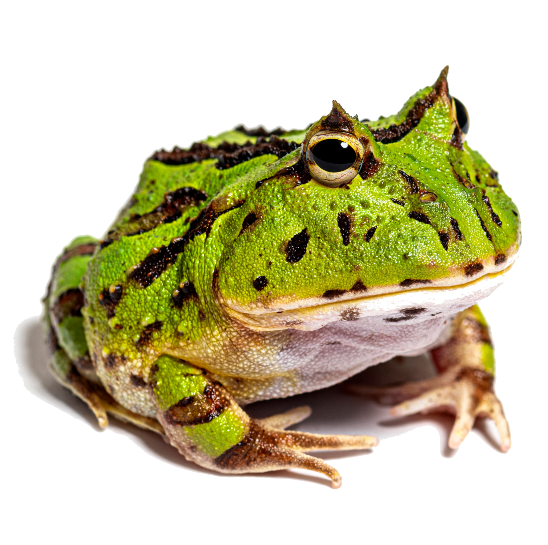
Pacman Frogs are named for their resemblance to the iconic video game character due to their large, round mouths and voracious appetites. Native to South American rainforests, these frogs are known for their striking appearance, with vibrant colors ranging from green and yellow to brown and red, often with intricate patterns. They have a unique, squat body shape and can grow up to seven inches in diameter, making them one of the larger frog species. In managed care, with proper husbandry, they commonly live 10 to 15 years, though some individuals have surpassed this range.
Ecologically, Pacman Frogs occupy the role of mid-level predator within their native grassland and forest-edge habitats of South America. As opportunistic carnivores, they help regulate populations of insects, small vertebrates, and other amphibians. In doing so, they contribute to maintaining ecological balance and preventing overpopulation of certain prey species. At the same time, they serve as prey for larger predators such as snakes, birds, and small carnivorous mammals. Their ability to burrow and remain concealed reduces their vulnerability, while their rapid growth and high reproductive output help sustain population numbers despite predation pressure. Adaptations such as a wide gape, powerful jaw muscles, water-retaining skin, and the capacity to estivate allow them to survive in environments that fluctuate between heavy seasonal rainfall and periods of relative dryness. Understanding this life cycle and ecological role provides essential context for recreating appropriate conditions in managed care, as their physical and behavioral traits are deeply shaped by a life spent as a solitary, ground-dwelling ambush predator in a dynamic environment.
Conservation Status
The Pacman Frog is currently listed under the "Least Concern" category according to the IUCN Red List, with the assessment conducted recently in the year 2020. The population trend for this species is recorded as "Decreasing." Being classified as Least Concern implies that the species is widespread and abundant, facing no immediate threat of extinction across its range. The decreasing population trend indicates that there may be significant declines currently affecting the species as a whole, suggesting that the overall species health is being affected. Pacman Frogs are known to inhabit a broad geographic distribution across parts of South America, thriving in both natural and disturbed habitats.
Despite its status, the Pacman Frog does face several threats that could impact its populations if they were to intensify. Habitat destruction is a primary concern, especially due to deforestation and land conversion for agriculture. These practices can lead to the degradation of the frog's natural habitat, affecting their breeding and feeding grounds. Additionally, climate change poses a significant long-term threat, potentially altering the ecosystems that support these frogs. Other threats include the introduction of invasive species that may outcompete native species for resources, and disease outbreaks that could decimate populations if they become widespread. While not currently a major issue for this species, the illegal wildlife trade can also pose a risk if demand for these frogs as pets increases.
Conservation efforts for the Pacman Frog are currently limited due to its Least Concern status. However, various indirect conservation measures benefit this species. Wildlife reserves and protected areas help protect their habitat from further destruction. Habitat restoration projects can also improve ecosystem health by maintaining or reintroducing native vegetation, which supports the frogs' ecological requirements. Additionally, protective laws that regulate land use and deforestation are crucial in ensuring their natural habitats remain secure.
Breeding programs, although not critical for the survival of Pacman Frogs in the wild, do exist and play a role in preserving the genetic diversity of this species. These programs can contribute to scientific research and education, increasing public awareness about the species and its ecological importance. They also provide an opportunity to establish healthy captive populations that could be used for future reintroduction efforts if wild populations were to decline significantly. By understanding the threats and conservation measures in place, reptile keepers can better appreciate the natural history and ecological role of the Pacman Frog while ensuring that they contribute positively to their conservation in human care and beyond.
Native Range
The Pacman Frog is native to central and southeastern South America, with a distribution that includes eastern Bolivia, Paraguay, southern Brazil, Uruguay, and much of northern and central Argentina. Its range is considered broad within this region, particularly across the Río de la Plata basin and adjacent subtropical lowlands. While populations are widespread, they are closely tied to specific climatic and soil conditions that support their fossorial and ambush-based lifestyle.
At the macrohabitat level, this species occupies subtropical and temperate grasslands, savannas, open woodlands, forest edges, and seasonally flooded pampas. These environments are characterized by relatively flat terrain, fertile soils, and a mosaic of grasses, shrubs, and scattered trees. Many populations occur in transitional zones between grassland and woodland, where both ground cover and open hunting space are available. The species is especially common in humid pampas and Chaco regions where seasonal rainfall patterns create temporary wetlands and saturated soils.
At the microhabitat level, Pacman Frogs are highly specialized sit-and-wait predators that spend the majority of their lives partially buried in soft soil, leaf litter, or loose substrate. They prefer areas with deep, moisture-retentive soils that allow burrowing, such as loamy or silty ground near ponds, marsh edges, drainage ditches, and low-lying depressions. Individuals often conceal themselves beneath leaf litter, among grass roots, or beside fallen logs. Their cryptic coloration provides camouflage against the earthy browns and greens of these environments. Access to shallow, temporary bodies of water is essential during the breeding season, as reproduction occurs in rain-filled pools and ephemeral ponds.
Climatically, the species inhabits regions with moderate to high humidity and marked seasonal variation. Average daytime temperatures during the active season commonly range from 75℉ to 90℉, with nighttime temperatures dropping into the mid-60s to low 70s. During peak summer heat waves, temperatures may exceed 95℉, though frogs typically avoid extreme heat by burrowing deeper into damp soil. Winters are cooler and drier, with temperatures sometimes falling into the 40s in the southern portion of their range. In response to prolonged dry or cool periods, Pacman Frogs may enter a state of dormancy similar to estivation, burrowing underground and encasing themselves in a cocoon formed from shed skin layers to reduce moisture loss.
Annual precipitation within their range generally falls between 30 and 60 inches, depending on locality. Rainfall is often concentrated in warmer months, creating seasonal pools necessary for breeding. High ambient humidity during the wet season supports active foraging and rapid growth. During dry periods, soil moisture becomes the critical survival factor. The frog’s physiology is adapted to conserve water, but it remains dependent on substrates that retain sufficient moisture to prevent dehydration.
In terms of elevation, Pacman Frogs are primarily lowland animals, most commonly found from near sea level up to approximately 1,500 feet. They are rarely encountered at high altitudes, as cooler temperatures and reduced humidity limit their activity and reproductive success. Lowland plains with rich alluvial soils are particularly favorable.
Several key environmental factors are essential for their survival. First, access to soft, penetrable substrate is critical for burrowing and moisture regulation. Second, the presence of temporary or seasonal freshwater bodies is necessary for breeding. Third, moderate vegetation cover such as grasses, shrubs, or forest edge growth, provides both camouflage and a stable microclimate. Finally, stable humidity and warm seasonal temperatures drive feeding, growth, and reproduction. Without sufficient soil moisture and seasonal rainfall, populations cannot persist long-term.
Behavior
The Pacman Frog is a primarily nocturnal and highly sedentary ambush predator native to humid subtropical and tropical regions of South America. In the wild, it spends the majority of its life partially buried in moist soil or leaf litter, remaining motionless for extended periods while waiting for prey to approach. Activity levels increase significantly during periods of rainfall and elevated humidity, which coincide with peak feeding opportunities and the breeding season. During dry spells or cooler seasonal shifts, individuals may undergo a period of aestivation. In this state, the frog burrows deeper into the substrate and encases itself in a protective cocoon formed from layers of shed skin to reduce water loss. Metabolic activity decreases during this period, and feeding ceases until environmental moisture levels rise again.
This species is strictly solitary outside of breeding events. Adults are highly territorial and intolerant of conspecifics, particularly in confined spaces. In the wild, individuals maintain physical distance from one another except during the brief breeding season, when heavy rains trigger explosive breeding aggregations. Males vocalize loudly from concealed positions in shallow water to attract females. Vocalizations are species-specific and consist of repeated low-pitched calls. There is no indication of dominance hierarchies beyond male competition for calling sites. Physical combat is rare but can occur if individuals come into close contact. After mating and egg deposition in temporary pools or flooded grasslands, there is no parental care. Eggs and tadpoles develop independently, and cannibalism among tadpoles is common, reflecting an inherently opportunistic and aggressive feeding strategy from an early life stage.
The Pacman Frog is highly responsive to environmental stimuli. As an ectotherm, its behavior is strongly influenced by ambient temperature. When temperatures fall below its optimal range of approximately 75℉ to 85℉, the frog becomes lethargic and less responsive to food. Prolonged exposure to temperatures below 70℉ may suppress appetite and immune function. Conversely, excessive heat above 88℉ can cause stress, dehydration, and escape attempts. Humidity levels directly affect hydration and skin health; individuals seek out moist microhabitats and will burrow more deeply when surface conditions become dry. Light levels also influence behavior. Although largely nocturnal, it may become active during overcast or rainy daytime conditions. In managed care, many individuals adapt to feeding during daylight hours due to learned associations with keeper activity.
Prey detection relies on a combination of visual sensitivity to movement and tactile perception. These frogs possess relatively large, forward-facing eyes that provide binocular vision and depth perception, allowing accurate strike distances. They remain motionless until prey moves within range, then lunge forward rapidly with a powerful jaw snap. The mouth is proportionally massive relative to body size, enabling consumption of prey items nearly half their own body length. They do not use tongues for projection feeding but instead, they rely on a swift forward thrust of the entire body. Chemosensory cues are also important, particularly in detecting the presence of other frogs or potential mates during the breeding season.
Defensive behaviors reflect their sedentary lifestyle. When threatened, a Pacman Frog will inflate its body to appear larger and may produce a short distress call or scream. It can deliver a strong bite and will hold tenaciously if provoked. The jaws are equipped with small, odontoid projections capable of causing minor injury. Camouflage is a primary defense strategy where the frog’s coloration often mimics fallen leaves or mottled forest floor debris. When buried with only the eyes exposed, it becomes extremely difficult to detect. Unlike more mobile amphibians, it does not rely on rapid escape but rather on concealment and intimidation.
Thermoregulatory behavior primarily involves microhabitat selection rather than active basking. In natural settings, individuals shift between shaded and slightly more open areas to regulate body temperature. They may press their bodies against warm, moist substrate to absorb residual heat or retreat deeper into cooler soil layers during hot periods. Remaining partially buried also reduces evaporative water loss and stabilizes body temperature.
In human care, behavioral patterns are generally simplified due to controlled environmental conditions and limited space. Many individuals become predictably responsive to routine feeding schedules and may lunge at enclosure doors when opened. This conditioned feeding response can be mistaken for aggression but reflects their instinctual feeding strategy. Unlike in the wild, where feeding frequency fluctuates with prey availability, individuals typically receive regular meals, which may lead to overfeeding if not carefully managed. Reduced opportunities for burrowing or environmental variation can result in prolonged inactivity, though this species is naturally sedentary.
Aggression toward conspecifics is heightened in a managed setting because spatial separation is constrained. Cohabitation frequently results in cannibalism. Stress responses include persistent attempts to bury, refusal to eat, excessive inflation, or spending prolonged time in the water dish if conditions are too dry. Proper substrate depth, consistent humidity around 60% to 80%, stable temperatures within the optimal range, and minimal handling are essential to reduce stress. Pacman Frogs do not tolerate frequent handling well; they lack social bonding behaviors and may respond defensively.
Husbandry Requirements
Enclosure Design
Pacman Frogs are terrestrial ambush predators that spend the majority of their time partially buried in substrate. Their enclosure should prioritize floor space over height and provide a stable, humid microclimate. While juveniles can be started in a 10-gallon enclosure (approximately 20 inches long by 10 inches wide), adults require a minimum of a 20-gallon long enclosure (approximately 30 inches long by 12 inches wide). Larger enclosures, such as a 30-gallon breeder footprint, are appropriate and can help improve environmental stability, especially for large females, which commonly exceed five inches in body diameter.
Glass terrariums with front-opening doors are preferred because they offer good visibility, ease of access, and compatibility with overhead heating and lighting. Ventilation should be moderate as excessive airflow will dry the enclosure, while stagnant air can promote mold growth. Screen tops should be partially covered with acrylic or foil-backed insulation to help retain humidity while preserving airflow. Plastic enclosures designed for reptiles can also be used if they allow for proper heating and lighting installation.
The layout should replicate a forest floor environment. Pacman Frogs do not climb, so vertical structures are unnecessary. Instead, provide a deep, moisture-retentive substrate layer to allow natural burrowing behavior. At least two hides should be available, one on the warm side and one on the cooler side of the enclosure. These can be cork bark flats, half logs, or commercially available reptile caves. Dense artificial or live plants help increase humidity and provide additional concealment, reducing stress. A shallow water dish large enough for the frog to sit in comfortably should be placed toward the cooler side to prevent overheating.
Security is essential, as Pacman Frogs are strong and can push against unsecured lids. Ensure the enclosure has a tightly fitting, locking lid. All openings for cords or tubing must be sealed adequately, and doors must latch securely. Even though these frogs are not agile climbers, they can lunge powerfully and shift lightweight lids if improperly secured.
Lighting and Heating
Pacman Frogs require a controlled temperature gradient within the enclosure. The warm side should range from 82℉ to 85℉ during the day, while the cooler side should remain between 75℉ and 78℉. Nighttime temperatures can safely drop to 72℉ to 75℉ but should not fall below 70℉ for extended periods. Heating is best provided using an overhead ceramic heat emitter or low-wattage heat lamp positioned above one side of the enclosure. All heating elements must be regulated by a reliable thermostat to prevent dangerous overheating. Heat rocks should never be used, as they pose a high risk of thermal burns.
Although Pacman Frogs are primarily nocturnal and ambush predators, low-level UVB exposure has been shown to support proper calcium metabolism and overall health. A 6% to 7% UVB linear fluorescent bulb is appropriate. The bulb should span roughly half the enclosure length and be mounted above a mesh screen top. The basking or resting area should be positioned 8 to 12 inches below the UVB source, depending on manufacturer guidelines. UVB bulbs should be replaced every 6 to 12 months according to product specifications, as UVB output degrades over time even if visible light persists.
A 12-hour light and 12-hour dark photoperiod is suitable for most of the year. During winter months, some keepers reduce daylight to 10 hours to simulate seasonal variation, though this is not strictly necessary unless breeding is intended. Consistent light cycles help regulate feeding behavior, hormonal rhythms, and immune function. Avoid bright, intense lighting, as Pacman Frogs prefer dim conditions and may become stressed under excessive illumination.
Substrate and Enrichment
Pacman Frogs require a deep, soft substrate that retains moisture and permits burrowing. A substrate depth of at least three to four inches for juveniles and four to six inches for adults is recommended. ReptiEarth is an excellent primary substrate due to its moisture retention and naturalistic texture. It should be kept damp but not saturated. TropicalBase is also a great substrate for this species as it holds moisture and humidity well and supports bioactive enclosures.
Substrates such as gravel, bark chips, sand, or reptile carpet must not be used. Loose, indigestible particles increase the risk of impaction if accidentally ingested during feeding. While Pacman Frogs often strike with precision, they can ingest small amounts of substrate attached to prey.
Enrichment for Pacman Frogs centers on promoting natural burrowing and ambush behaviors rather than climbing or exploration. Varying the depth and moisture gradient of the substrate allows the frog to self-regulate hydration and temperature by burrowing. Adding leaf litter on top of the substrate mimics their native forest floor environment and provides additional cover. Rearranging leaf litter and hides periodically introduces subtle environmental changes that can stimulate natural investigative behavior.
Providing visual barriers through plants and cork flats helps reduce stress. While Pacman Frogs are sedentary, environmental complexity contributes to psychological well-being and encourages natural postures and feeding responses. Avoid excessive handling, as they stress easily and have sensitive skin.
Enrichment can come in many forms and is for the stimulation of your animal. The five types of enrichment you can offer are food related, sensory, physical habitat, cognitive, and social. These categories have a vast variety of options to choose from that are appropriate for the species being enriched.
Humidity and Hydration
Pacman Frogs require consistently high humidity levels between 60% and 80%. Short fluctuations slightly above or below this range are tolerated, but prolonged dry conditions can lead to dehydration, poor shedding, and respiratory stress. Humidity should be monitored continuously using a calibrated digital hygrometer placed near substrate level.
Maintaining proper humidity can be achieved through daily misting with dechlorinated water, especially in enclosures with screen tops. The substrate should remain moist to the touch but never waterlogged. Squeezing a handful should produce no dripping water. Partially covering the screen lid and using moisture-retentive substrate mixtures are essential strategies. In particularly dry climates, a cool-mist humidifier directed near (but not directly into) ventilation areas can help stabilize humidity.
A shallow, sturdy water dish filled with dechlorinated water must always be available. The dish should be wide enough for the frog to sit in fully but shallow enough to prevent drowning. Water must be changed daily, as Pacman Frogs frequently defecate in their soaking bowls. These frogs absorb water through a specialized pelvic patch on their underside, making clean water essential for hydration and electrolyte balance.
Regular observation of hydration status is important. A well-hydrated Pacman Frog appears full-bodied with clear eyes and smooth skin. Wrinkled skin, sunken eyes, or lethargy may indicate dehydration or environmental imbalance. By maintaining stable humidity, providing constant access to clean water, and ensuring an appropriate substrate moisture gradient, keepers can successfully replicate the humid forest floor conditions essential to this species’ long-term health.
Diet & Supplementation
The Pacman Frog, known for its voracious appetite, is a captivating species when it comes to its dietary habits. Naturally, Pacman Frogs are carnivorous, primarily functioning as opportunistic ambush predators. In their native habitats, these frogs consume a wide variety of prey, ranging from insects like crickets and beetles to larger vertebrates, such as small rodents, frogs, and even birds. Their broad and powerful jaws allow them to consume prey nearly as large as themselves, relying heavily on their sit-and-wait strategy to capture passing animals. This method suits them well, as they have a sedentary lifestyle, using their excellent camouflage and patience to surprise their prey.
Pacman Frogs exhibit several interesting hunting strategies that enhance their predatory efficiency. They possess a keen sense of smell and rely significantly on chemical cues to detect prey in their immediate environment. Their eyesight also plays a crucial role as they visually lock onto target movements before launching a swift and decisive strike. While the Pacman Frog does not use venom or constriction, its wide gape and sticky tongue are highly effective for quickly securing and ingesting prey. Unlike active foragers, these frogs conserve energy by remaining motionless, making them effective predators in the wild.
Seasonal and age-related dietary shifts do occur in Pacman Frogs, influenced by both their growth stage and the abundance of prey. Juveniles primarily consume smaller insects and invertebrates, requiring daily feedings to support their rapid growth and higher metabolic needs. As they mature, adult Pacman Frogs transition to larger prey items and their feeding frequency decreases, often consuming meals only two to three times a week. Additionally, environmental factors such as temperature and humidity can impact their feeding behavior, with lower activity levels observed during cooler periods.
When transitioning to human care, providing a diet that closely mimics their natural feeding habits is crucial for the Pacman Frog's health. Diets often consist of appropriately-sized crickets, roaches, and occasional pinkie mice or small frogs for enrichment and variety. It is vital to supplement these prey items with calcium and vitamins to prevent common deficiencies seen in captive amphibians, such as metabolic bone disease. One challenge is ensuring that prey items do not exceed the width of the frog's head to prevent choking hazards or impaction.
Common feeding issues can include food refusal, obesity from overfeeding, and malnutrition due to insufficient dietary diversity or improper supplementation. To mitigate these issues, offering a variety of prey types can encourage natural feeding behaviors and prevent boredom. Establishing a regular feeding schedule that reflects their natural feeding frequency helps maintain optimal body condition. Environmental enrichment, such as varying the presentation of prey or adding live plants and hides within the enclosure, can also stimulate their innate hunting instincts and promote overall well-being.
Reproduction
Pacman Frogs reach reproductive maturity relatively quickly compared to many other amphibians. Males typically become sexually mature between six and eight months of age, while females generally mature between 10 and 14 months, depending on growth rate and nutritional status. Females grow significantly larger than males and are more robust in body shape, displaying clear sexual dimorphism. Adult females commonly measure four to seven inches in length, while males usually remain between two and a half and four inches. Males can also be distinguished during the breeding season by the development of darkened nuptial pads on their forelimbs, which assist in gripping females during amplexus. Additionally, males produce vocalizations, while females do not call.
Breeding behavior is strongly influenced by seasonal environmental cues. In the wild, reproduction coincides with the onset of the rainy season, when temporary pools form and humidity rises dramatically. Successful breeding usually requires simulating this seasonal transition. A cooling and drying period of 6 to 10 weeks often precedes breeding attempts. During this phase, daytime temperatures are gradually reduced to approximately 72℉ to 75℉, nighttime temperatures may drop to 68℉ to 70℉, and overall humidity is allowed to decrease slightly while still remaining safe. Feeding may be moderately reduced, but both animals must remain in solid body condition. After this rest period, environmental conditions are gradually shifted to simulate the rainy season. Daytime temperatures are increased to 78℉ to 82℉, humidity is elevated to 80% to 100%, and frequent misting or simulated rainfall is introduced. Some breeders increase photoperiod by one to two hours daily to mimic seasonal light expansion, though humidity and water availability appear to be more critical triggers than light alone.
Pacman Frogs are oviparous and rely heavily on abundant water for successful reproduction. They do not breed effectively in standard terrestrial enclosures. Instead, a separate breeding enclosure should be prepared that prioritizes shallow water access. A large enclosure measuring at least two feet by one and a half feet with a substantial shallow water area works well for one pair. Water depth should allow the frogs to sit comfortably with their heads above the surface, typically two to four inches deep. Live or artificial plants may provide security, but open space for movement is essential. Clean, dechlorinated water with gentle filtration or frequent partial changes is critical, as poor water quality can quickly inhibit breeding behavior.
Courtship is initiated by the male’s advertisement calls, which are low-pitched, repetitive croaks produced primarily at night. Calling intensity often increases after heavy misting or simulated rainfall events. Females receptive to breeding will approach calling males. Amplexus is axillary, meaning the male grasps the female just behind her forelimbs using his nuptial pads. This grip can last from several hours to more than a day. Successful mating typically requires that the pair be undisturbed during this period. It is advisable to introduce the male into the female’s enclosure rather than the reverse, as females are highly territorial and aggressive feeders. Close supervision is essential because cannibalism is possible, especially if there is a significant size discrepancy or if the male is stressed and moving erratically.
Social dynamics are strictly pair-based. Pacman Frogs are solitary outside of breeding events and should never be maintained communally long-term. Only one male should be paired with one female during breeding attempts. Multiple males in a confined space may call over one another and create stress, and direct contact can result in fighting. If multiple breeding attempts are planned within a season, males should be rotated individually rather than housed together.
Several challenges may arise during breeding. One of the most common issues is obesity in females, which can impair egg development and oviposition. Females should be well-fed but not excessively fat before cooling begins. A varied diet of appropriately sized insects and occasional vertebrate prey supports proper follicular development. Another frequent problem is failure of males to call. This is usually associated with insufficient humidity, inadequate seasonal cycling, or temperatures that are too cool during the simulated rainy season. Increasing misting frequency, slightly raising nighttime temperatures to 72℉ to 75℉, and ensuring high ambient humidity often stimulates vocalization.
Amplexus failure can occur if the male is too small to maintain a secure grip on a large female. Selecting a robust male with visible nuptial pads improves success. Stress is another significant inhibitor. Excessive enclosure traffic, handling, or vibrations can disrupt courtship. Breeding enclosures should be placed in a quiet area with minimal disturbance. Water quality is equally critical, elevated ammonia or nitrite levels may cause frogs to abandon breeding attempts or become lethargic. Frequent water changes and careful monitoring are essential throughout the breeding process.
Finally, compatibility issues sometimes arise when one animal is unreceptive. A female that repeatedly avoids or buries herself in response to a calling male may not be physiologically ready to breed. In such cases, extending the simulated rainy period or allowing additional conditioning time before reintroduction can improve outcomes. Patience, careful environmental manipulation, and close observation of behavioral cues are the keys to consistent reproductive success with this species.
Incubation & Neonate Care
The Pacman Frog is an oviparous amphibian, meaning it reproduces by laying eggs rather than giving birth to live young. Successful reproduction typically follows a simulated cooling and drying period that mimics seasonal changes in its native range, followed by a gradual return to warm temperatures and heavy misting to simulate seasonal rains. Females are generally larger and more robust than males, and breeding pairs should only be introduced when both individuals are in optimal body condition. During amplexus, the male grasps the female from above, stimulating oviposition as she releases eggs into shallow water.
After spawning, the female may deposit several hundred to over one thousand eggs in a large, gelatinous mass. Fertilization occurs externally. The eggs are typically attached to aquatic vegetation or rest along the bottom of a shallow breeding container. Eggs should be left undisturbed in clean, dechlorinated water at a stable temperature between 75℉ and 82℉. Temperatures below 72℉ can significantly delay development and increase the risk of fungal growth, while temperatures above 84℉ may cause deformities or high mortality. Gentle aeration using an air stone is recommended to maintain oxygen levels and water circulation without creating strong currents.
Relative humidity is not directly relevant to the egg mass since development takes place in water however, maintaining good water quality is critical. Ammonia and nitrite must remain at zero, and partial water changes using aged, temperature-matched water should be performed carefully to avoid disturbing the egg mass. Depending on temperature, embryonic development typically takes two to four days. Eggs that appear opaque white or fuzzy are infertile or infected and should be carefully removed to prevent the spread of fungus to viable embryos.
Pacman Frogs do not exhibit parental care. In fact, adults may consume eggs or tadpoles if given access. For this reason, breeders should remove the adults immediately after spawning. Hatching occurs rapidly, with tadpoles emerging as free-swimming larvae. Newly hatched tadpoles initially rely on their yolk reserves for nourishment for the first day or two before requiring external food sources.
The larval stage is aquatic and highly carnivorous compared to many other frog species. Tadpoles should be housed in shallow water enclosures with ample horizontal swimming space, gentle filtration, and strict attention to water quality. Overcrowding must be avoided, as cannibalism is common. A stocking density of no more than 20 similarly sized tadpoles per 10 gallons of water is recommended, with frequent size grading to prevent larger individuals from preying on smaller siblings. Water temperatures should remain between 75℉ and 80℉ for optimal growth. Cooler water slows development, while excessively warm water reduces dissolved oxygen and increases mortality.
Tadpoles accept high-protein foods such as finely crushed commercial carnivorous fish pellets, freshly hatched brine shrimp, blackworms, or finely chopped earthworms. Feeding should occur once or twice daily in small amounts to prevent fouling the water. As metamorphosis approaches, typically three to eight weeks after hatching depending on temperature and feeding regime, hind limbs appear first, followed by forelimbs. During this transition, individuals should be provided with gradually sloping surfaces or floating platforms that allow easy access to land. Water depth should be reduced to prevent drowning, as lung development replaces gill function.
Metamorphosis is a critical and vulnerable period marked by resorption of the tail and dramatic physiological changes. During this time, froglets may temporarily stop feeding. Once the tail is almost completely absorbed, they should be transferred to terrestrial enclosures with a secure lid, as they are capable of short hops. The enclosure should include a moisture-retentive substrate such as coconut fiber kept damp but not waterlogged, hiding areas, and a shallow water dish with dechlorinated water. Ambient temperatures for froglets should remain between 75℉ and 82℉, with nighttime drops no lower than 72℉. Relative humidity should be maintained between 60% and 80% to prevent dehydration, as juvenile frogs have delicate, highly permeable skin.
Newly metamorphosed froglets require small, appropriately sized prey items. Their first meals typically consist of pinhead crickets, small flightless fruit flies, or very small earthworm segments. Prey size should not exceed the width between the froglet’s eyes to prevent impaction. Feeding should occur daily due to their rapid growth rate. All feeder insects must be gut-loaded and lightly dusted with a balanced calcium and vitamin supplement formulated for amphibians several times per week to prevent metabolic bone disease and other nutritional deficiencies.
Neonates must be housed individually or in carefully monitored small groups of equal size, as cannibalism remains a significant risk even after metamorphosis. Individual housing in small enclosures of approximately 5 to 10 gallons is ideal for tracking feeding and growth. Handling should be minimized, especially during early development, to reduce stress and prevent damage to their sensitive skin. If handling is necessary, clean, wet hands free of soap or chemical residues must be used.
Common health concerns during early development include fungal infections of eggs, poor water quality leading to bacterial disease in tadpoles, limb deformities associated with suboptimal temperature or nutrition, failure to thrive from inadequate protein intake, and dehydration in newly morphed froglets. Close observation, meticulous hygiene, and precise environmental management are essential to achieving high survival rates from egg to established juvenile.
Conclusion
In conclusion, the successful keeping and breeding of Pacman Frogs requires a deep understanding of their natural history and specific husbandry needs. From their early life stages as aquatic tadpoles, through rapid metamorphosis, to their primary development as terrestrial ambush predators, Pacman Frogs demonstrate a range of ecological adaptations and behaviors that must be considered when designing their captive environment. Maintaining appropriate humidity, temperature, and substrate conditions, as well as providing a varied, nutritionally balanced diet, are critical factors in supporting their health and natural behaviors.
Through thoughtful enclosure design, environmental manipulation, and careful attention to dietary and hydration needs, keepers can create a captive habitat that closely mirrors the Pacman Frog's natural environment, promoting longevity and well-being. By fostering a commitment to informed and responsible husbandry, Pacman Frog keepers can contribute positively to their conservation and enjoy the unique aspects of these fascinating amphibians.