Natural History
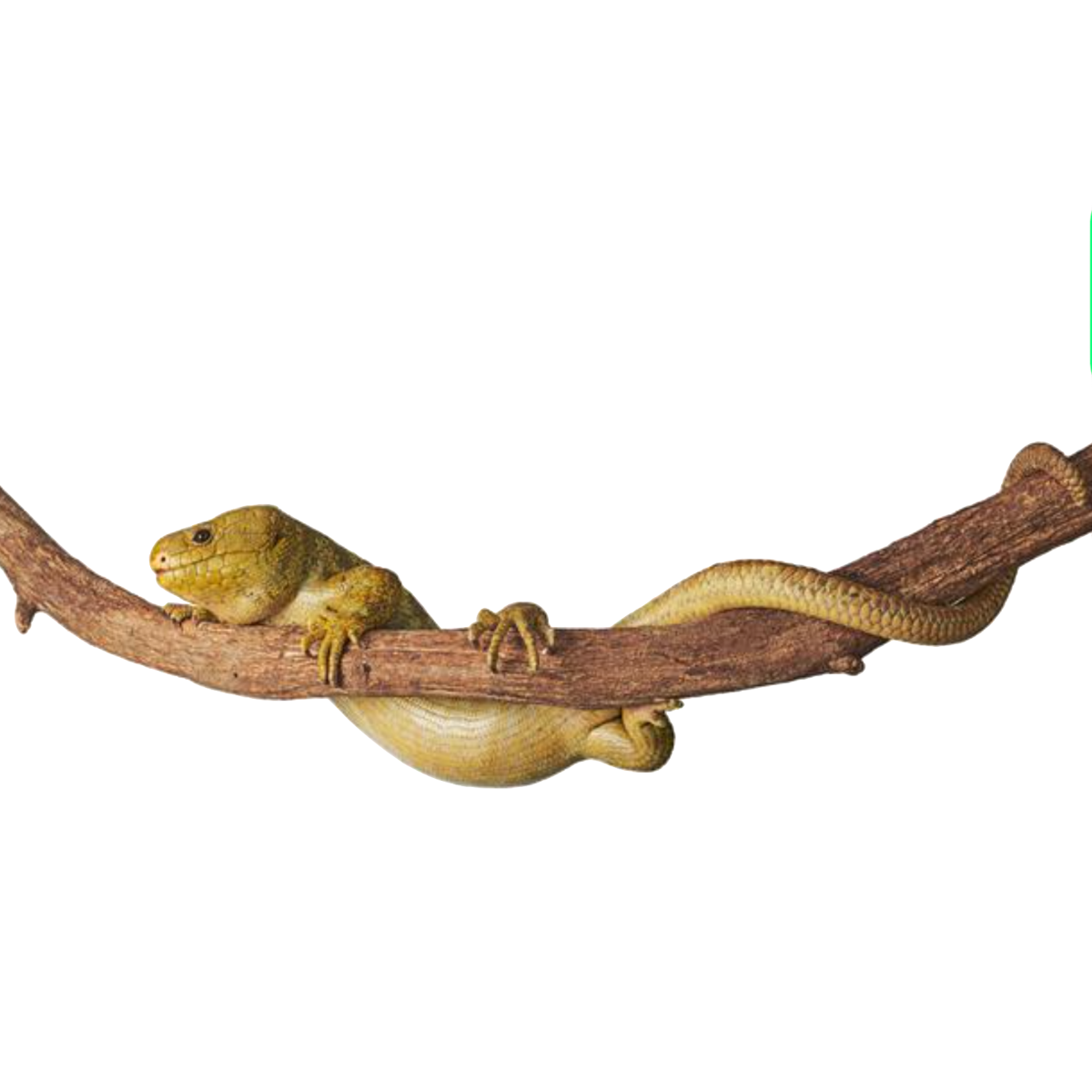
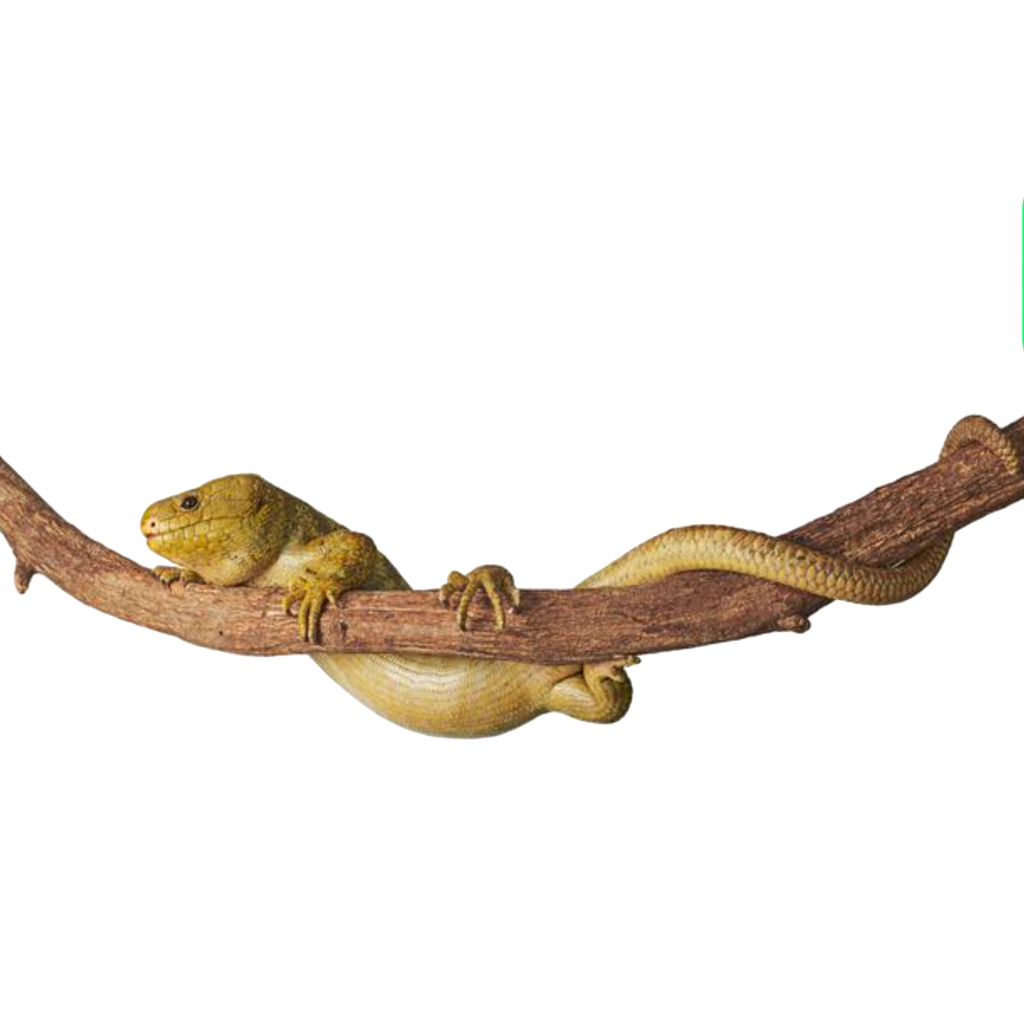
The Monkey Tail Skink is a large, arboreal lizard native to the tropical forests of the South Pacific. From the moment it emerges as a hatchling, it is exceptionally well adapted to life in the trees. Hatchlings are relatively large compared to many other lizard species and are fully formed, independent climbers at birth. They instinctively grasp branches with their long toes and prehensile tail, which functions almost like a fifth limb. Growth is steady during the first few years of life, with juveniles gradually developing heavier musculature, thicker bodies, and increasingly robust tails. Adults commonly reach lengths of over 2 feet, with the tail accounting for more than half of that measure. In well-maintained captive environments, individuals may live 15 to 20 years or longer, reflecting their slow maturation and steady, deliberate lifestyle.
Ecologically, the Monkey Tail Skink serves as an important arboreal herbivore. It feeds largely on leaves, shoots, flowers, and soft plant matter, contributing to the regulation of plant growth within its habitat. By selectively browsing foliage, it may influence plant community structure and stimulate new vegetative growth. In consuming fruit and flowers, it may also play a minor role in seed dispersal, though this is secondary to its function as a foliage browser.
Within the food web, it occupies the role of a mid-level consumer. Juveniles are vulnerable to predation by birds of prey, snakes, and introduced mammals, while adults, due to their size and arboreal habits, face fewer natural predators. Their primary adaptations for survival include strong grasping digits, a muscular prehensile tail, excellent low-light vision, and cryptic coloration that blends seamlessly with rainforest vegetation. These combined traits allow the Monkey Tail Skink to thrive in dense canopy environments where stability, camouflage, and energy-efficient feeding are essential for survival.
Understanding this species’ slow, deliberate growth, arboreal specialization, social tolerance, and herbivorous ecology provides critical context for keeping it successfully in captivity. Its biology reflects a life spent navigating complex vertical environments, processing fibrous plant matter, and maintaining stable social spacing within the forest canopy.
Conservation Status
The conservation status of the Monkey Tail Skink is listed as Near Threatened on the IUCN Red List. This classification, assessed in the year 2011, implies that the species is facing a high risk of extinction in the wild. The population trend is noted as decreasing, indicating that the number of mature individuals is expected to decline over time if current threats are not mitigated. Being classified as Near Threatened means that this skink is at a significant disadvantage concerning its abundance and distribution, necessitating proactive conservation measures.
Key threats to the Monkey Tail Skink are predominantly associated with human activities that destroy its natural habitat. One of the most pressing issues is deforestation, primarily driven by logging practices and slash-and-burn agriculture, which reduces the availability of suitable living environments for the skink. Habitat degradation is compounded by climate change, which alters the ecosystems that these reptiles rely upon. Additionally, poaching and the illegal pet trade exert considerable pressure on the species, as these skinks are often targeted due to their unique appearance and gentle nature.
Conservation efforts aimed at preserving the Monkey Tail Skink involve both in-situ and ex-situ strategies. Wildlife reserves and protected areas play a crucial role in maintaining natural habitats and providing safe havens for these reptiles. Effective law enforcement is essential to counteract illegal logging and regulate trade practices to ensure that populations are not further diminished by human exploitation. Conservation programs focusing on habitat restoration are crucial, aiming to reestablish ecological balance and provide the necessary environmental conditions for the skinks to thrive.
Breeding programs have also been established to support the species' survival. These initiatives serve as a genetic reservoir, potentially offering opportunities for reintroduction if wild populations become critically low. These programs not only aim to preserve genetic diversity but also increase public awareness and education about the species' plight. By fostering a better understanding of the threats facing the Monkey Tail Skink, these programs work to galvanize support for broader conservation actions that protect this and other vulnerable species.
Native Range
The Monkey Tail Skink is native to the Solomon Islands in the southwestern Pacific Ocean, where it has a relatively restricted geographic range. It is primarily found on the larger islands within the archipelago, including Guadalcanal, Malaita, Makira, and surrounding islands. This species does not occur naturally outside of this island chain, making it an insular endemic with a distribution limited to humid tropical environments. Its confinement to these islands has shaped its ecological specialization and dependence on forested habitats.
At the macrohabitat level, the Monkey Tail Skink inhabits tropical rainforest ecosystems, including both primary and secondary forests. These forests are characterized by dense canopy cover, high rainfall, and consistently warm temperatures throughout the year. The species can also be found in forest edge habitats and areas of regrowth, provided that sufficient tree cover and vertical structure remain. However, it is most strongly associated with mature, undisturbed lowland and foothill rainforests where canopy continuity supports its fully arboreal lifestyle.
Within this broader rainforest environment, the Monkey Tail Skink occupies very specific microhabitats. It is an entirely arboreal species and rarely descends to the ground. Individuals spend the majority of their lives in the canopy and subcanopy layers, inhabiting tree hollows, dense vine tangles, epiphytic vegetation, and branching systems that provide both food resources and protection. Tree cavities are particularly important, as they serve as sheltering and sleeping sites and offer protection from predators and environmental fluctuations. The species uses its prehensile tail to anchor itself among branches, allowing it to navigate confidently through vertical structures. Dense foliage and complex canopy architecture are essential features of its preferred microhabitats.
Climatically, the Solomon Islands experience a humid tropical climate with minimal seasonal temperature fluctuation. Ambient temperatures in the species’ native range typically range from approximately 75℉ to 88℉ during the day, with nighttime temperatures rarely dropping below 70℉. Humidity levels remain consistently high throughout the year, often ranging between 70% and 100%. Annual rainfall frequently exceeds 100 inches, with the heaviest precipitation occurring during the wet season, generally from November through April. While there is a relatively drier period during the middle of the year, rainfall remains substantial even during these months. The stable warmth and persistent humidity are critical to the species’ physiological function, hydration, and skin health.
In terms of elevation, the Monkey Tail Skink is most commonly found in lowland and lower montane forests. It typically occurs from sea level up to approximately 3,000 feet in elevation, although it is most abundant in coastal and foothill forests below 1,500 feet. At higher elevations, cooler temperatures and shifts in vegetation structure may limit its distribution. The species’ preference for low to mid-elevation rainforest reflects its reliance on dense, broadleaf evergreen vegetation and consistent climatic conditions.
Several key environmental factors are essential for the survival of this species. Continuous canopy connectivity is critical, as it allows safe movement between feeding and sheltering sites without descending to the forest floor. Access to a diverse array of leafy vegetation is fundamental, as the species is folivorous and depends heavily on leaves, shoots, and other plant material found in its arboreal environment. High ambient humidity reduces the risk of dehydration, particularly important for an arboreal reptile that may have limited access to standing water. Although it may drink from water collected in leaves or tree hollows, it does not rely on terrestrial water bodies in the same way as other reptiles. The presence of large, mature trees with natural cavities further supports long-term sheltering and reproduction, as females give birth to live young and require secure, protected resting sites.
Overall, the Monkey Tail Skink is a highly specialized arboreal reptile of humid, lowland tropical rainforest ecosystems within a restricted island range. Its survival depends on stable warmth, abundant rainfall, dense forest structure, vertical habitat complexity, and reliable sources of leafy vegetation within an intact canopy environment.
Behavior
This species is primarily nocturnal and can be crepuscular. In the wild, individuals typically emerge from hollow trees or dense canopy foliage in the late afternoon and remain active through the night. Peak activity usually occurs shortly after sunset, when humidity rises and temperatures slightly decrease from daytime highs. During daylight hours, they rest in tree hollows, tangled vines, or thick epiphytic growth. Although generally inactive during full daylight, they may shift positions within shelter sites to regulate body temperature or avoid disturbance. Seasonal fluctuations in the Solomon Islands are less extreme than in temperate regions; therefore, they do not undergo true brumation. However, during extended periods of heavy rainfall or subtle shifts in resource availability, activity levels and feeding intensity may vary slightly. Breeding activity appears to correlate with seasonal peaks in food abundance and favorable environmental stability.
Monkey Tail Skinks are primarily solitary but show a level of social tolerance uncommon among many large skinks. In the wild, small groups may occupy the same tree system, especially where suitable hollow refuges are abundant. Social structure does not form complex hierarchies, but dominance interactions can occur, particularly between mature males. These interactions involve posturing, body inflation, slow lateral displays, tail positioning, and occasional biting. Serious combat is uncommon in stable forest territories but may increase in confined environments. Unlike many lizard species, this skink exhibits a form of parental investment. Reproduction results in the birth of a single, well-developed live young after a lengthy gestation. Field observations and studies indicate that neonates may remain in close association with the mother for extended periods, and adults often show reduced aggression toward juveniles. Cooperative tolerance has been documented under human care, where small family groups may cohabitate successfully under appropriate conditions.
Environmental cues play a major role in behavior regulation. As ectotherms, Monkey Tail Skinks rely heavily on ambient temperature for metabolic function. They select elevated perches that retain warmth accumulated during the day but avoid direct exposure to excessive heat. When temperatures drop below optimal ranges, activity decreases significantly. Conversely, sustained temperatures above preferred nighttime values may lead to restlessness and attempts to descend to cooler levels of the enclosure. Humidity is critical; low humidity triggers increased water-seeking behavior and may result in prolonged soaking if a water basin is available. In their native habitat, consistently high humidity allows them to maintain proper hydration through both drinking and environmental moisture absorption.
Light cycles strongly influence circadian rhythms. In managed care, disruption of a consistent day-night schedule can lead to abnormal activity, including daytime pacing or lethargy. Although nocturnal, they can perceive moderate light levels and may respond to sudden illumination with freezing behavior or rapid retreat to cover.
Predator response in the wild includes reliance on crypsis and immobility. Their mottled green to brown coloration blends effectively with moss-covered branches and foliage. When threatened, they often freeze, relying on camouflage. If approached more closely, they may inflate their body, gape, hiss, and lash their prehensile tail. Biting is a last-resort defense but can be forceful due to strong jaw musculature adapted for fibrous plant material. Unlike many skinks they do not practice tail autotomy, the prehensile tail is a critical locomotor and stabilizing organ and is not easily shed.
Prey detection and feeding behavior differ significantly from insectivorous skinks. This species is primarily folivorous, consuming leaves, shoots, flowers, and fruit. In the wild, they forage deliberately and slowly, using vision and possibly chemosensory cues to assess plant material. The tongue is used in exploratory tasting, but feeding behavior is not strike-oriented. Instead, they grasp vegetation with their jaws and tear plant matter using strong, blunt dentition adapted for grinding. This specialized herbivory is unique among large arboreal skinks and distinguishes them behaviorally from more opportunistic relatives.
Locomotion is another defining behavioral feature. The Monkey Tail Skink is highly arboreal and uses its muscular, fully prehensile tail as a fifth limb. The tail is frequently coiled securely around branches during climbing, resting, and even feeding. Movements are deliberate and calculated rather than rapid. Individuals often test branch stability before transferring their body weight, demonstrating strong proprioceptive control. Descending behavior is usually head-up rather than head-down, reflecting caution and reliance on tactile feedback from the tail.
In managed care activity cycles often shift slightly earlier into the evening due to artificial lighting schedules. Individuals may become more visible during daylight hours, particularly if they associate keepers with food. Feeding behavior becomes more anticipatory; captive animals quickly learn routine feeding times and may approach enclosure doors when the keeper is present. This learned behavior contrasts with the more cautious foraging patterns seen in the wild.
Aggression can be more pronounced if space is limited. Arboreal territory in the wild allows vertical and horizontal separation, confined enclosures may force individuals into closer proximity, increasing stress or dominance displays. Stress responses include persistent hiding, reduced feeding, darkened coloration, repetitive climbing attempts along enclosure walls, or defensive hissing when approached. Proper enclosure height, dense foliage, and multiple elevated retreats significantly reduce these behaviors.
Environmental enrichment is particularly important for this species due to its intelligence and deliberate foraging strategy. In natural settings, they spend considerable time selecting and manipulating plant material. Providing varied browse, suspended feeding bundles, and complex climbing structures replicates this natural engagement. Without such stimulation individuals may become inactive, overweight, or behaviorally dull.
Overall, the Monkey Tail Skink demonstrates a blend of nocturnal arboreal specialization, social tolerance with limited dominance structuring, unique herbivorous feeding adaptations, and strong reliance on stable warm and humid conditions. Its prehensile tail, live-bearing reproduction with extended maternal tolerance, and folivorous lifestyle make it behaviorally distinct among commonly kept lizards. Careful replication of canopy structure, stable environmental parameters, and naturalistic lighting cycles is essential to maintain psychologically healthy and behaviorally normal individuals in captivity.
Husbandry Requirements
Enclosure Design
The Monkey Tail Skink is a large, fully arboreal lizard native to the humid forest canopies of the Solomon Islands. Its heavy-bodied build, strong prehensile tail, and social tendencies require a tall, spacious enclosure that prioritizes vertical climbing space. For a single juvenile, the minimum enclosure size should be no smaller than 3 feet long, 2 feet wide, and 4 feet tall. However, because this species grows quickly and can exceed 24 inches in total length as an adult, a long-term enclosure for a single adult should measure at least 4 feet long, 2 feet deep, and 6 feet tall. Larger enclosures are highly recommended. For pairs or small compatible groups, enclosures should be significantly expanded, ideally custom-built vertical habitats of 6 feet long, 3 feet deep, and 6 to 7 feet tall to provide adequate space and visual separation.
Enclosures constructed from sealed hardwood, PVC, or high-quality plywood with a waterproof interior coating are strongly recommended because they retain humidity and heat more effectively than standard glass aquariums. Glass enclosures may be used if modified with partial side coverings to conserve humidity, but they must still provide substantial ventilation. Cross-ventilation near the top and lower sections of the enclosure is ideal to prevent stagnant air while maintaining the high humidity this species requires. Screen tops alone are not sufficient for humidity control in most climates and often lead to excessive moisture loss.
The internal layout must mimic a forest canopy environment. Multiple sturdy climbing branches of varying diameters should be secured both vertically and horizontally. Cork bark tubes, driftwood, and thick natural branches work well. The branches must support a heavy-bodied adult without shifting. Elevated basking platforms positioned close to the primary heat and UVB source are essential. Several elevated hides should be provided among foliage or cork hollows, as these skinks prefer to rest above ground level. Dense artificial or live plants such as pothos and philodendron provide visual security, reduce stress, and help maintain humidity.
Because Monkey Tail Skinks are strong and surprisingly capable of pushing open improper lids, the enclosure must be escape-proof. All doors should lock securely, and ventilation panels should be firmly secured. Sliding glass doors should include locking mechanisms. Gaps larger than half an inch should be sealed to prevent escape or injury.
Lighting and Heating
As a diurnal reptile that basks intermittently in filtered sunlight, the Monkey Tail Skink requires consistent UVB exposure to synthesize vitamin D3 and properly metabolize calcium. A high-output linear UVB fixture is strongly recommended. A 6% UVB bulb spanning at least half the enclosure length should be mounted overhead inside the enclosure or directly above a mesh panel that does not significantly block UVB output. The basking zone should be positioned 10 to 14 inches below the bulb, depending on manufacturer output specifications, to provide effective exposure without overexposure. UVB bulbs should be replaced every 12 months or according to manufacturer guidelines, as UVB output diminishes over time even if visible light remains.
Temperature gradients are critical. The basking area should reach 90℉ to 95℉ during the day. The ambient air temperature in the upper canopy should range from 82℉ to 85℉, while the lower areas of the enclosure may remain around 75℉ to 80℉. Nighttime temperatures can safely drop to 72℉ to 75℉ but should not fall below 70℉ for extended periods.
Overhead radiant heat panels or ceramic heat emitters are preferred heating methods and must always be regulated by a reliable thermostat to prevent overheating. Heat lamps can also be used to create basking zones, provided they are securely mounted and controlled. Under-tank heating devices are not suitable for this arboreal species, and heat rocks should never be used due to the risk of severe burns and uneven heating.
A photoperiod of 12 hours of light and 12 hours of darkness is appropriate year-round. Slight seasonal adjustments, such as increasing daylight to 13 hours during summer months and reducing to 11 hours in winter, may support natural biological rhythms but are not strictly required in managed care. Consistent lighting cycles help regulate feeding behavior, activity levels, and overall endocrine health.
Substrate and Enrichment
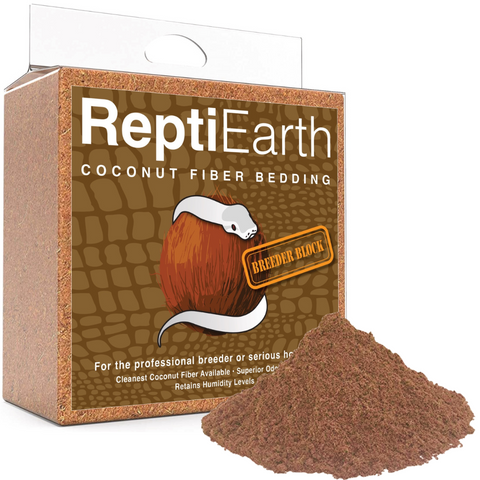
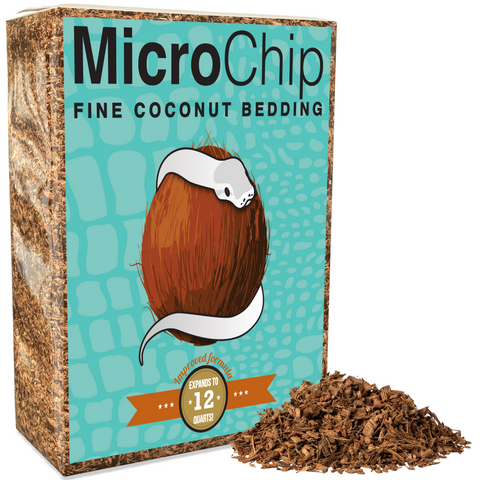
In the wild, Monkey Tail Skinks inhabit humid forest canopies with access to leaf litter and decomposing organic material below. Under human care, the substrate should help maintain humidity while remaining safe and easy to clean. A base layer of BabiChip coconut chip substrate works well due to its excellent moisture retention and resistance to mold. For enhanced humidity stability, it can be mixed with TropicalBase and sphagnum moss. If a finer substrate component is desired, ReptiEarth may be incorporated to improve moisture balance while maintaining a natural texture.
The substrate layer should be at least 3 to 4 inches deep to support live plant root systems if a bioactive setup is used. Although this species is not fossorial, deeper substrate contributes significantly to environmental humidity. Spot cleaning should be performed daily, with full substrate replacement as needed in non-bioactive enclosures.
Environmental enrichment is essential for this intelligent and social lizard. The enclosure should include multiple climbing routes, varied branch thicknesses to promote muscle development and foot health, and several visual barriers created by foliage. Rotating branch arrangements periodically can encourage exploration. Offering browse items such as pesticide-free leafy branches can stimulate natural foraging behavior. Elevated feeding stations among branches promote natural feeding posture and activity. Enrichment can come in many forms and is for the stimulation of your animal. The five types of enrichment you can offer are food related, sensory, physical habitat, cognitive, and social. These categories have a vast variety of options to choose from that are appropriate for the species being enriched.
Monkey Tail Skinks benefit from sheltered resting sites placed at multiple heights. Providing more hides than there are animals reduces the risk of social tension in group settings. Visual complexity and vertical space use reduce stress and encourage natural thermoregulation and basking behaviors.
Humidity and Hydration
This species requires consistently high humidity levels between 70% and 90%. Short dips to around 65% are tolerable, but chronic low humidity can lead to dehydration, poor shedding, and respiratory irritation. Maintaining proper humidity is most effectively achieved through moisture-retentive substrate, limited ventilation that still allows airflow, and regular misting.
The enclosure should be misted thoroughly once or twice daily, depending on ambient household humidity. Morning misting is especially important to simulate natural dew accumulation. Automated misting systems can provide consistent hydration, particularly in larger enclosures. Foggers may be used sparingly during nighttime hours to increase humidity, but they must not saturate the enclosure or create constantly wet surfaces, which can promote bacterial growth.
A large, sturdy water bowl should be provided at an elevated location or securely fastened platform, as these skinks often prefer drinking from elevated sources. The bowl should be heavy enough to prevent tipping and cleaned daily. Many individuals will also drink water droplets from leaves after misting, making live or artificial foliage especially beneficial.
Accurate humidity monitoring is critical. A digital hygrometer with a probe should be placed in the mid-to-upper section of the enclosure where the animal spends most of its time. Monitoring both upper and lower enclosure humidity provides a clearer picture of environmental stability. Consistent measurement ensures that adjustments can be made promptly to maintain optimal hydration conditions and prevent health complications.
Diet & Supplementation
Monkey Tail Skinks have a primarily herbivorous diet, characterized by their consumption of a wide variety of plant materials in their natural forest habitats. They are known to feed on leaves, flowers, fruits, and occasionally other plant parts, which they find in the dense, tropical canopies of the Solomon Islands. This diet indicates their adaptation to a folivorous lifestyle, making them largely dependent on the availability of diverse plant matter. In the wild, their diet can shift slightly with seasonal changes in plant availability, leading to periods when fruits or flowers might be more prominent in their intake.
These skinks are arboreal by nature and have adapted to a life of climbing and foraging amongst the trees. They employ a strategy of active foraging, using excellent visual acuity to locate fresh plant growth. Unlike many carnivorous reptiles that use heat sensing or venom, Monkey Tail Skinks rely on their keen sense of sight and possibly their sense of smell to discriminate between varying degrees of foliage maturity and ripeness. Their curved claws and strong limbs facilitate efficient climbing and exploration of their forest environment as they seek out their vegetarian diet.
As they age, Monkey Tail Skinks may show a preference for different types of plant materials, with young skinks often consuming softer leaves, which are easier to digest. Adult skinks, having developed a more robust digestive system, might expand their diet to include harder or more fibrous plants. This dietary flexibility is crucial for their survival in the wild, where food availability can fluctuate with the seasons.
Providing a diet that parallels their natural intake is vital for their health and longevity. Human care diets should consist of a mixture of leafy greens, vegetables, and occasional fruits, with particular attention to the calcium-to-phosphorus ratio, ensuring calcium-rich foods are prevalent. Since many common vegetables are deficient in necessary vitamins and minerals, supplements such as calcium and a multivitamin designed for herbivorous reptiles are advised to prevent deficiencies. A varied diet is crucial, as it not only meets the nutritional needs of the skinks but also encourages natural foraging behaviors.
Feeding challenges in captivity often include improper diet composition and the potential for over-relying on easy-to-provide but nutritionally inadequate items like iceberg lettuce or fruit. Captive skinks might also resist eating if the offered food does not meet their accustomed tastes or are offered too frequently, leading to obesity. The introduction of a variety of plant items, appropriate feeding schedules every two to three days, and environmental enrichment like hanging food or simulating natural foraging situations can address these challenges. Such practices encourage physical activity and mental stimulation, promoting a healthy appetite and physical condition.
Overall, understanding and implementing a complex and varied feeding regimen for Monkey Tail Skinks is essential for replicating their natural diet and ensuring their physical and mental well-being. By accommodating their dietary preferences and physiological needs, keepers help ensure that these unique reptiles thrive outside their native habitats.
Reproduction
Reproductive maturity in Monkey Tail Skinks is typically reached between 3 and 5 years of age, depending on growth rate, nutrition, and overall health. Females generally mature slightly later than males and at a larger body size. This species exhibits subtle sexual dimorphism. Adult males tend to have broader heads, more robust jowls, and slightly thicker tail bases due to the presence of hemipenes. Females are often heavier-bodied, particularly when gravid. In some individuals, males may display more assertive behavior and territorial posturing during the breeding season, although physical differences are not extreme and sexing can be difficult without probing or imaging.
Breeding behavior is influenced by social dynamics. In the wild, Monkey Tail Skinks often live in small social groups that may include a dominant male, multiple females, and offspring from previous years. Courtship interactions are typically gradual and can involve increased tactile contact, tongue-flicking, and following behavior by the male. Males may gently bite or grasp the female’s neck or flank during copulation attempts. Courtship can span several days to weeks, with copulation occurring multiple times to ensure successful fertilization. Aggressive interactions may occur if a female is not receptive, underscoring the importance of careful behavioral observation in a managed setting. Mate selection appears influenced by social familiarity and hierarchical stability, so long-term cohabitation of compatible individuals often results in more successful breeding than abrupt introductions.
Environmental cues play a crucial role in stimulating reproductive behavior. In their native range, seasonal shifts are less extreme than in temperate reptiles, but moderate changes in rainfall patterns, humidity, and photoperiod do occur. Breeding success improves when keepers simulate a subtle seasonal cycle. Daytime temperatures should normally range between 80℉ and 85℉ with a basking area of 90℉ to 95℉. To stimulate breeding, a slight seasonal cooling period of six to eight weeks can be introduced, with daytime ambient temperatures lowered to 75℉ to 80℉ and basking temperatures reduced to approximately 88℉ to 90℉. Nighttime temperatures during this phase can drop to 72℉ to 75℉. Concurrently, photoperiod may be reduced to 10 to 11 hours of light daily, followed by a gradual increase back to 12 to 13 hours to simulate the onset of a more favorable season. Humidity should remain relatively high year-round, between 70% and 90%, but brief fluctuations combined with increased misting during the simulated rainy season may help trigger reproductive behaviors.
Monkey Tail Skinks are viviparous, giving birth to fully formed live young rather than laying eggs. Copulation requires stable footing and adequate vertical climbing structures, as this species is strongly arboreal. Breeding enclosures should be spacious, ideally no less than 6 feet long, 3 feet wide, and 4 feet tall for a compatible pair or trio, with abundant branches, platforms, and visual barriers. Because of their semi-social nature, many successful breeding groups consist of one male and one or two females housed together long-term. Introducing unfamiliar adults into an established group can result in stress or aggression, so introductions should be performed gradually, ideally in neutral enclosures with close supervision. Visual separation followed by short supervised interactions can reduce the likelihood of serious conflict.
Several challenges may arise when breeding this species. One common issue is incompatibility between individuals, particularly when adults are introduced without prior acclimation. Aggression may lead to stress, injury, or reproductive suppression. Maintaining stable social groupings and minimizing environmental disturbances are critical. Another frequent obstacle is inadequate environmental cycling. Without subtle seasonal shifts and environmental enrichment, adults may fail to exhibit breeding behavior. Overly dry conditions can also negatively impact overall health and reproductive viability. Chronic stress, often due to insufficient enclosure size or lack of climbing structures, can suppress mating behavior entirely. Nutritional imbalances may further impair fertility, females in particular require adequate dietary calcium and a varied, leafy plant-based diet to maintain reproductive health.
Close behavioral monitoring, careful environmental management, and maintenance of compatible social groups are essential for successful breeding of Monkey Tail Skinks. When environmental parameters closely resemble natural seasonal rhythms and social structures remain stable, this species can reproduce reliably in well-managed conditions.
Incubation & Neonate Care
Monkey Tail Skinks are viviparous, meaning they give birth to fully formed live young rather than laying eggs. Unlike oviparous reptiles that deposit shelled eggs in a nest, or ovoviviparous species that retain eggs internally until hatching without placental exchange, this species exhibits a true placentotrophic form of viviparity. The developing embryo is nourished internally by the mother through a placenta-like structure that facilitates nutrient and gas exchange. This advanced reproductive strategy is relatively rare among skinks and results in the birth of large, well-developed neonates.
The gestation period is long, typically lasting between six and eight months. During this time, the female’s nutritional and environmental needs are especially critical. Gravid females often show gradual abdominal enlargement, reduced activity, and increased basking behavior to maintain optimal internal temperatures for embryonic development. Enclosure temperatures should remain consistent, with a basking area maintained between 88℉ and 92℉ and ambient daytime temperatures between 78℉ and 85℉. Nighttime temperatures can drop slightly to 75℉ to 78℉ but should not fall below 72℉. Humidity should remain between 70% and 90%, reflecting their native tropical forest environment. Proper hydration and consistent access to fresh leafy greens are essential, as dehydration can contribute to complications such as dystocia, or difficulty giving birth.
As parturition approaches, the female may become noticeably restless, reduce food intake, and seek elevated, secure perching sites. Providing ample climbing branches and dense foliage within an enclosure of at least 4 feet long, 2 feet wide, and 4 feet tall allows for natural positioning during birth. The birthing process itself is typically slow and deliberate. Most litters consist of a single, exceptionally large neonate, although twins occasionally occur. The young are born encased in a thin, transparent membrane, which is usually ruptured quickly through movement. The mother may lick or gently mouth the neonate, and some females display a degree of short-term tolerance or protective behavior, which is unusual among many reptiles but documented in this species.
Dystocia, though uncommon when proper husbandry is maintained, remains a significant risk due to the large size of the offspring relative to the mother. Signs of complications include prolonged straining, lethargy, or failure to deliver after visible contractions. Veterinary intervention from a practitioner experienced with large skinks is critical if labor appears stalled for more than several hours. Maintaining appropriate temperature gradients, hydration, and calcium balance throughout gestation significantly reduces this risk.
Neonates are exceptionally large at birth, often measuring 10 to 12 inches in total length and immediately demonstrating strong gripping ability with their prehensile tails. They are alert and capable climbers within hours. Although some mothers tolerate their young for extended periods, neonates should ideally be housed separately in a secure arboreal enclosure to ensure precise monitoring of feeding, hydration, and health. An appropriate juvenile enclosure should measure at least 3 feet long, 2 feet wide, and 3 feet tall, furnished with abundant climbing structures and visual barriers to reduce stress.
Temperature and humidity requirements for neonates mirror those of adults, with a basking zone of 88℉ to 92℉ and ambient temperatures between 78℉ and 85℉. High humidity between 70% and 90% remains essential to support proper skin health and shedding. Daily misting may be necessary, and water should be provided in a shallow but stable dish, though many juveniles will preferentially drink droplets from foliage.
Feeding should begin once the neonate is fully mobile and has completed its first shed, usually within the first week of life. The species is folivorous, and neonates should be offered finely chopped dark leafy greens such as collard greens, dandelion greens, mustard greens, and hibiscus leaves. Small amounts of grated vegetables can be introduced gradually. Food should be provided daily for growing juveniles. Because of their herbivorous diet and rapid growth, maintaining a proper calcium-to-phosphorus ratio is critical. A light dusting of calcium supplement without excessive vitamin D3 can be used if full-spectrum UVB lighting is properly installed and maintained. A high-output UVB fixture spanning much of the enclosure length is essential to promote proper skeletal development and prevent metabolic bone disease.
Handling of neonates should be minimal during the first several weeks. Although young monkey-tail skinks can acclimate to gentle interaction, excessive handling can induce stress and lead to tail autotomy, although tail loss is uncommon in well-adjusted individuals. Close monitoring for dehydration, poor feeding response, retained shed, and early signs of metabolic bone disease is critical during the first several months.
With precise environmental control, a high-fiber leafy diet, consistent humidity, and careful observation, neonates grow steadily and develop into robust juveniles. Their slow reproductive rate and production of very small litters underscore the importance of meticulous gravid care and attentive neonatal husbandry to ensure successful long-term outcomes in captivity.
Conclusion
In conclusion, the Monkey Tail Skink is a captivating and highly specialized reptile species that thrives under conditions that meticulously replicate its natural environment in the Solomon Islands. Keeping these skinks requires a detailed understanding of their arboreal adaptations, social behavior, and ecological role as folivorous lizards. The importance of a well-designed enclosure cannot be overstated, with emphasis on vertical space, appropriate climbing structures, and a stable microclimate that suits their needs for high humidity and warm temperatures.
Conservation efforts, both in the wild and in managed care, are crucial to the long-term survival of this species. Habitat preservation and anti-poaching initiatives are vital in the Solomon Islands, while well-managed captive programs can support population stability and awareness. Overall, the successful care of Monkey Tail Skinks not only contributes to their preservation but also provides valuable insights into their intriguing ecological dynamics, emphasizing the significance of dedicated herpetological stewardship.