Natural History
Throughout their lives, corn snakes exhibit behaviors typical of many North American colubrids but with distinct ecological nuances. In the wild, their lifespan commonly reaches 6 to 10 years due to predation and environmental pressures, while individuals in human care often live 15 to 20 years when properly maintained. They are skilled climbers and frequently ascend trees or shrubs to raid bird nests or pursue arboreal prey. In agricultural regions, they are commonly found in barns, abandoned buildings, and fields where rodent populations are abundant.
Ecologically, corn snakes play an important mid-level role in their native habitats across the southeastern and central United States. As consistent predators of small mammals, they help regulate rodent populations that might otherwise damage crops, spread disease, or disrupt ecological balance. Their presence around farms and rural structures historically made them valuable allies to humans. At the same time, they serve as a significant food source for higher predators, forming a vital link in the food web. Adaptations such as excellent climbing ability, tolerance of varied habitats ranging from pine forests to grasslands, and seasonal behavioral flexibility allow them to persist across a broad geographic range. Understanding these life history traits and ecological functions provides essential context for appreciating the biological and behavioral needs of this species in human care.
Conservation Status
According to the International Union for Conservation of Nature (IUCN) Red List, the corn snake is classified as "Least Concern." The assessment year for this classification is 2015, and the population trend is listed as "Stable." Being categorized as Least Concern suggests that the species does not currently face significant risk of extinction in its natural habitat. It indicates a broad geographic distribution and abundant population numbers that reflect a healthy species status in the wild.
One of the primary reasons for this favorable classification is the corn snake's extensive adaptability to various environments, including woodlands, grasslands, and areas altered by human activity such as farms and suburban areas. Despite this, there are several threats that could impact population numbers if not monitored. Habitat destruction due to urbanization and agricultural expansion poses significant risks by reducing the availability of natural habitats. Additionally, road traffic significantly affects them as they often fall victim to vehicle collisions. While not currently at a critical level, the illegal capture and sale of wild specimens for the pet trade also contribute to local population declines in some areas.
Conservation efforts for the corn snake focus largely on habitat protection and public education. Many corn snake habitats are protected in national and state parks where urban development is restricted. Informative campaigns aimed at educating the public about the ecological role and harmless nature of corn snakes help reduce unfounded fears and senseless killings. These efforts have been instrumental in maintaining the corn snake’s population stability.
Although breeding programs are not essential for the survival of the corn snake species, they do play a critical role in preventing over-collection from wild populations. These programs significantly contribute to the pet trade, ensuring that individuals available as pets do not deplete wild populations, thus supporting the species’ continued Least Concern status.
Native Range
The corn snake is native to the southeastern and central United States, with a natural range that extends from southern New Jersey and Maryland south through Florida, west through Louisiana, and into parts of eastern Texas. It is also found northward into portions of Kentucky and southern Illinois. This species has a broad and well-established distribution and is considered one of the most widespread native snakes in the southeastern United States. Its wide geographic range reflects a high degree of adaptability to varied environmental conditions, provided that certain structural and climatic requirements are met.
Within this range, corn snakes occupy a variety of macrohabitats. They are most commonly associated with pine flatwoods, hardwood forests, mixed woodlands, overgrown fields, agricultural margins, and brushy areas. They are also frequently encountered along the edges of forest clearings, in abandoned buildings, and around farms, where rodent populations are abundant. In the southernmost parts of their distribution, they inhabit subtropical environments, while in more northern areas they occupy temperate deciduous forests with distinct seasonal changes. This adaptability across multiple ecosystem types contributes to their ecological success.
At the microhabitat level, corn snakes favor environments that provide both cover and thermal opportunities. They are commonly found beneath fallen logs, inside rotting stumps, under bark slabs, within leaf litter, and in rodent burrows. They readily use underground retreats for shelter from predators and temperature extremes. In sandy or loose soils, they may utilize preexisting burrows rather than excavating their own. In forested habitats, they often climb trees to access bird nests or to bask on low branches. Their semi-arboreal tendencies are especially evident in younger individuals. Access to structural complexity such as downed woody debris, dense shrubs, and rock piles, are an important component of suitable habitat.
Climatically, corn snakes inhabit regions with warm summers and mild to moderately cool winters. In much of their range, summer daytime temperatures frequently reach between 80℉ and 90℉, with localized ground temperatures exceeding this in exposed areas. Winters are cooler, with temperatures in northern populations commonly dropping below 50℉ for extended periods. Seasonal variation strongly influences their activity patterns. In colder regions, corn snakes undergo a period of winter dormancy in underground refuges, stump holes, or rock crevices, where temperatures remain stable and above freezing. In southern populations, winter dormancy is shorter and less pronounced.
Humidity levels across their range vary from moderately humid inland forests to the higher humidity environments of coastal plains and Florida flatwoods. Annual precipitation typically ranges from approximately 40 to over 60 inches, depending on location. These snakes are well adapted to moderate humidity levels but rely on microhabitats that provide stable moisture for proper shedding and hydration. While they do not require standing bodies of water for survival, proximity to seasonal wetlands, creek margins, or moist forest depressions enhances habitat suitability due to increased prey density and humidity stability.
In terms of elevation, corn snakes are primarily found in lowland and lower mid-elevation environments. Most populations occur from sea level up to roughly 1,500 feet in elevation, although they may occasionally be found slightly higher in foothill regions. They are not adapted to high-altitude or mountainous environments with prolonged cold conditions.
Key environmental factors critical to their survival include adequate ground cover for concealment, access to prey populations such as rodents and small birds, thermally diverse microhabitats that allow effective behavioral regulation of body temperature, and secure overwintering refuges in regions with cold winters. Loose or well-drained soils, abundant fallen timber, and heterogeneous vegetation structure are especially important features. Their frequent association with agricultural edges and old barns reflects their ecological reliance on small mammal populations and accessible shelter.
Overall, the corn snake is a habitat generalist within warm temperate and subtropical regions, but it remains dependent on structurally complex environments that provide shelter, moderate humidity, seasonal thermal variation, and reliable prey availability.
Behavior
Corn snakes are primarily crepuscular, showing peak activity at dawn and dusk. In regions with moderate spring and autumn temperatures, they may also be active during daylight hours. During the heat of summer, especially in the southern portions of their range, they become more nocturnal to avoid overheating, while in cooler spring and fall conditions they may bask openly in early morning sunlight. In winter, wild individuals enter a state of brumation, retreating into underground burrows, rock crevices, stump holes, or abandoned mammal dens. Brumation typically begins when daytime temperatures consistently fall below 60℉ and may last from late autumn through late winter, depending on latitude. In managed care seasonal cycling is not always required for general maintenance, but reduced activity and appetite are still commonly observed during winter months, especially if light duration and ambient temperatures are lowered.
In their natural habitat, corn snakes are largely solitary outside of the breeding season. They do not form social groups or maintain cooperative structures. Adults occupy overlapping home ranges but avoid frequent contact with conspecifics. During the breeding season, which typically occurs in spring shortly after emergence from brumation, males actively search for females by following pheromone trails deposited on the substrate. Combat between males is uncommon compared to some other snake species but may occur as ritualized pushing or body wrestling to establish dominance for access to receptive females. After mating, females are oviparous and seek secure, humid nesting sites such as rotting logs or decaying vegetation where temperatures remain stable. Clutches typically consist of 10 to 20 eggs. There is no parental care after oviposition. Hatchlings are fully independent and disperse soon after emergence.
Corn snakes rely heavily on chemosensory input to interpret their environment. Like other snakes, they use tongue flicking to collect airborne and substrate-borne chemical cues, which are processed through the vomeronasal organ. This allows them to track prey, locate mates, and detect potential predators. They have moderate visual acuity and are particularly sensitive to movement. In response to temperature fluctuations, corn snakes adjust their position within the environment to maintain preferred body temperatures, typically selecting microhabitats that allow them to remain between 75℉ and 85℉. If exposed to excessive heat above 90℉ without access to cooler retreats, they will actively seek shade or burrow deeper into substrate. In conditions that drop below 65℉ for extended periods outside of brumation, their metabolism slows significantly, reducing digestion and movement.
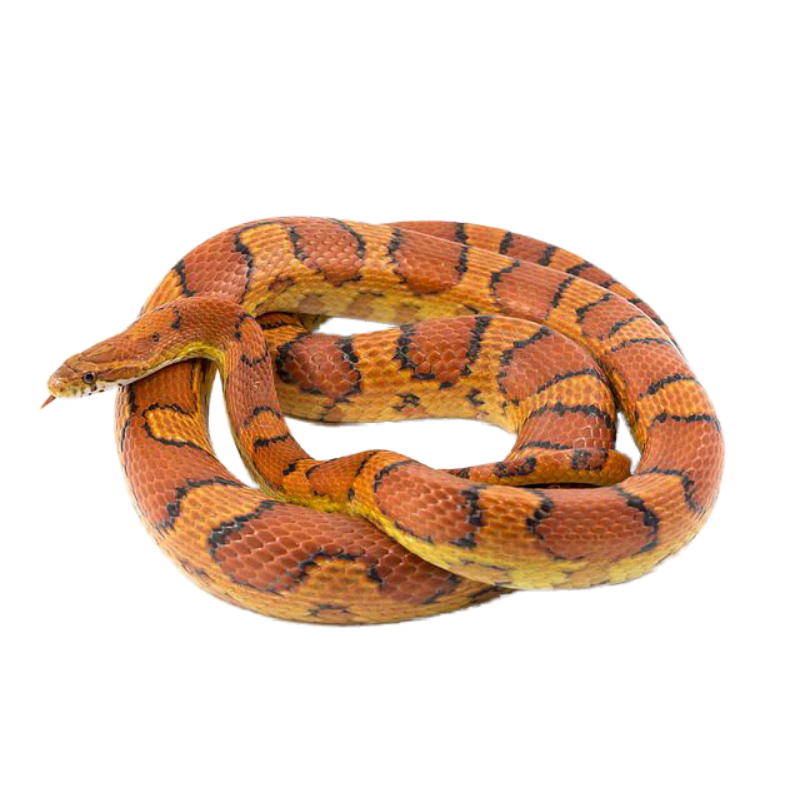
When threatened, corn snakes rely first on avoidance. Their natural dorsal pattern of reddish or orange blotches on a background of tan, gray, or brown provides camouflage among leaf litter and forest edges. If escape is not immediately possible, they may freeze to avoid detection. As a secondary defense, they can vibrate the tip of their tail rapidly against dry leaves, producing a buzzing sound that mimics a rattlesnake. They may also flatten their bodies slightly to appear larger and adopt an S-shaped defensive posture. Biting is typically a last resort. Juveniles may be more reactive than adults, as their smaller size makes them more vulnerable to predation from birds of prey, mammals, and larger snakes.
Corn snakes are active foragers but often employ ambush tactics. They consume small mammals, birds, and occasionally reptiles or amphibians. Juveniles tend to consume more ectothermic prey, such as small lizards, shifting to primarily rodent prey as they mature. In the wild, they frequently climb trees and shrubs to access bird nests, demonstrating notable arboreal ability despite being classified as primarily terrestrial. Their locomotion is versatile, as they use lateral undulation for general travel, concertina movement in confined spaces such as burrows, and rectilinear movement when stalking prey at close range. Their slender bodies and keeled scales facilitate climbing rough bark and navigating tight crevices.
Under human care, many natural behaviors persist, but certain differences are evident. Feeding behavior becomes more predictable and often more vigorous due to regular schedules and the presentation of thawed rodents. Unlike in the wild, where hunting may require significant energy expenditure and periods of fasting are common, individuals may become conditioned to feeding cues such as enclosure opening or the scent of thawed prey. This can sometimes result in heightened feeding responses, including accidental strikes at non-food items if handlers are not cautious.
Corn snakes typically exhibit reduced wariness compared to wild counterparts, particularly with consistent, calm handling. However, improper enclosure conditions, such as inadequate hiding spaces, incorrect temperatures, or excessive vibration can lead to chronic stress behaviors. These can include refusal to feed, persistent hiding, defensive striking, or repeated attempts to escape. Providing environmental enrichment, such as multiple hides, climbing branches, varied substrate textures, and occasional rearrangement of enclosure furnishings, encourages natural exploratory behavior and reduces stress.
Aggression toward conspecifics can occur if multiple individuals are housed together, particularly during feeding or breeding attempts. Although some keepers report temporary cohabitation without conflict, solitary housing is strongly recommended to prevent stress, competition, and accidental cannibalism. In contrast to the wild, where individuals can disperse freely, confined environments prevent avoidance behaviors and may elevate tension.
Overall, corn snakes are adaptable, behaviorally flexible reptiles whose success in managed care stems from their moderate temperament, strong feeding response, and tolerance for a range of environmental conditions. Nonetheless, their well-being depends on replicating the thermal gradients, photoperiod cycles, shelter availability, and environmental complexity that support their natural behavioral repertoire.
Husbandry Requirements
Enclosure Design
In managed care, their enclosure must provide sufficient horizontal space, moderated ventilation, and multiple forms of cover to reflect their secretive and exploratory nature.
For juveniles, a minimum enclosure size of 24 inches long by 18 inches wide by 18 inches tall is appropriate during the first year of life. Hatchlings may be started in slightly smaller, secure enclosures to reduce stress and improve feeding consistency, but space should be upgraded promptly as growth occurs. Adult corn snakes require a minimum enclosure measuring 4 feet long by 2 feet wide by 2 feet tall. Larger enclosures, such as 5 feet by 2 feet by 2 feet, are strongly encouraged for fully grown individuals exceeding 4 feet in length. Floor space is more important than height, though moderate vertical space allows for light climbing behavior.
Acceptable enclosure materials include high-quality PVC, sealed wood designed for reptile use, or glass aquariums with secure screen lids. PVC enclosures are preferred for their superior heat retention, lightweight durability, and resistance to humidity fluctuations. Glass tanks provide visibility but lose heat more quickly and may require adjustments to maintain stable temperatures. Adequate ventilation is essential to prevent stagnant air while maintaining appropriate humidity levels. Enclosures should have cross-ventilation without creating excessive drafts.
Security is critical. Corn snakes are strong, curious, and adept escape artists. All enclosures must feature tight-fitting, locking lids or front-opening doors with secure latches. Gaps around cable pass-through points must be sealed. Even small openings can permit escape.
The interior layout should replicate a terrestrial environment with abundant cover. At minimum, provide two secure hides; one on the warm side and one on the cooler side. A third humid hide can be beneficial during shed cycles. Hides should fit snugly enough for the snake to feel contact on multiple sides of its body, reducing stress. Incorporate branches or sturdy climbing structures, as corn snakes will frequently explore vertical space, especially at night. Artificial or live plants can increase environmental complexity and provide additional security. A clearly defined basking area on the warm side should be established beneath the primary heat source.
Lighting and Heating
Corn snakes require a well-defined thermal gradient to regulate metabolism, digestion, and immune function. The warm side of the enclosure should provide a basking surface temperature between 85℉ and 88℉. Ambient air temperatures on the warm side should range from 82℉ to 85℉. The cool side should maintain ambient temperatures between 72℉ and 75℉. Nighttime temperatures may safely drop to between 68℉ and 72℉, replicating natural conditions.
All heat sources must be controlled by a reliable thermostat to prevent overheating. Under-tank heating elements, radiant heat panels, and overhead ceramic heat emitters are appropriate when regulated correctly. Heat rocks must never be used, as they frequently cause thermal burns due to uneven heat distribution and lack of thermostatic control. Overhead heating more closely mimics natural warming from above and is generally preferred, especially in PVC enclosures.
Although corn snakes are crepuscular to nocturnal, UVB lighting is increasingly recognized as beneficial. Provide a low-level UVB source in the 5 percent range, positioned to create a gradient across the enclosure. The UVB fixture should span approximately half to two-thirds of the enclosure length and be mounted according to manufacturer distance guidelines, typically 10 to 12 inches above the basking zone when placed over a mesh screen. If mounted inside the enclosure, ensure appropriate distance to avoid overexposure. UVB supports vitamin D3 synthesis, calcium metabolism, and overall physiological health, even in species not considered strictly diurnal.
A photoperiod of 12 hours of light and 12 hours of darkness is appropriate for most of the year. Seasonal adjustments may be implemented for breeding purposes, gradually reducing daylight hours to 8 to 10 hours during winter cooling periods, then increasing again in spring. Consistent light cycles regulate circadian rhythms and feeding responses. Light sources should be placed on timers to ensure stability.
Substrate and Enrichment
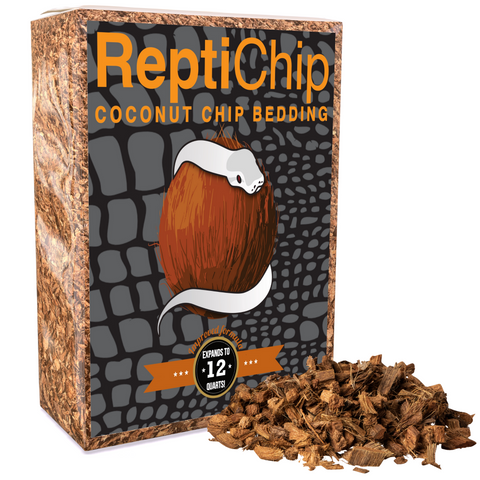
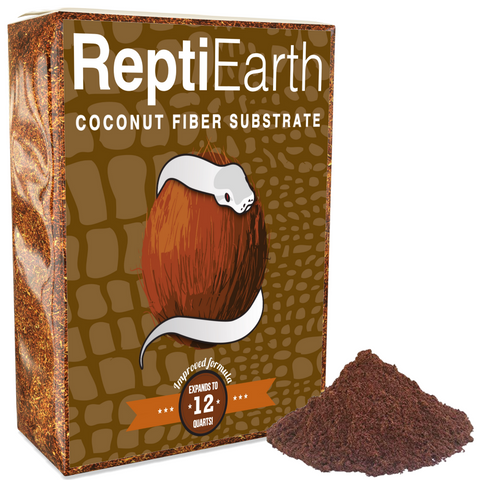
In the wild, corn snakes travel through leaf litter, loose soil, and pine debris. Substrates should reflect these conditions while remaining hygienic and low risk. A depth of two to three inches permits natural tunneling behavior. For keepers seeking a more naturalistic approach, a blended substrate of ReptiChip mixed with ReptiEarth and leaf litter can be used in well-ventilated enclosures.
Avoid substrates that are excessively dusty or aromatic. Sand is not appropriate for this species due to impaction risk. Reptile carpet should not be used, as it restricts natural burrowing behavior and can harbor bacteria.
Enrichment should focus on promoting exploratory and hunting behaviors. Provide multiple textured climbing branches, cork bark tubes, and layered leaf litter to encourage movement. Rearranging enclosure elements periodically stimulates exploration without causing excessive stress. Incorporating scent trails using prey items (without leaving decomposing material behind) can promote natural foraging responses.
Hides of varying design, including cork rounds and enclosed rock-style shelters, help the snake feel secure. A humid hide filled with damp sphagnum moss or moistened ReptiEarth can assist with proper shedding. Environmental complexity reduces stress, improves feeding reliability, and supports muscular development.
Enrichment can come in many forms and is for the stimulation of your animal. The five types of enrichment you can offer are food related, sensory, physical habitat, cognitive, and social. These categories have a vast variety of options to choose from that are appropriate for the species being enriched.
Humidity and Hydration
Corn snakes thrive in moderate humidity levels between 40% and 60%. Short-term fluctuations are tolerated, but prolonged high humidity above 70% may predispose the snake to respiratory issues, while excessively dry conditions can lead to incomplete sheds.
Humidity can be maintained through substrate choice, enclosure material, and water bowl placement. In most standard enclosures, routine ambient humidity within the recommended range is sufficient without heavy misting. Light misting once or twice weekly may be beneficial during shed cycles, but the enclosure should dry between mistings. Overly damp conditions should be avoided.
A medium to large water bowl must be provided at all times. The bowl should be heavy enough to prevent tipping and large enough for the snake to coil inside if desired. Many corn snakes will soak prior to shedding. Water must be replaced at least every 48 hours and immediately if soiled.
Hydration is primarily achieved through drinking rather than environmental moisture. However, a humid hide containing damp sphagnum moss or ReptiEarth provides localized humidity approaching 70%, which is especially helpful during shedding. Always monitor humidity levels using a calibrated digital hygrometer placed at mid-height within the enclosure. Analog gauges are often inaccurate and should not be relied upon.
By carefully balancing humidity, providing constant access to clean water, and monitoring with accurate instruments, keepers can prevent dehydration, shedding complications, and respiratory disease while maintaining optimal physiological function.
Diet & Supplementation
Corn snakes are small to medium-sized reptiles classified as carnivores, primarily consuming a diet of vertebrates. In their natural habitat, they primarily prey upon small mammals such as mice and rats, but they are also known to consume birds, bird eggs, and occasionally amphibians. Corn snakes exhibit opportunistic feeding behavior, meaning they will consume available prey depending on their environment and what's abundant during particular seasons. Their feeding methods include constriction, a strategy in which they subdue prey by coiling around it and tightening to cause suffocation. Corn snakes possess a keen sense of smell, relying on chemical cues detected via their forked tongue and Jacobson's organ to locate prey. They also utilize their vision to track movement, although their sight is not as finely tuned as their chemical senses.
As corn snakes age, their dietary preferences can shift based on size and nutritional need. Younger snakes typically require smaller meals more frequently, such as pinky mice, while adults may consume larger prey items like adult mice or small rats, less frequently. Seasonal changes can influence feeding, with decreased activity in cooler months leading to reduced metabolic requirements and thus less frequent feeding. Corn snakes in the wild may experience periods of fasting, especially during colder seasons when prey is scarcer.
Replicating a natural diet for corn snakes involves offering appropriately sized rodents, which should be the staple of their diet. Prey items can be offered frozen-thawed to minimize the risk of injury from live prey. It's crucial to ensure the prey size is appropriate, generally no larger than one and a half times the width of the snake at its broadest point. Supplementing with calcium and a balanced commercial reptile vitamin can help address any nutritional gaps, particularly when using captive-bred prey. However, supplementation should not be excessive to avoid hypervitaminosis.
Challenges in feeding include the tendency for keepers to overfeed, given corn snakes' opportunistic nature. This can lead to obesity, a common issue that reduces longevity. Conversely, inadequate prey size or frequency can result in malnutrition. Some corn snakes may exhibit food refusal, often due to stress, improper temperature settings, or illness. To encourage natural feeding behavior, it's beneficial to feed corn snakes in an environment that mimics their natural conditions, reducing excessive handling and disturbances during feeding time. Providing environmental enrichment, such as hiding spots and varied terrain, can stimulate natural foraging behaviors. Maintaining an appropriate feeding schedule that reflects natural rhythms, such as less frequent feedings during colder months, can also help replicate their natural diet effectively.
Reproduction
Corn snakes reach sexual maturity between 18 and 36 months of age, though age alone should not determine breeding readiness. Females should weigh at least 300 grams and display consistent feeding and growth before being paired, while males typically become reproductively viable slightly earlier and at smaller body mass. Sexual dimorphism in this species is subtle. Males generally have longer, thicker tails relative to body length due to the presence of the hemipenes and associated musculature, while females tend to have shorter, more tapered tails. Visual sexing can be unreliable, so probing or popping by an experienced individual is recommended to confirm sex before any breeding attempt.
Breeding behavior is seasonally influenced and closely tied to natural environmental cycles. In the wild, reproductive activity follows a winter brumation period. In managed care, a controlled cooling period significantly improves reproductive success. Adults are gradually cooled over two to three weeks in late fall until daytime temperatures reach approximately 55℉ to 60℉, with nighttime drops to around 50℉ to 55℉. During this time, lighting is reduced to mimic shortened winter photoperiods, and feeding is discontinued once temperatures fall below 60℉ to prevent undigested food from spoiling in the digestive tract. The cooling period typically lasts 8 to 12 weeks. Afterward, temperatures and light exposure are gradually increased over two to three weeks to normal active-season conditions, with daytime ambient temperatures of 75℉ to 82℉ and a localized basking area of 85℉. The increase in temperature and photoperiod serves as a primary environmental cue that stimulates follicular development in females and spermatogenesis in males.
Once normal spring conditions are restored and both animals have resumed feeding for at least two weeks, introduction can occur. Corn snakes are solitary outside of breeding and should not be permanently cohabitated. Pairing should occur in a neutral, well-secured enclosure with adequate space for movement, at minimum a 3 foot long enclosure for an adult pair, though larger quarters reduce stress and allow natural behaviors. Introducing the male into the female’s enclosure often yields higher success, as females may be more sensitive to environmental displacement. Initial encounters typically involve tongue flicking, body alignment, and tactile exploration. Males demonstrate courtship behavior through chin rubbing along the female’s side, rhythmic body waves, and attempts to align their tail beneath the female’s tail to achieve cloacal contact. If receptive, the female will elevate and slightly shift her tail to facilitate copulation. Copulation may last from several minutes to several hours, during which the male inserts one hemipenis. Multiple pairings over several days often increase the likelihood of successful fertilization.
Female receptivity is influenced by follicular development, which can sometimes be detected through subtle mid-body thickening prior to ovulation. Following ovulation, females typically undergo a pre-lay shed several weeks later, signaling that fertilization has occurred. Humidity during this reproductive phase should remain between 50% and 70% to support overall health and proper hydration without promoting respiratory disorders. While excessive humidity is not required for mating itself, proper hydration is critical for follicle development and subsequent egg production.
Corn snakes are oviparous and require a suitable nesting site for egg deposition. Although they do not exhibit complex nest construction behavior, gravid females actively seek secure, humid microenvironments in which to lay. A nesting box measuring approximately 12 inches long by 8 inches wide and 6 inches deep, filled with slightly damp sphagnum moss or similar moisture-retentive substrate, should be provided once post-ovulatory swelling is evident. The nesting area should maintain humidity sufficient to keep the substrate lightly moist but not saturated. Placement in a quiet, secure portion of the enclosure reduces stress and supports natural nesting behavior.
Several challenges can arise during breeding. One of the most common issues is failure to breed due to inadequate cooling or insufficient seasonal cues. Without a proper brumation period, males may show limited interest and females may not develop mature follicles. Ensuring consistent cooling temperatures and a gradual transition back to active conditions is critical. Another frequent problem is incompatibility between mates. Some females display defensive behavior, including striking or excessive avoidance. In such cases, remove the male immediately and reattempt pairing after several days. Introducing visual barriers and minimizing disturbances during courtship can significantly reduce stress.
Stress-related reproductive failure may also occur if enclosures lack adequate security or if animals are handled excessively during the breeding season. Maintaining stable environmental parameters, minimizing enclosure traffic, and providing multiple hiding sites increase the likelihood of success. Nutritional status is equally important; underweight females frequently fail to develop viable follicles or may resorb developing eggs. A well-conditioned female should be fed appropriately sized prey at 7 to 10 day intervals for several months prior to cooling to ensure sufficient energy reserves.
In summary, successful breeding of corn snakes depends on replicating natural seasonal variation, ensuring proper physical maturity and body condition, facilitating controlled introductions, and providing secure nesting conditions. Careful attention to environmental cues and stress reduction greatly enhances reproductive success.
Incubation & Neonate Care
Corn snakes are oviparous, meaning they reproduce by laying eggs. Fertilization is internal, and after a successful breeding, the female undergoes a gravidity period that typically lasts about four to six weeks. During this time, she will exhibit increased basking behavior to support proper egg development and may reduce or refuse food as oviposition approaches. A gravid female should be provided with a suitable nesting site within the enclosure. This is best accomplished with a lay box measuring approximately 12 inches long, 8 inches wide, and 6 inches deep, filled with slightly moist sphagnum moss or a mixture of organic soil and moss. The substrate must be damp enough to hold its shape when squeezed but not wet, as excessive moisture can drown developing embryos.
A typical clutch consists of 10 to 30 elongated, leathery eggs, though younger females often produce smaller clutches. Eggs are usually deposited in a single mass and adhered together. After laying, the female does not provide parental care, and in captivity, the eggs should be carefully removed for artificial incubation to maximize hatching success. When separating eggs, they should not be rotated, as this may disrupt embryo orientation. A soft pencil can be used to lightly mark the top of each egg before moving.
Incubation should occur in a sealed container with limited ventilation to maintain stable humidity. A common and effective substrate is vermiculite or perlite mixed at a 1:1 ratio by weight with water. The substrate should be moist but not saturated. Eggs are typically placed partially embedded in the medium, ensuring consistent contact without burying them completely. Incubation temperatures should be maintained between 78℉ and 82℉. At 80℉, average incubation lasts approximately 55 to 65 days. Slightly higher temperatures may shorten incubation by several days, while lower temperatures can prolong development. Corn snakes do not exhibit temperature-dependent sex determination; sex is genetically determined at fertilization. However, improper incubation temperatures outside the recommended range may result in developmental abnormalities or embryonic death. Humidity within the incubation container should remain above 80%, though condensation should not drip directly onto the eggs.
As hatching approaches, eggs typically dimple slightly. Neonates use a specialized egg tooth to slit the shell, a process known as pipping. Hatchlings often remain partially inside the egg for 12 to 48 hours while absorbing remaining yolk reserves. This is normal and should not be disturbed unless a hatchling is clearly in distress. Fully emerged hatchlings measure approximately 8 to 12 inches in total length and are independent from birth.
Potential reproductive complications include egg binding, in which a female is unable to pass one or more eggs. Signs include visible retained eggs, lethargy, straining, or swelling of the lower body beyond the normal post-laying appearance. Egg binding is a medical emergency requiring veterinary intervention. Maintaining proper hydration, adequate calcium levels, and appropriate nesting conditions significantly reduces this risk.
Neonates should be housed individually in secure enclosures to prevent accidental injury or stress. A small plastic terrarium or rack tub measuring about 6 to 12 inches in length and 4 to 8 inches in width is appropriate initially, with tight-fitting lids to prevent escape. Provide simple furnishings such as a secure hide on both the warm and cool sides and a shallow water dish. Paper towels are recommended as substrate during the first several weeks for easy monitoring of waste and health.
Thermal gradients for neonates should mirror adult standards but in proportion to their enclosure size. A warm side surface temperature of 82℉ to 85℉ and a cool side around 72℉ to 75℉ are appropriate. Night temperatures may drop slightly to around 70℉ but should not fall below 68℉. Humidity should remain between 50% and 70% to support proper shedding, with slightly elevated humidity during shed cycles.
Hatchlings typically undergo their first shed within 7 to 10 days after hatching. Feeding should begin after this initial shed. The appropriate first meal is a newborn mouse appropriately sized so that it does not exceed one to one and a half times the widest part of the snake’s body. Most hatchlings readily accept pre-killed prey, though some individuals may require scenting techniques to stimulate feeding. Feeding should occur every five to seven days. Fresh water must always be available in a shallow dish to prevent drowning risk.
Handling of neonates should be minimal during the first two weeks and avoided for 48 hours after feeding to prevent regurgitation. Common early health concerns include failure to thrive due to refusal to feed, dehydration, retained shed, and regurgitation caused by improper temperatures. Close monitoring of weight gain, shedding success, and feeding consistency is essential during the first three months of life. With correct environmental parameters and consistent husbandry, corn snake neonates are generally hardy and develop rapidly, transitioning to larger enclosures once they exceed approximately 18 inches in length.
Conclusion
Corn snakes are remarkably adaptable reptiles that serve important ecological roles in their native environments. Their capacity to thrive across a wide range of habitats and conditions is partly attributed to their behavioral flexibility, secretive nature, and effective predation strategies. As pets, they are celebrated for their manageable size, docile temperament, and ease of care, making them a popular choice among reptile enthusiasts. Their longevity often extends beyond what is observed in the wild, underscores the importance of proper husbandry in maintaining their health and well-being.
By adhering to scientifically grounded husbandry practices and remaining informed about the latest developments in reptile care, keepers can ensure that their corn snakes not only survive but thrive. This not only benefits the individual animals but also supports broader conservation efforts by reducing the need for wild-caught specimens in the pet trade. Through responsible care and an understanding of their biological needs, corn snakes can continue to be a rewarding and fascinating species for reptile hobbyists.