Natural History
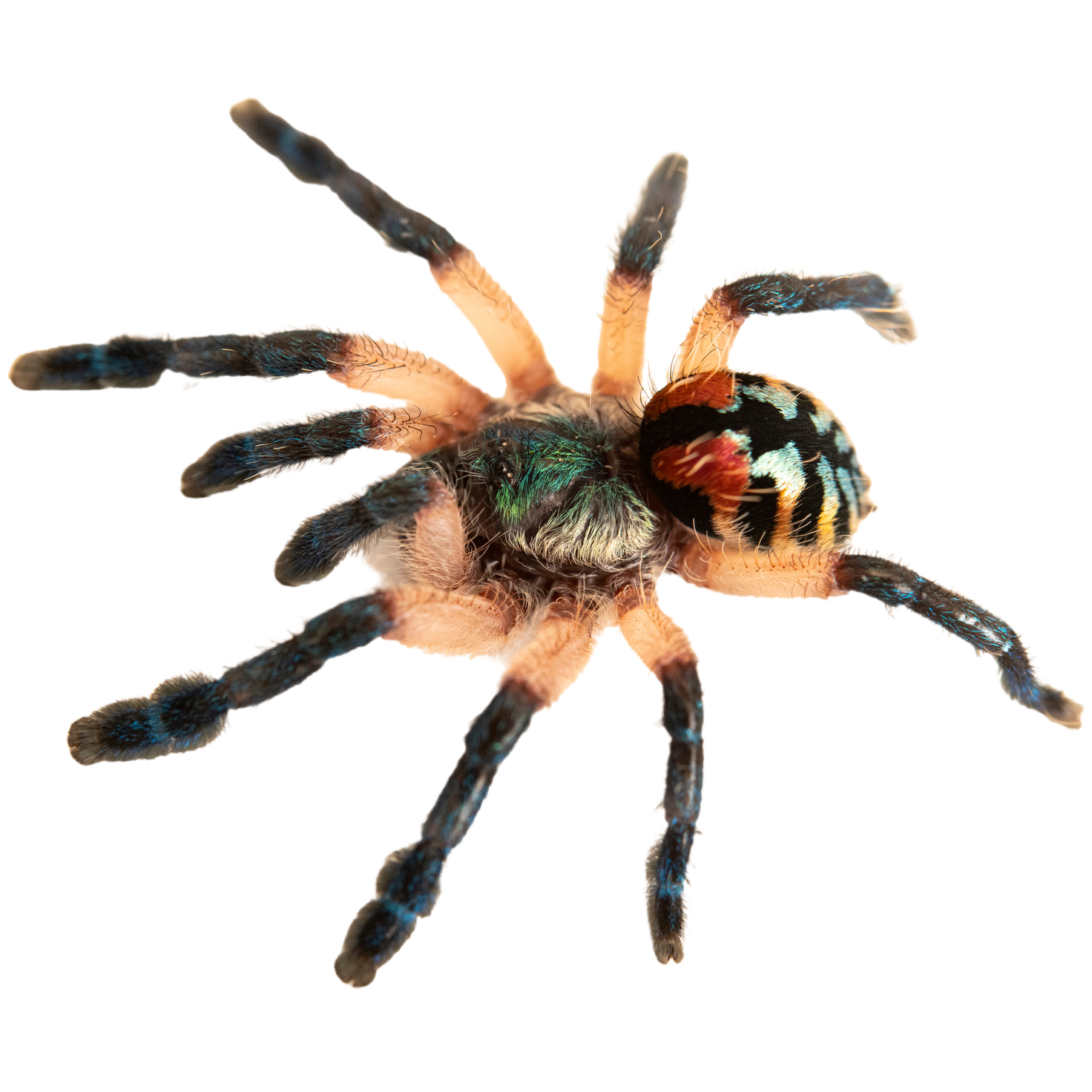
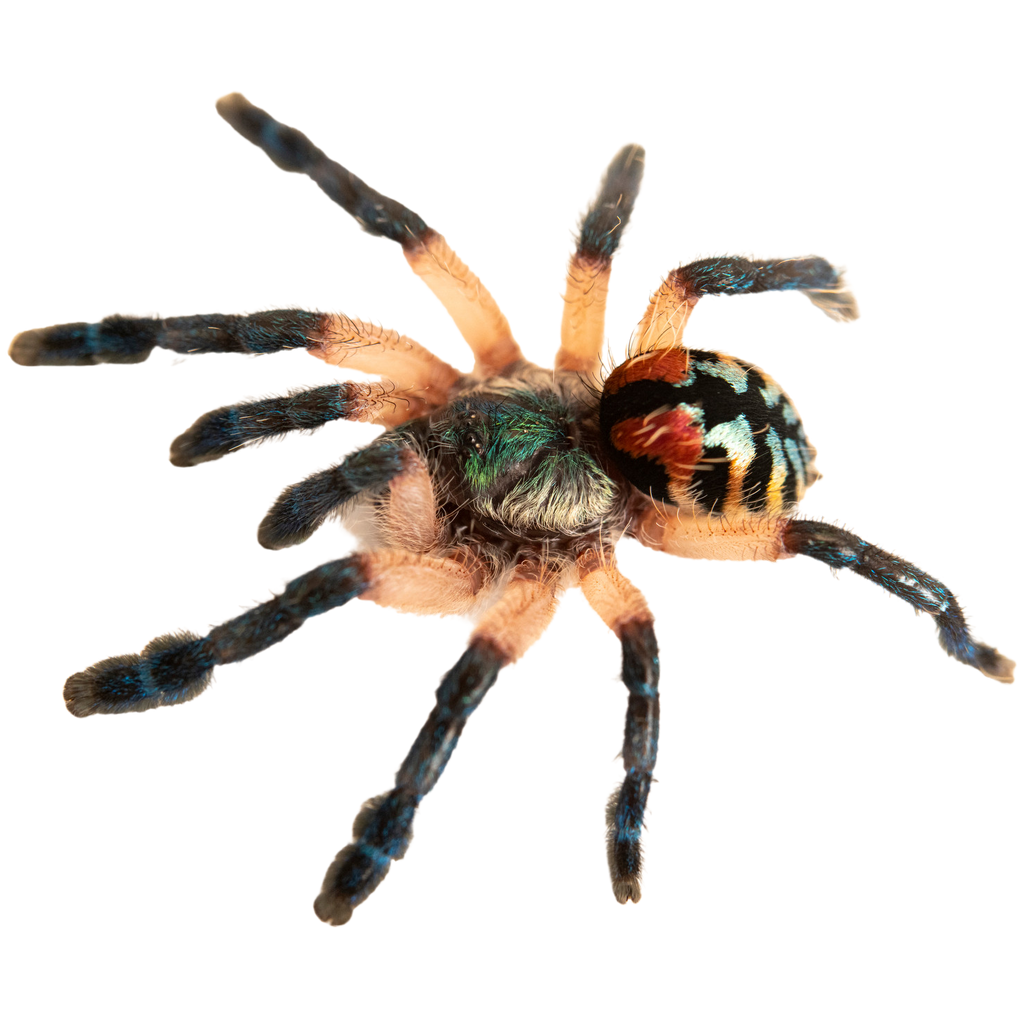
The Brazilian Jewel Tarantula is a small to medium-sized, arboreal tarantula native to the Atlantic forests of eastern Brazil. As juveniles, they display rapid growth compared to many larger tarantula species, molting frequently during their first year of life. Each molt allows the spider to shed its exoskeleton and expand in size, gradually developing the vivid metallic blues and complex leg striping that give the species its common name. Females generally mature in two to three years and can live well over a decade under favorable conditions, while males mature more quickly and rarely survive more than a few years, particularly after reaching sexual maturity.
Throughout its life, this tarantula is arboreal, spending the majority of its time above ground in trees, shrubs, and other elevated vegetation. Juveniles may begin life closer to the ground in leaf litter or low vegetation, but as they grow, they establish silken retreats in tree cavities, under loose bark, or within dense foliage. These retreats are reinforced with extensive webbing that provides both structural stability and early warning of approaching threats. This is a nocturnal species, emerging after dark to hunt. Using a combination of vibration detection and acute sensitivity to air movement, it locates prey such as insects and other small invertebrates. Once within range, it strikes with remarkable speed, injecting venom to immobilize its prey before consuming liquefied tissues.
Behaviorally, this tarantula is known for its alert and defensive nature. Unlike many New World terrestrial tarantulas that rely heavily on specialized hairs as a primary defense, this arboreal species is more inclined to flee rapidly into its retreat when disturbed. If escape is not possible, it may adopt a defensive posture, raising its front legs and displaying its fangs. Biting is a last resort but can occur if the spider feels cornered. Social interaction outside of breeding is minimal; individuals are solitary and often intolerant of conspecifics, especially as adults.
Ecologically, the Brazilian Jewel Tarantula serves as both predator and prey within its forest ecosystem. As an insectivore, it helps regulate populations of various arthropods, contributing to natural pest control and maintaining balance within the forest canopy community. In turn, it is preyed upon by birds, small mammals, reptiles, and parasitic wasps, particularly during its more vulnerable molting periods. Its arboreal specialization reflects several adaptations to life off the ground, including strong, adhesive pads on its feet for climbing, excellent body awareness for navigating vertical surfaces, and the ability to construct complex silken structures in elevated habitats. By occupying the forest canopy and mid-level vegetation, it fills a distinct ecological niche, participating in the intricate web of predator-prey interactions that sustain the biodiversity of Brazil’s Atlantic forest.
Understanding the life history and ecological context of this striking tarantula provides essential insight into its behavioral needs and environmental sensitivities. Its arboreal habits, rapid defensive responses, and reliance on vertical space are all products of millions of years of adaptation to a dynamic forest ecosystem.
Conservation Status
The Brazilian Jewel Tarantula does not have a conservation status listed in the IUCN Red List, meaning it falls under the category of "Not Evaluated." This classification indicates that the species has not been assessed for its risk of extinction according to the criteria of the IUCN Red List. In the absence of an official evaluation, the population trend, geographic distribution, and overall health of the species remain largely unquantified at a global level, though anecdotal reports often guide current understandings.
Despite the lack of an official assessment, the Brazilian Jewel Tarantula faces several threats in its natural environment that can impact its populations and long-term viability. Habitat destruction, primarily due to deforestation and land conversion for agriculture, poses a significant threat. These practices reduce the available natural habitat crucial for the species' survival. The illegal pet trade is another pressing threat; their striking coloration makes them highly coveted by collectors, leading to overharvesting from the wild. Such extraction can dramatically reduce local populations, particularly when combined with habitat loss and degradation. Brazil has not legally exported these tarantulas since 1998, USFWS has historically viewed them as illegal "fruit from the forbidden tree” as they trace back to illegally exported specimens.
Conservation efforts for the Brazilian Jewel Tarantula are just coming into existence, largely due to its undefined conservation status. However, general tarantula conservation strategies can offer insights into potential measures. Breeding programs, implemented by tarantula enthusiasts and hobbyists, contribute to the preservation of genetic diversity and reduce pressures on wild populations by providing an alternative source for the pet trade. Furthermore, habitat protection laws aimed at safeguarding rainforest ecosystems can indirectly benefit this species by preserving its natural habitat. Although no specific reserves are known to focus exclusively on the Brazilian Jewel Tarantula, those that protect extensive tracts of Brazilian forest habitats play a critical role in conserving the wide array of species residing there.
For long-term conservation success, efforts must broaden to include the protection and restoration of native habitats and the enforcement of regulations controlling the illegal pet trade. International collaborations and awareness campaigns could further enhance the protection of this species, promoting its sustainability both within natural ecosystems and in the context of captivity. Protecting the Brazilian Jewel Tarantula requires continued research to better understand its ecology, behavior, and distribution, thereby enabling the development of targeted conservation strategies in the future.
Native Range
The Brazilian Jewel Tarantula is native to eastern Brazil, where it is endemic to a relatively restricted portion of the Atlantic Forest biome. Its known distribution is concentrated primarily in the state of Bahia, though closely related populations occur in adjacent areas of northeastern Brazil. Unlike wide-ranging terrestrial tarantulas that occupy vast expanses of habitat across multiple countries, this species has a comparatively limited geographic range confined to humid coastal and inland Atlantic Forest zones. This restricted distribution, combined with historical deforestation in the region, makes its natural habitat both ecologically specialized and increasingly fragmented.
At the macrohabitat level, this species inhabits tropical and subtropical moist broadleaf forests. The Atlantic Forest is characterized by dense canopy cover, layered vegetation structure, and high biodiversity. Annual rainfall in these regions commonly ranges from approximately 40 to over 80 inches, with precipitation distributed throughout much of the year. While there may be a relatively drier season during the southern winter, humidity remains consistently elevated. Average daily temperatures typically range from about 70℉ to 85℉, with occasional highs near 90℉ during warmer months. Nighttime temperatures usually drop into the upper 60s to low 70s. Relative humidity often remains between 70% and 90%, creating a stable, moisture-rich environment that supports abundant plant growth and invertebrate life.
Within this broader forest ecosystem, the Brazilian Jewel Tarantula occupies highly specific microhabitats. It is an arboreal species that spends its life off the forest floor, relying on mature trees for shelter. Individuals are most often found inside natural cavities in live trees, beneath loose bark layers, within knot holes, or in narrow crevices formed by branching trunks. They construct tubular silk retreats that line and seal these cavities, creating a concealed chamber with a small entrance. These retreats provide protection from predators, desiccation, and environmental fluctuations. In some cases, they may also use spaces among epiphytic plants such as bromeliads, which trap moisture and organic debris and create humid microclimates high above the ground.
Vegetation structure is critical to this species’ survival. The dense canopy moderates temperature extremes and maintains high ambient humidity. The presence of mature trees with natural hollows is especially important, as juveniles and adults depend on preexisting cavities rather than burrowing into soil. In parts of Bahia, this tarantula has also been observed in traditional cacao agroforestry systems known as “cabruca,” where cacao trees are cultivated under a retained native canopy. These semi-natural systems can provide substitute arboreal microhabitats when sufficient tree cover and structural complexity are preserved.
This species is generally found in lowland to mid-elevation environments, from near sea level up to roughly 3,000 feet in elevation. Within this range, climatic conditions remain warm and humid for most of the year. Elevation influences local temperature and moisture patterns, but the species consistently favors areas where humidity remains high and rapid desiccation is unlikely. Proximity to perennial water sources such as streams or areas with high groundwater retention contributes to maintaining suitable forest humidity, though the tarantulas themselves do not depend on standing water.
Seasonally, increased rainfall can stimulate greater insect activity, indirectly influencing feeding opportunities. During relatively drier periods, individuals remain within their silk-lined retreats, where stable humidity helps prevent dehydration. The structural integrity of forest habitat, presence of arboreal refuges, consistent humidity, and warm temperatures are the key environmental factors essential for this species’ long-term survival. Any significant reduction in canopy cover, tree cavity availability, or regional moisture levels can negatively affect population stability in the wild.
Behavior
The Brazilian Jewel Tarantula is a nocturnal species that spends the majority of its life concealed within tree bark burrows. In its native tropical range, it inhabits humid forests where temperatures remain warm year-round and seasonal variation is influenced more by rainfall than by dramatic temperature shifts. During daylight hours, this species typically remains inside its burrow to avoid predation and desiccation. Activity increases after dusk, when ambient temperatures stabilize and prey items such as insects and other arthropods become active. Nocturnal excursions are usually short and deliberate, often limited to the immediate vicinity of the burrow entrance.
Seasonal behavioral changes are closely tied to precipitation patterns. During wetter periods, individuals may be more frequently observed at or near the burrow entrance due to increased prey availability. In drier intervals, they tend to remain in their silken burrows where microclimate conditions are more stable.
This species is solitary and not considered aggressive, they are however skittish, fast moving, and can biome defensive. While they do not protect large, active territories, they are territorial over their specific, silk-lined bark crevice or trapdoor. Individuals construct and maintain their own burrow systems and do not tolerate conspecifics outside of brief mating encounters. Territoriality is primarily expressed through avoidance rather than overt confrontation, as encounters between adults can result in injury or cannibalism. Males become more mobile upon reaching sexual maturity, wandering at night in search of receptive females. Courtship involves a series of vibratory signals transmitted through their webbing. The male taps rhythmically near the female’s burrow to signal species identity and readiness to mate. If the female is receptive, she will allow the male to approach. Mating is cautious and brief, as females may prey upon males if communication cues are misinterpreted or if the female is not physiologically receptive.
Environmental stimuli strongly influence behavior. Temperature fluctuations affect metabolic rate and surface activity. In cooler conditions, individuals remain deeper in their burrows where temperatures are more stable. Excessively high surface temperatures may also cause retreat. Humidity plays a critical role; insufficient moisture can lead to desiccation stress, prompting the tarantula to plug its burrow entrance to conserve humidity. Light exposure is generally avoided, and bright light often triggers retreat behavior. Vibrations transmitted through the environment are the primary sensory modality for detecting prey, predators, and potential mates. Highly sensitive mechanoreceptive hairs allow them to perceive minute movements, while chemical cues assist in environmental assessment.
When threatened, this species relies on a combination of defensive strategies. It is generally reclusive and prefers to retreat. If cornered, it may display a threat posture by raising its front legs and exposing its fangs. As a New World species, it possesses specialized hairs. These barbed hairs can be kicked into the air toward a predator, causing irritation to skin and mucous membranes. Biting is typically a last resort. Camouflage also plays a role in defense; its coloration, while iridescent and vivid under certain light angles, can blend effectively with their trapdoors.
Thermoregulatory behavior involves precise use of microhabitats. Rather than basking openly, this tarantula regulates body temperature by shifting vertically within its burrow system. They often inhabit bromeliads, which provide a naturally insulated, humid, and stable microclimate, offering relief from excessive heat. While relatively inactive, they can alter their position within their silk-lined retreat or modify their trapdoor site to select a better microclimate.
In managed care, behavioral patterns remain largely consistent with those observed in the wild when environmental parameters are properly maintained. Individuals remain nocturnal and burrow-oriented. However, enclosure conditions can influence surface visibility. In an appropriately furnished enclosure, the tarantula will construct an extensive burrow and may rarely be seen except at night. In enclosures with insufficient furniture, individuals may exhibit increased defensive behavior due to lack of security. Stress responses often include excessive hair flicking, refusal to feed, or persistent attempts to climb enclosure walls in search of suitable burrowing sites.
Feeding behavior is typically opportunistic. While wild individuals may ambush prey passing near the burrow entrance, managed specimens often respond quickly to introduced prey vibrations. Some may exhibit heightened food responses due to consistent feeding schedules. Aggression toward prey remains strong, but aggression toward humans is generally defensive rather than proactive.
Enrichment for this species centers on environmental complexity rather than interactive stimulation. Providing a tropical substrate that allows humidity retention and support of bioactivity is essential for psychological and physiological well-being. Stable humidity and appropriate thermal gradients reduce stress and promote natural behaviors. When these needs are met, Brazilian Jewel Tarantulas display calm, predictable patterns closely aligned with those observed in their natural habitat in human care.
Husbandry Requirements
Enclosure Design
The Brazilian Jewel Tarantula is a highly arboreal species that inhabits tree hollows and vertical bark crevices in humid South American forests. Its enclosure must emphasize vertical space over floor area to accommodate natural climbing and retreat-building behaviors. For a single juvenile measuring under 2 inches in diagonal leg span, an enclosure measuring at least 8 inches tall, 6 inches wide, and 6 inches deep is appropriate. As the tarantula grows, the enclosure must be upgraded to prevent stress and accommodate webbing and vertical movement. A fully grown adult, which may reach 2 to 2.5 inches in leg span, should be housed in an enclosure that is no smaller than 12 inches tall, 8 inches wide, and 8 inches deep. Larger enclosures, up to 18 inches tall, are beneficial provided vertical furnishing is adequate.
Materials must balance ventilation with humidity retention. Clear acrylic or glass enclosures with cross-ventilation are strongly recommended. Ventilation holes should be placed both high and low to promote passive air exchange while maintaining stable humidity. Excessive ventilation can lead to desiccation, while poor airflow increases the risk of mold growth and stagnant conditions. Secure, fine mesh or perforated lids are essential, as this species is fast-moving and capable of exploiting small gaps. Sliding doors or hinged lids must close flush and lock securely to prevent escape.
The enclosure layout should replicate a vertical forest microhabitat. A tall piece of cork bark placed upright against the back of the enclosure serves as a primary retreat and anchor point for web construction. The bark should extend nearly to the top of the enclosure, allowing the tarantula to establish a silken tube retreat behind or within it. Additional vertical branches or textured climbing surfaces enhance usable space and encourage natural exploratory behavior. Minimal ground clutter is needed, as this species rarely utilizes terrestrial hides. However, a small piece of cork bark at the base can provide a secondary refuge.
Security measures are critical due to the species’ speed and defensive temperament. All openings must be secured before maintenance, and feeding ports should close tightly. Enclosures should be opened slowly and only in controlled environments to prevent accidental escape. Because arboreal tarantulas are prone to injury from falls, enclosure height should always be matched with ample web anchor points and furnishings to reduce the likelihood of sudden drops onto hard surfaces.
Lighting and Heating
The Brazilian Jewel Tarantula does not require specialized UVB lighting, but one can be given. As a nocturnal invertebrate that typically resides within shaded forest retreats, it receives little direct sunlight in the wild. Ambient room lighting that follows a natural day-night cycle is sufficient. A consistent 12-hour light and 12-hour dark photoperiod supports normal behavioral rhythms. Minor seasonal adjustments, such as slightly shorter daylight hours during winter, may be implemented but are not strictly necessary for this species in captivity.
Temperature gradients are subtle but important. Ideal ambient temperatures should remain between 72℉ and 78℉ during the day. A slight daytime increase up to 80℉ is tolerated but should not be exceeded consistently, as prolonged high temperatures increase stress and dehydration risk. Nighttime temperatures may safely drop to between 68℉ and 72℉. Stability is more important than extreme gradients for this species.
Supplemental heating is often unnecessary if the room remains within the ideal range. If additional warmth is required, a low-wattage heat source may be placed externally on a side panel of the enclosure to create a gentle thermal gradient. Heating elements must always be regulated by a reliable thermostat to prevent overheating. Under no circumstances should heat rocks be used, as they can cause localized overheating and desiccation. Overhead heat lamps are generally discouraged because they rapidly dry the enclosure and disrupt humidity balance.
Temperature should be monitored using accurate digital thermometers placed at mid-height within the enclosure. Because this species prefers elevated retreats, measuring temperatures both near the upper third and near the substrate provides a clearer understanding of the internal climate.
Substrate and Enrichment
A moisture-retentive substrate layer that mimics tropical forest floor conditions is essential. A depth of 2 to 3 inches is sufficient since this species is not a burrower. A mixture of ReptiEarth and TropicalBase creates an ideal balance between humidity retention and aeration. ReptiChip may be incorporated to improve structure and reduce compaction. The substrate should remain slightly damp but never saturated, as waterlogged conditions promote mold and mite growth.
Soil should be gently compacted to stabilize vertical decorations but left loose enough to allow natural microfauna if a bioactive approach is used. Bioactive systems containing springtails and isopods can assist in waste breakdown, though careful humidity management is required to prevent overgrowth of mold.
Environmental enrichment should focus on vertical complexity. Multiple cork bark slabs, curved bark tubes, and firm branches allow the tarantula to create intricate silken tunnels. Anchor points at varying heights encourage natural webbing structures and expand usable territory. Rearranging anchor elements only during necessary enclosure upgrades helps prevent chronic stress. Enrichment can come in many forms and is for the stimulation of your animal. The five types of enrichment you can offer are food related, sensory, physical habitat, cognitive, and social. These categories have a vast variety of options to choose from that are appropriate for the species being enriched.
Although tarantulas do not engage in play behavior, enrichment reduces stress by facilitating species-typical behaviors such as web construction, ambush positioning, and nocturnal exploration. Vibrational disturbances should be minimized, as this species is sensitive to environmental vibrations. Placement of the enclosure in a quiet, low-traffic area contributes significantly to long-term health.
Humidity and Hydration
The Brazilian Jewel Tarantula requires moderate to high humidity levels, ideally maintained between 70% and 80%. Brief fluctuations slightly below this range are tolerated, but prolonged dry conditions can result in dehydration and molting difficulties. Conversely, constantly saturated conditions predispose the enclosure to fungal growth and poor air quality.
Humidity is best maintained through controlled substrate moisture rather than frequent heavy misting. One corner of the substrate should be gently moistened once or twice per week, allowing moisture to gradually evaporate and stabilize internal humidity. Light misting of enclosure walls may be performed as needed, but surfaces should dry within 24 hours to prevent stagnation.
A shallow water dish should be provided at all times, even for juveniles. The dish must be stable and shallow enough to prevent accidental drowning of feeder insects while still allowing the tarantula access to open water. This species will drink from both water dishes and droplets on webbing or enclosure walls. Fresh water should be replaced regularly to prevent bacterial growth.
Accurate humidity monitoring is essential. A digital hygrometer placed at mid-level within the enclosure provides a representative reading. Avoid analog dial gauges, as they are often inaccurate. Observing the tarantula’s behavior during pre-molt periods is also important; slightly elevated humidity within the acceptable range can assist with successful ecdysis. Careful balance of ventilation and moisture ensures a stable microclimate that supports proper hydration and long-term health.
Diet & Supplementation
The Brazilian Jewel Tarantula, a captivating species native to the lush forests of Brazil, follows a carnivorous diet. In their natural habitat, these tarantulas are opportunistic predators, consuming a variety of prey items primarily composed of invertebrates. Their diet includes insects such as crickets, grasshoppers, and various beetles. This species is adept at utilizing its environment to ambush prey, employing its great patience and speed to capture unsuspecting victims. The tarantula primarily relies on vibration and chemical cues detected by sensory hairs on its legs and body, which allow it to pinpoint the location and movement of potential prey.
The Brazilian Jewel Tarantula employs an efficient strategy for capturing and consuming prey. When a target is within striking distance, it quickly lunges forward, capturing it with its front legs and immobilizing it using its sharp fangs. The tarantula then injects venom to subdue the prey. This venom contains enzymes that begin the digestion process externally, allowing the tarantula to consume its meal in liquid form.
Throughout its life, the dietary preferences and needs of the Brazilian Jewel Tarantula can shift. Juveniles often require more frequent feedings and consume smaller prey items, while adults eat larger meals less often. Additionally, environmental changes, such as seasonal fluctuations in prey availability in the wild, can impact their feeding behavior. Periods of fasting may occur naturally, especially before molting or during cooler seasons when prey is scarce.
Maintaining an appropriate diet under human care presents unique challenges for the Brazilian Jewel Tarantula. While the staples of their diet remain insects like crickets and roaches, providing a varied diet is crucial to meet nutritional needs. In managed care, it is essential to occasionally supplement their diet with appropriate vitamins and minerals, gut loading your insects 24 hours before feeding will achieve this. Difficulties arise in replicating the exact nutritional composition of wild prey, making it vital for keepers to offer a diverse range of insects to prevent nutrient deficiencies.
Common feeding issues can include food refusal, which may occur if the tarantula is nearing a molt or experiencing stress due to environmental conditions such as incorrect temperature or humidity. Obesity and malnutrition are also concerns if prey selection and feeding frequency are not carefully managed. To encourage natural feeding behaviors, it is recommended to present varied prey types and employ feeding schedules that mimic natural cycles. Providing environmental enrichment, such as stimulating hiding spots or using live prey, can also promote healthy foraging and reduce stress. By understanding and catering to the specific dietary needs of the Brazilian Jewel Tarantula, keepers can ensure the health and vitality of these striking arachnids.
Reproduction
The Brazilian Jewel Tarantula reaches reproductive maturity relatively quickly compared to many larger terrestrial tarantulas. Males typically mature between two to three years of age, while females may reach maturity slightly later, often between four and five years, depending on feeding frequency and environmental conditions. Sexual dimorphism becomes clearly visible at maturity. Mature males develop elongated legs, a more slender body, and tibial apophyses (mating hooks) on the first pair of legs. They also develop enlarged pedipalps with bulbous sperm storage organs. Females remain more robust in build, with a heavier abdomen and shorter, thicker legs. Prior to mating, a mature male will produce a sperm web and charge his palpal bulbs with sperm before seeking out a receptive female.
Courtship behavior in this species is deliberate and cautious. The male typically begins by drumming or tapping around her burrow with his front legs and pedipalps to signal his presence. This vibrational communication helps distinguish him from prey. If the female is receptive, she may respond by remaining stationary or lightly tapping in return. During the approach, the male continues rhythmic drumming while carefully advancing. Once within reach, he uses his tibial hooks to gently lift and secure the female’s fangs, creating space to insert his pedipalps and transfer sperm. Copulation may last several seconds to over a minute. As with many tarantulas, there is a risk of cannibalism if the female is unreceptive or defensive. A well-fed female in optimal condition is less likely to attack the male immediately after mating.
Environmental cues play a significant role in stimulating reproductive behavior. In managed care, successful breeding, rather than temperature drops, is more often linked to proper husbandry, specifically high humidity (70-80%) with excellent cross-ventilation to avoid stagnant air as this species naturally inhabits humid Atlantic forest environments. Stable humidity with good ventilation prevents fungal growth while maintaining the moisture levels necessary for overall health and reproductive readiness.
The Brazilian Jewel Tarantula is oviparous, reproducing through internal fertilization and egg development within a silk egg sac. For breeding, individual housing is recommended until a planned introduction occurs. A well-established, appropriately sized enclosure for the female, ideally at least two feet by one foot in floor space with ample vertical cork bark and anchor points for webbing, should be used as the breeding location. This species is arboreal and constructs dense silk retreats, so vertical structure is essential. The male should be introduced carefully into the female’s enclosure rather than relocating the female, as moving her can cause stress and disrupt established security patterns. Continuous supervision during introduction is critical to prevent injury or cannibalism.
Breeding challenges most often involve incompatibility between individuals, environmental instability, or poorly timed introductions. An unreceptive female may ignore the male’s courtship signals or respond defensively. Ensuring the female has recently fed and is not in premolt is crucial, as females close to molting will not accept a mate. Males also have a limited breeding window after maturity, as their lifespan is significantly shorter than that of females. Temperature fluctuations outside the recommended range or excessively dry conditions can reduce activity levels and suppress reproductive responses. Conversely, stagnant, overly damp enclosures may promote stress and disease.
To increase success rates, keepers should carefully monitor both individuals for signs of maturity and optimal health before pairing. Conditioning the female with consistent feeding several weeks prior to introduction improves receptivity and reduces aggressive behavior. Introducing the male during evening hours, when the species is naturally more active, may also improve courtship success. If initial introduction fails, separating the pair and attempting again after several weeks can yield better results. Patience, precise environmental control, and close behavioral observation are the keys to consistent and safe captive breeding of this species.
Incubation & Neonate Care
Fertilization occurs internally after a successful mating, with the male depositing sperm via specialized pedipalps. After mating, the female stores the sperm until she produces an egg sac. Unlike live-bearing species, there is no gestation involving placental nourishment; instead, embryonic development occurs entirely inside the eggs once they are laid and encased in silk.
Following a successful pairing and adequate nutritional conditioning, the female typically produces an egg sac within four to eight weeks. Prior to oviposition, she will often become reclusive and may refuse food. She constructs a dense silk retreat and lays the eggs within it, carefully wrapping them into a spherical egg sac. Clutch size can range from approximately 70 to over 150 eggs, depending on the age, size, and overall condition of the female. Optimal environmental conditions during this period are critical. Ambient temperatures should be maintained between 75℉ and 82℉, with slightly warmer conditions around 80℉ often promoting optimal embryonic development. Relative humidity should be maintained between 70% and 80%, but adequate ventilation must be preserved to prevent mold growth, which can be fatal to the developing eggs.
In many cases, the female will actively guard and rotate the egg sac to ensure even temperature and moisture distribution. Some breeders choose to leave the sac with the female for the full incubation period, while others remove it after approximately three weeks for artificial incubation to reduce the risk of the female consuming it due to stress. If artificially incubated, the sac should be kept in a well-ventilated container with slightly moist substrate such as lightly damp vermiculite or paper towel, ensuring it is not in direct contact with free-standing water. The egg sac is often suspended or placed on a mesh platform to allow airflow. Under proper conditions, incubation typically lasts six to eight weeks. Development progresses from eggs to first instar larvae (often called "eggs with legs") and then to second instar spiderlings capable of independent movement.
Temperature significantly influences developmental rate, though this species does not exhibit temperature-dependent sex determination as seen in some reptiles. Higher but safe temperatures within the recommended range may shorten incubation time, while cooler conditions can prolong development and increase the risk of fungal contamination or embryonic failure.
As hatching approaches, embryos transition from immobile larvae to motile second instars within the sac. If left with the female, she may assist by opening the sac once the spiderlings are ready to disperse. In artificial incubation, the breeder may gently open the sac once most individuals have molted to second instar, typically indicated by darker coloration and active movement. Care must be taken to avoid damaging delicate limbs during this process.
Potential reproductive complications include egg sac desiccation from insufficient humidity, fungal outbreaks from excessive moisture and poor airflow, and egg sac cannibalism by stressed females. While egg binding is more common in reptiles, tarantulas can experience retained eggs if they are severely dehydrated or improperly conditioned, which often results in mortality. Maintaining proper hydration and pre-breeding nutrition significantly reduces these risks.
Once spiderlings reach the second instar stage and begin dispersing, they should be separated to prevent cannibalism. Individual rearing is recommended for maximizing survival rates. Each spiderling can be housed in a small ventilated enclosure approximately two to three inches in diameter and two to three inches tall, with one to two inches of slightly loose moist substrate such as ReptiEarth. Because this is an arboreal species even from a young age, providing a small piece of cork bark or textured surface for climbing is beneficial.
Environmental parameters for neonates should mirror those of adults but with closer monitoring. Maintain temperatures between 76℉ and 82℉. Slightly higher humidity, around 75% to 80%, supports proper molting, though the enclosure should never be saturated. Light misting along one side of the enclosure once or twice weekly is usually sufficient, allowing part of the substrate to dry slightly between mistings to prevent mold.
Spiderlings, or “slings” as some call them, typically begin feeding once they have hardened after their first molt to second instar. Prey should be proportionally small, such as flightless fruit flies, pre-killed pinhead crickets, or very small roach nymphs. Feeding once or twice per week is appropriate, with uneaten prey removed within 24 hours. As spiderlings grow, prey size can gradually increase relative to the body length of the animal.
Hydration is critical. While they obtain moisture from prey and substrate humidity, occasional micro-droplets on the enclosure wall can provide additional drinking opportunities. Standing water dishes are generally unnecessary and may pose a drowning risk at this stage.
Young Brazilian Jewel Tarantulas are more sensitive to dehydration, sudden temperature changes, and nutritional deficiencies than adults. Common health concerns include failed molts due to inadequate humidity, desiccation from insufficient moisture, and cannibalism when housed communally. Handling should be avoided entirely, as spiderlings are fast, delicate, and prone to injury from even minor falls. Enclosures should not exceed four to five inches in height to minimize risk of rupture injuries from accidental drops.
With stable environmental conditions, consistent feeding, and minimal disturbance, spiderlings grow steadily through successive molts, eventually developing the striking coloration and arboreal behaviors characteristic of the species. Proper incubation and careful neonatal husbandry are essential to achieving high survival rates and producing healthy, well-established juveniles.
Conclusion
In conclusion, the Brazilian Jewel Tarantula, a stunning and ecologically unique species from the Atlantic forests of eastern Brazil, presents both opportunities and challenges in managed care. Its distinctive arboreal nature necessitates an enclosure design that prioritizes vertical spaces and complex climbing structures. Managing appropriate environmental conditions, such as maintaining consistent humidity and temperature, is crucial for supporting both its physiological needs and natural behaviors.
This tarantula's relatively rapid growth and distinct lifecycle require keepers to be well-versed in the changes in dietary needs, activity levels, and environmental requirements at various stages of its life. Successful breeding hinges on understanding and replicating natural breeding cues and offering proper post-mating care, along with careful management of the egg sac and subsequent spiderling development.
Though not currently evaluated for conservation status, the species is subject to threats from habitat loss and the illegal pet trade. Sustainable husbandry and breeding initiatives can help mitigate these pressures by reducing the necessity for wild-caught specimens, while also offering opportunities for education and awareness about the broader ecological roles these tarantulas fulfill in their native ecosystems.
In sum, by adhering to precise husbandry protocols and fostering an environment that mimics their natural habitat, reptile keepers can ensure the health and vitality of the Brazilian Jewel Tarantula, allowing it to thrive both in human care and, ultimately, contributing to the preservation of its populations in the wild.
Another intriguing fact about Brazilian jewel tarantula is its web-building behavior. While most tarantulas are known to construct webs for various purposes, Brazilian jewel tarantula creates elaborate silken retreats within the bromeliads and other vegetation it inhabits. These silk structures are multi-functional, serving as both a protective retreat and a platform for ambushing prey. The tarantula's webbing skills highlight its adaptation to an arboreal lifestyle, demonstrating a level of complexity in web construction that is not as common among terrestrial tarantulas. Additionally, Brazilian jewel tarantula exhibits relatively calm and non-aggressive behavior, making it a more manageable species for experienced tarantula keepers. Despite its beauty and intriguing habits, the Brazilian jewel tarantula is still relatively rare in the pet trade, partly due to its specific habitat requirements and the challenges associated with breeding and raising this species in captivity.