Natural History
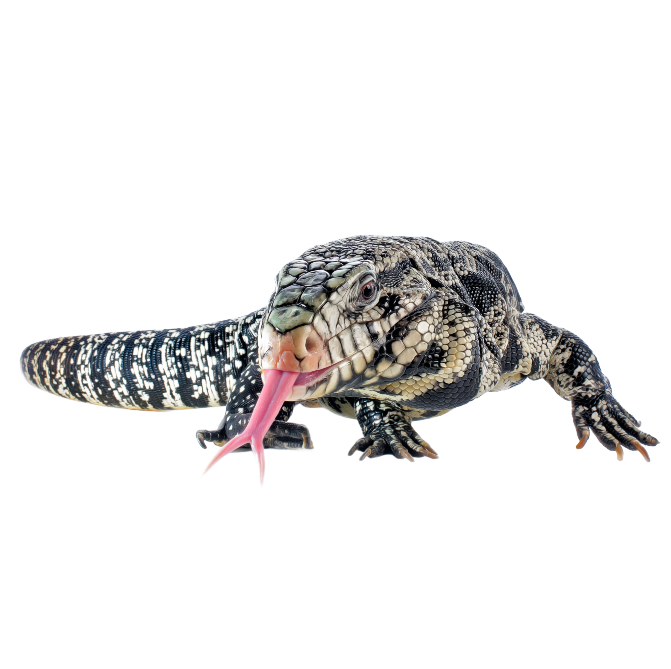
The Argentine Tegu is one of the largest and most intelligent lizards native to South America, inhabiting savannas, grasslands, forest edges, and scrub habitats across Argentina, Paraguay, Uruguay, and parts of Brazil. In the wild, their lifespan is estimated to range from 15 to 20 years, while individuals in well-managed environments may live even longer. Females exhibit a moderate degree of parental investment compared to most lizards, carefully selecting and constructing nest sites and, in some cases, guarding the nest for a short period after laying.
Ecologically, the Argentine Tegu plays a vital and multifaceted role. As both predator and scavenger, it helps regulate populations of insects, rodents, and other small animals, contributing to natural pest control. Its consumption of carrion aids in nutrient recycling within its ecosystem. By feeding on fruit, it may also assist in seed dispersal, supporting plant regeneration in certain habitats. Tegus themselves are prey for larger predators, including birds of prey, large snakes, and carnivorous mammals, particularly when young. Their burrowing behavior influences soil structure and can create shelter opportunities for other organisms. The species’ adaptability to varied environments, broad diet, seasonal dormancy, and strong thermoregulatory behavior have allowed it to thrive across diverse climates. Understanding this complex life history provides essential insight into the biological and environmental needs that must be met when maintaining this species in a managed setting.
Conservation Status
As of the most recent assessment in 2014, the IUCN Red List classifies the Argentine Tegu as being of Least Concern. This classification implies that the species is currently widespread and abundant, with no immediate risk of population decline that would warrant a higher threat status. Despite being listed as Least Concern, continuous monitoring is necessary to ensure that this status is maintained, as changes in environmental conditions or threats can quickly alter the population dynamics.
One of the reasons for the Argentine Tegu's classification is its extensive geographic distribution. This reptile species is native to a wide range of South America, primarily found in countries such as Argentina, Brazil, Uruguay, and Paraguay. A healthy, stable population trend is often associated with its adaptability to a variety of habitats, ranging from tropical rainforests to savannas, and even urban environments where it often forages for food. However, while the population trend is currently stable, ongoing threats could potentially impact future status.
The primary threats facing the Argentine Tegu in the wild include habitat destruction, particularly due to deforestation for agricultural expansion and urban development. While the species is quite adaptable, the rapid destruction of its natural habitat can limit its available resources and territory, leading to increased competition for survival. In some regions, climate change is also an emerging threat, impacting the availability of fresh water and suitable living conditions. Additionally, the Argentine Tegu faces pressure from illegal wildlife trade, where it is often captured and sold as a pet due to its striking appearance and relatively docile nature.
To combat these threats, several conservation efforts are currently in place, although they vary significantly in scope and success. Protective laws in some countries regulate the capture and trade of these lizards, aiming to curb the illegal pet market. However, enforcement can be challenging, necessitating broader international cooperation and public awareness campaigns to reduce demand for wild-caught individuals. In areas where habitat destruction is prevalent, habitat restoration projects are crucial, focusing on reforestation and the protection of critical ecosystems to maintain the ecological balance necessary for the Argentine Tegu's survival.
Breeding programs are being developed to ensure the genetic diversity and sustainability of the species. These programs not only aim to supply the pet trade with captive-bred individuals, reducing the demand for wild-caught tegu but also act as a genetic reservoir that could support future reintroduction efforts should wild populations begin to decline. While the Argentine Tegu currently thrives, ongoing conservation efforts are vital in preserving this remarkable species and ensuring its continued survival in a rapidly changing world.
Native Range
The Argentine Tegu is native to southeastern South America and has a broad natural distribution that includes Argentina, Paraguay, Uruguay, Bolivia, and southern and southeastern Brazil. Its range spans several major ecological regions, making it one of the most widely distributed large lizards in South America. It is especially common in northern and central Argentina, where it occupies a variety of subtropical and temperate habitats. Because of this wide geographic range, it encounters diverse environmental conditions and demonstrates a high degree of ecological adaptability.
At the macrohabitat level, this species is most strongly associated with subtropical forests, savannas, grasslands, and woodland margins. It is frequently found in the Gran Chaco region, the Atlantic Forest biome, and open pampas grasslands. These ecosystems are characterized by a mosaic of forest patches, scrubland, palm groves, and open grassy areas. In many parts of its range, the environment consists of semi-deciduous forests intermixed with wetlands and seasonally flooded plains. The species thrives particularly well in transitional zones, such as forest edges and ecotones, where open basking areas meet denser vegetation. It is also commonly observed in areas modified by humans, including agricultural lands and pasture edges, provided sufficient cover and prey are available.
Within these broader ecosystems, Argentine Tegus select specific microhabitats that provide shelter, thermoregulatory opportunities, and access to food. They frequently utilize underground burrows, either excavated themselves or taken over from mammals. These burrows are often dug into soft, well-drained soil and may extend several feet in length, providing stable humidity and temperature conditions. Tegus also shelter beneath fallen logs, dense brush piles, thick leaf litter, and within hollow tree bases. During the active season, they rely on open, sun-exposed areas for basking, typically choosing flat ground, low vegetation, or logs that allow rapid heat absorption. Proximity to water is common but not strictly required. They are strong swimmers and often inhabit areas near streams, marshes, ponds, and seasonally flooded wetlands, where humidity levels are higher and prey abundance is greater.
Climatically, the Argentine Tegu is adapted to a subtropical to warm-temperate climate with pronounced seasonal variation. In much of its native range, summer daytime temperatures regularly reach between 85℉ and 100℉, with high humidity levels often exceeding 60% to 80% in forested or wetland habitats. Winters are cooler and drier, with daytime temperatures frequently ranging from 55℉ to 70℉ and nighttime temperatures dropping lower. These seasonal changes strongly influence the species’ behavior. In cooler months, tegus enter a prolonged period of brumation, retreating into deep burrows where temperatures remain stable and above freezing. Precipitation patterns vary across the range but generally include moderate to heavy rainfall during the warmer months, supporting lush vegetation growth and abundant invertebrate and vertebrate prey populations.
In terms of elevation, Argentine Tegus are most commonly found in lowland and mid-elevation environments, generally from near sea level up to approximately 3,300 feet above sea level. They are most abundant in lowland floodplains, savannas, and forest margins, where soil conditions are suitable for burrowing and where food resources are plentiful. At higher elevations within their range, populations may be more localized and dependent on favorable microclimates.
Several key environmental factors are critical for the survival of this species. Access to well-drained but diggable soil is essential for burrow construction, which in turn supports thermoregulation, predator avoidance, and seasonal brumation. Dense vegetation or ground cover is important for concealment and humidity retention. Reliable basking sites with unobstructed sunlight are equally necessary, as these lizards depend heavily on external heat sources to maintain optimal body temperature. In wetter regions, access to marshes, riverbanks, and swamp edges supports higher prey density and may aid in hydration and shedding. Overall, the Argentine Tegu’s natural habitat is defined by a balance of open basking areas, protective cover, suitable burrowing substrate, seasonal climatic variation, and abundant food resources.
Behavior
The Argentine Tegu is a diurnal lizard, with peak activity occurring in the mid-morning through late afternoon when environmental temperatures are optimal. In its native range of South America, it emerges shortly after sunrise to bask intensively, elevating its core body temperature to support digestion, locomotion, and hunting. Activity levels are strongly influenced by seasonal variation. During warmer months, tegus are highly active, foraging widely and engaging in reproductive behaviors. In cooler months, particularly in regions with pronounced seasonal shifts, they enter a period of brumation. This dormancy can last several weeks to several months, during which the animal retreats to a burrow and drastically reduces movement and feeding. Juveniles typically emerge from brumation later than adults, and males often become active before females in preparation for the breeding season.
Argentine Tegus are generally solitary outside of the breeding season. In the wild, adults maintain loosely defined home ranges, and while these ranges may overlap, direct interaction is often avoided except during courtship or territorial disputes. Males can become territorial during the breeding season, displaying increased aggression toward rival males through posturing, tail lashing, lateral body compression, and occasional biting. Courtship involves persistent pursuit by the male, tongue-flicking, nudging, and grasping of the female. Mating can be physically vigorous. Females construct and guard nests, often built into deep burrows or vegetated mounds. Unlike many lizard species, females exhibit a notable degree of parental investment by defending the nest site during egg incubation. However, there is no parental care after hatching.
This species relies heavily on chemical cues to interpret its environment. The forked tongue and highly developed vomeronasal organ allow precise detection of prey, carrion, predators, and conspecific scent trails. Tongue-flicking increases when investigating novel stimuli, prey items, or unfamiliar individuals. Tegus respond behaviorally to environmental factors such as temperature, humidity, and photoperiod. Reduced daylight and cooler ambient temperatures trigger pre-brumation behaviors, including decreased appetite and increased burrow use. In excessively hot conditions, they seek shelter in burrows or shaded areas to avoid overheating. In the presence of predators, wild tegus may flee rapidly to cover, inflate the body to appear larger, lash the tail defensively, or bite if cornered. Juveniles are more prone to flight, while large adults often rely on bluff displays and physical defense.
Argentine Tegus are opportunistic omnivores with flexible foraging strategies. In the wild, they actively hunt insects, small vertebrates, eggs, and carrion while also consuming seasonal fruits and plant matter. They use a combination of active searching and ambush tactics, guided by scent detection. Powerful jaws and robust dentition allow them to crush hard-shelled prey. Their locomotion is primarily terrestrial and characterized by a purposeful, ground-hugging gait, though they are capable swimmers and can dig extensive burrows using strong forelimbs and claws. Burrowing serves multiple behavioral functions, including thermoregulation, predator avoidance, nesting, and brumation.
Thermoregulatory behavior is especially distinct in this species. Tegus engage in prolonged basking sessions, often flattening the body to increase surface area exposure. They may shuttle between sun and shade to maintain a preferred internal temperature. Unlike most reptiles, Argentine Tegus exhibit a degree of seasonal endothermy during the breeding season, slightly elevating their body temperature above ambient conditions through increased metabolic activity. This physiological adaptation supports reproductive processes and distinguishes them from many other lizard species.
Under human care behavioral patterns shift in response to consistent food availability, controlled temperatures, and regular human interaction. Without seasonal variation in temperature and photoperiod, some individuals may not enter a full brumation, though many still exhibit reduced appetite and activity during winter months due to endogenous rhythms. Tegus often become more tolerant of human presence when habituated properly. Regular, calm handling can reduce defensive responses, whereas inconsistent or forceful interaction may reinforce tail whipping, biting, or avoidance behaviors.
Feeding behavior tends to become more anticipatory and conditioned. Tegus quickly associate enclosure access or specific cues with feeding time, sometimes leading to food-driven lunging behavior if not managed carefully. Enrichment plays a critical role in maintaining behavioral health. In sterile or undersized enclosures, tegus may exhibit pacing, excessive digging at barriers, or lethargy. Providing deep substrate for burrowing, varied textures, visual barriers, and opportunities for exploratory foraging helps replicate natural behaviors and reduce stress.
Aggression is typically situational rather than inherently social, as the species does not require conspecific companionship. Co-housing adults often results in stress or injury, especially between males or during breeding attempts. Visual and olfactory barriers are important to minimize territorial stimulation if multiple animals are housed in proximity.
Overall, the Argentine Tegu demonstrates high behavioral adaptability, complex seasonal rhythms, advanced chemical sensing, and notable thermoregulatory and reproductive traits. Understanding and accommodating these natural behaviors in a managed setting is essential for maintaining physical health, reducing stress, and promoting psychological well-being.
Husbandry Requirements
Enclosure Design
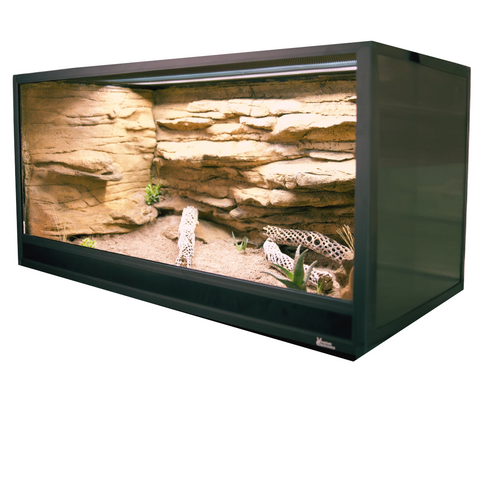
Argentine Tegus are large, powerful, highly intelligent lizards that require expansive enclosures designed to accommodate their adult size, terrestrial lifestyle, and strong digging behavior. Juveniles can be started in an enclosure measuring 48 inches long by 24 inches wide by 24 inches tall, but this size is only appropriate for the first year of growth. Because tegus grow rapidly and can exceed four feet in total length, adults require a minimum enclosure measuring 8 feet long by 4 feet wide by 4 feet tall. Larger is always preferable, especially for males, as increased floor space supports natural roaming and exploratory behavior. Outdoor enclosures can be used in appropriate climates but must provide full environmental control and predator-proof construction.
Enclosures should be constructed from sealed wood such as plywood coated with non-toxic waterproof sealant, PVC panels, or high-quality reptile enclosures designed for large monitors and tegus. Glass aquariums are not suitable for adults due to insufficient insulation and space limitations. Materials must retain heat efficiently while allowing adequate ventilation. Cross-ventilation, with vents placed low on one side and higher on the opposite side, promotes air exchange while maintaining humidity.
The interior layout should replicate the tegu’s natural habitat of South American savannas, open woodland, and forest edges. As terrestrial reptiles, they require substantial floor space rather than excessive height. Deep substrate areas for burrowing are essential and should occupy a significant portion of the enclosure. At least one large, secure hide should be provided on both the warm and cool sides of the enclosure. These hides must be large enough for the tegu to fully enter and turn around comfortably.
A defined basking area should be positioned beneath the heat and UVB sources. This can consist of a large flat stone, thick wooden platform, or stabilized rock structure capable of supporting the lizard’s full body weight. Climbing opportunities, such as heavy branches or low platforms, are beneficial, especially for juveniles, but must be securely anchored to prevent collapse. Tegus are strong and will test enclosure structures through pushing and digging.
Security is critical. Argentine Tegus are intelligent and capable of manipulating loose doors and weak latches. Doors should lock securely with keyed or latched mechanisms. Sliding glass doors must fit tightly within tracks. All seams should be sealed to prevent substrate displacement and escape attempts. Outdoor enclosures must have buried fencing extending at least 12 inches underground to prevent digging escapes.
Lighting and Heating
Argentine Tegus require intense, high-quality lighting to support proper metabolism, calcium absorption, immune function, and activity levels. A strong UVB source is mandatory. A linear T5 high-output UVB fixture with a 10% or 12% UVB bulb should span at least half the enclosure length. The bulb should be mounted inside the enclosure or above mesh that does not significantly block UVB output. The basking platform should be positioned so the tegu can approach within 12 to 18 inches of the UVB source, depending on manufacturer recommendations, to ensure effective exposure.
The basking surface temperature should reach 110℉ to 120℉, measured with an infrared temperature gun directly on the basking surface. Ambient temperatures on the warm side should range from 85℉ to 90℉, while the cool side should remain between 75℉ and 80℉. Nighttime temperatures can safely drop to 70℉ to 75℉. In most indoor setups, supplemental nighttime heating is unnecessary unless the room falls below 70℉. If nighttime heating is required, it should be provided by a ceramic heat emitter or radiant heat panel that produces no light.
All heat sources must be controlled by a reliable thermostat to prevent overheating and thermal burns. Heat rocks must never be used, as they pose a significant burn risk and do not provide appropriate ambient warmth.
A consistent photoperiod of 12 to 14 hours of light daily is recommended during the active season. Argentine Tegus naturally undergo a seasonal brumation period, typically in fall and winter, during which their appetite decreases and activity declines. During this time, lighting duration can be gradually reduced to 8 to 10 hours per day, and temperatures may be slightly lowered to encourage natural seasonal cycling. However, first-year juveniles should generally not be forced into brumation. Seasonal adjustments help maintain hormonal balance and long-term health.
Substrate and Enrichment
Deep, diggable substrate is one of the most important components of tegu care. Argentine Tegus are enthusiastic burrowers and will regularly dig to regulate body temperature and humidity. Substrate depth should be at least 8 to 12 inches for juveniles and 12 to 18 inches for adults.
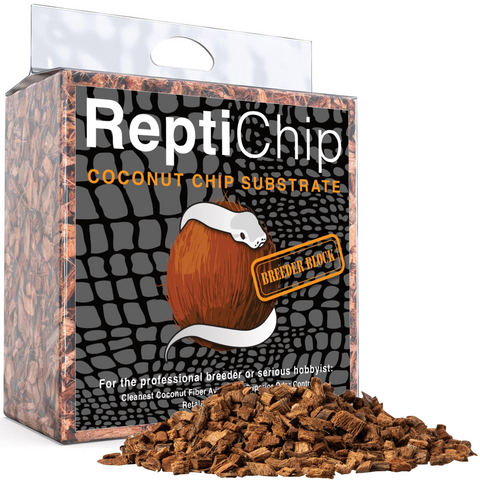
A high-quality substrate mix should retain moisture while remaining well-aerated. ReptiChip coconut chip substrate can be used as a primary component due to its ability to hold humidity without compacting excessively. When a finer soil texture is desired, ReptiEarth can be mixed with ReptiChip and organic topsoil if needed to create a naturalistic, burrow-supporting blend. The substrate should be slightly moist below the surface but dry on top to prevent mold growth and skin infections.
Loose sand, walnut shell, and reptile carpet must not be used. These either pose impaction risks or fail to support natural digging behaviors. Spot cleaning should be performed daily, with full substrate replacement as needed depending on enclosure hygiene and moisture levels.
Enrichment can come in many forms and is for the stimulation of your animal. The five types of enrichment you can offer are food related, sensory, physical habitat, cognitive, and social. These categories have a vast variety of options to choose from that are appropriate for the species being enriched. Environmental enrichment is critical for this highly intelligent species. Provide multiple hides, varied textures, climbing elements, and occasional rearrangement of decor to encourage exploration. Large cork bark tubes, heavy branches, and low platforms offer structural complexity. Food can be offered in different locations to stimulate foraging behavior. Supervised outdoor time in secure, pesticide-free areas can also provide enrichment in appropriate climates.
Tegus benefit from cognitive stimulation. Puzzle feeders, scent trails, and target training are effective enrichment strategies. Regular interaction with keepers can also reduce stress and strengthen habituation, but handling should always be calm and gradual.
Humidity and Hydration
Argentine Tegus require moderate to high humidity levels, typically between 60% and 80% percent. Proper humidity supports skin health, respiratory function, and successful shedding. Insufficient humidity can lead to retained shed and dehydration.
Humidity can be maintained by using deep, moisture-retentive substrate such as a ReptiChip and ReptiEarth blend, combined with periodic misting. Light misting of the enclosure once or twice daily may be necessary, depending on room conditions. The lower substrate layers should remain moist but never waterlogged. Pouring water directly into deeper substrate layers rather than saturating the surface helps maintain stable humidity.
A large, heavy water bowl must always be available. Tegus frequently soak, particularly before shedding. The bowl should be large enough to allow the lizard to submerge most of its body and must be sturdy to prevent tipping. Water should be changed daily, as tegus often defecate in their water dishes.
Automated foggers can be used cautiously in very dry climates but should not create constant surface dampness. Proper ventilation is essential to prevent stagnant air and bacterial growth. Humidity levels must be monitored with a calibrated digital hygrometer placed near substrate level on the cool side of the enclosure.
Consistent hydration, combined with adequate humidity and access to soaking opportunities, plays a vital role in kidney health, skin integrity, and overall physiological stability in this species. Careful environmental monitoring and adjustments are essential to maintaining long-term health in Argentine Tegus.
Diet & Supplementation
The Argentine Tegu is a large omnivorous lizard native to the diverse ecosystems of South America. In the wild, its diet is remarkably varied, reflecting its opportunistic feeding behavior. Primarily, these reptiles consume small mammals, birds, eggs, insects, and seasonal fruits. Their omnivorous nature allows them to adapt their diet based on availability, often indulging in carrion as well. The combination of these food sources provides the necessary nutrients for their growth, reproduction, and energy needs. They exhibit a strong preference for protein-rich animal matter, which constitutes a significant portion of their diet, particularly during the warmer months when prey is abundant.
When it comes to feeding strategies, the Argentine Tegu employs a mix of active foraging and ambush predation. They are well-equipped with strong jaw muscles and sharp teeth for capturing and processing a variety of prey. Their keen sense of smell and acute vision are crucial in locating food sources. Unlike some reptiles that use heat-sensing pits or venom, the Argentine Tegu relies more on chemical cues and visual tracking. This adaptability is essential across the range of habitats they occupy, from tropical forests to grasslands. Seasonal shifts are evident in their dietary habits; during the mating season and warmer months, they exhibit increased consumption of animal-based food, while during cooler periods, their activity and food intake decrease, prompting a reliance on energy stores accrued in warmer months. Younger tegus display a higher protein requirement than adults, which is critical for their rapid growth and development.
Replicating the varied diet of the Argentine Tegu is essential to ensure their health and well-being. A nutritious diet should include a mix of high-quality proteins such as lean meats, eggs, and appropriately sized rodents. Offering a variety of fruits and vegetables helps balance their nutritional intake, although animal matter should remain predominant. Calcium and vitamin supplements are crucial, particularly vitamin D3, to support bone health and prevent metabolic bone disease, a common ailment in reptiles under human care. Using Vitamin D3 while using UVB bulbs can cause toxicity by excessive calcium absorption causing calcification of organs. One challenge is ensuring the variety and balance of nutrients mimic what would naturally be found in the wild.
Common feeding issues include food refusal and obesity due to lack of exercise and overfeeding. These can be mitigated by establishing a varied feeding schedule that mimics natural conditions, such as augmented feeding frequency during the "active" months and a reduction during "cooler" periods. Environmental enrichment through hunting simulations can encourage natural foraging behaviors and maintain the Tegu's physical and psychological health. For instance, hiding food within their enclosure or providing puzzle feeders can help replicate the challenges faced in their natural habitats and maintain a healthy, stimulating environment.
Understanding these aspects of the Argentine Tegu’s dietary needs is crucial for providing an environment that supports their physical health and mimics natural behaviors, which is essential for their overall well-being. Through careful attention to diet and feeding practices, Argentine Tegus can thrive and exhibit a close semblance of their wild counterparts' behavior and nutritional health.
Reproduction
Argentine Tegus reach sexual maturity between three and four years of age, though exceptionally well-grown individuals raised with optimal nutrition and husbandry may mature slightly earlier. Males typically reach maturity before females but require substantial body mass and seasonal cycling to become reproductively active. This species displays clear sexual dimorphism. Adult males are noticeably larger and more robust, with broader heads, pronounced jowls due to enlarged jaw muscles, thicker necks, and more prominent femoral pores along the underside of the thighs. Females are generally slimmer, with narrower heads and less pronounced pore development. During the breeding season, males often develop heightened territoriality and increased activity, while females may show subtle behavioral shifts such as increased basking and food intake prior to ovulation.
Reproductive behavior is strongly seasonal and closely tied to natural environmental cycles. In their native range, Argentine Tegus undergo a winter dormancy period characterized by reduced activity and decreased food intake. In captivity, replicating this cooling period is critical to stimulating reliable reproductive function. Beginning in late fall, daylight hours should gradually be reduced to approximately eight to nine hours per day, and ambient temperatures may be lowered to a range of 65℉ to 75℉, with basking opportunities limited and sometimes refused by the animals. Many individuals will naturally burrow and enter a state of brumation lasting 8 to 12 weeks. Food should be withheld once they cease regular basking, though fresh water must always be available.
As spring approaches, environmental conditions should be gradually restored. Increase daylight length to 12 to 14 hours per day over several weeks, and reestablish a basking area of 105℉ to 115℉, with a warm side ambient temperature around 85℉ to 90℉ and a cooler side near 75℉ to 80℉. Humidity should be maintained between 60% and 80% with access to deep, slightly moist substrate to encourage natural burrowing. The combination of rising temperatures, extended photoperiod, and renewed feeding stimulates hormonal changes that initiate reproductive behavior. Males typically begin roaming, tongue-flicking more persistently, and actively investigating enclosure boundaries when receptive females are nearby.
Courtship in this species can be assertive and sometimes aggressive in appearance. Males often pursue females with rapid movements, tongue-flicking along the female’s body and cloacal region to assess receptivity through chemical cues. Neck grasping is common, the male may bite or hold the female’s neck or shoulders to secure position during copulation. This biting is usually controlled but can cause abrasions if the female lacks adequate space to maneuver. Copulation can be prolonged and may occur multiple times over several days. It is generally recommended to introduce the female into the male’s enclosure rather than the reverse, as males are more likely to breed successfully within established territory. However, careful monitoring is essential. If the female demonstrates extreme avoidance behavior, persistent tail-whipping, or signs of stress such as frantic escape attempts, the pair should be separated and reintroduced later.
Argentine Tegus are oviparous and require suitable nesting opportunities to complete the reproductive cycle successfully. Although this discussion excludes incubation details, it is important to note that females must have access to a properly prepared nesting site prior to egg deposition in order for breeding to proceed normally. A deep nesting box, at least 12 to 18 inches deep and filled with a moist but not saturated soil and sand mixture, should be provided once the female shows signs of gravidity. Without proper nesting substrate, females may retain eggs, leading to serious health complications.
Breeding is typically conducted in solitary pairs rather than group settings. Cohabitation outside the breeding season is not recommended due to the species’ strong feeding response and potential for aggression, especially from males. Introducing a second male into the same enclosure can result in severe combat. Even during the breeding season, pairs should only be housed together under supervision and for limited durations. After confirmed copulation, separation is often advisable to reduce stress on the female and prevent overheating or food competition.
Several challenges can interfere with successful breeding. Failure to properly cycle animals through a winter cooling period is one of the most common causes of infertility or lack of reproductive behavior. Tegus maintained year-round at high temperatures with constant long photoperiods frequently fail to develop appropriate hormonal cycles. Another issue is inadequate body condition. Females that are underweight may not ovulate, while obese animals can experience reproductive complications. A balanced pre-breeding diet rich in whole prey items, calcium, and appropriate fat levels is essential for conditioning.
Mate incompatibility can also occur. Some females consistently reject specific males, even when both individuals are physiologically capable of breeding. In such cases, introducing a different mate may resolve the issue. Stress is another major factor. Enclosures that are too small, less than six feet long for adults, can prevent natural courtship behaviors and increase aggression. Visual barriers, multiple hides, and adequate floor space significantly reduce stress-related breeding failures.
Health status must also be carefully evaluated before pairing. Subclinical metabolic bone disease, parasitism, or chronic dehydration can all impair fertility. A veterinary examination prior to the breeding season is strongly recommended for established breeding projects. When properly cycled, well-fed, and maintained in spacious, enriched enclosures that mimic seasonal variations, Argentine Tegus breed reliably in managed care and can be consistent reproducers year after year.
Incubation & Neonate Care
Argentine Tegus are oviparous, meaning they reproduce by laying eggs. After a successful breeding season, which typically follows a period of brumation, the female develops a clutch of eggs internally and deposits them in a constructed nest. In the wild, females often dig deep burrows or utilize termite mounds to create stable, humid nesting chambers. A gravid female must be provided with a suitably large nesting area at least two to three feet deep, filled with a diggable substrate such as a mixture of organic topsoil and sand that retains moisture without becoming waterlogged. Nesting usually occurs 30 to 45 days after mating, and clutch sizes commonly range from 20 to 40 eggs, with larger, mature females capable of producing even more.
Once laid, eggs should be carefully excavated without rotating them, as movement can damage the developing embryo. Eggs should be incubated in a sealed container using a moisture-retentive medium such as vermiculite or perlite mixed at a 1:1 ratio by weight with water. The substrate should be damp but not saturated when squeezed and it should clump without dripping water. Incubation temperatures should be maintained between 84℉ and 88℉. Consistency is critical, as temperature fluctuations can increase embryonic mortality or result in weakened hatchlings. Humidity within the incubation container should remain high, typically between 80% and 90%, to prevent egg desiccation. Ventilation should be minimal but present, achieved through small air holes in the container.
The incubation period typically ranges from 90 to 120 days, depending on temperature. Warmer incubation within the safe range tends to shorten development time, while cooler temperatures lengthen it. Unlike many turtle and some lizard species, Argentine Tegus do not exhibit well-established temperature-dependent sex determination. Instead, sex is genetically determined at fertilization, so incubation temperature does not reliably influence hatchling sex ratios. However, improper temperature or humidity levels can reduce hatch rates, cause developmental abnormalities, or lead to egg collapse from dehydration.
As hatching approaches, eggs may slightly dent or “sweat.” Hatchlings use an egg tooth to slit the shell and may remain partially within the egg for 24 to 48 hours while absorbing residual yolk. This rest period is normal and should not be interrupted. Prematurely assisting a hatchling from the egg can result in hemorrhage or yolk sac injury. Most clutches hatch within a short window of several days. Maternal care is absent during incubation, although wild females may guard nests. Eggs are typically removed for artificial incubation to ensure safety and stability.
Potential reproductive complications include egg binding, in which the female is unable to lay her eggs. Signs include lethargy, straining, abdominal swelling, and reduced appetite beyond the expected pre-lay fasting period. Egg binding is often caused by inadequate nesting conditions, dehydration, or poor calcium status. This condition requires immediate veterinary intervention. Ensuring proper calcium supplementation, hydration, and access to an appropriate nesting site significantly reduces risk.
Newly hatched Argentine Tegus typically measure approximately 7 to 10 inches in total length. They are alert, active, and often defensive. Neonates should be housed separately from adults and from larger clutchmates to prevent stress, competition, or cannibalism. An appropriate enclosure for a single hatchling may start at 3 feet long, 18 inches wide, and 18 inches tall, with secure ventilation and multiple hiding areas. As they grow rapidly, enclosure size must be increased accordingly.
Neonates require a thermal gradient similar to adults but slightly moderated. A basking surface temperature of 105℉ to 110℉ is appropriate, with a warm side ambient temperature of 85℉ to 90℉ and a cooler side ranging from 75℉ to 80℉. Nighttime temperatures can safely drop to around 75℉ but should not fall below 72℉. High humidity is essential, ideally maintained between 70% and 80%, to ensure proper shedding and hydration. Light misting and a humid hide filled with damp sphagnum moss are beneficial. Full-spectrum UVB lighting is critical for proper calcium metabolism and skeletal development.
Hatchlings typically undergo their first shed within 7 to 10 days. Feeding can begin once the yolk sac is fully absorbed and the lizard is active, often within three to five days post-hatching. Young tegus are highly carnivorous and require frequent feeding, usually once or twice daily. Appropriately sized insects such as crickets and roaches should form a primary component, supplemented with chopped pinky mice, finely ground poultry, and eventually small amounts of fruit as they grow. All insect prey must be gut-loaded and dusted with calcium powder, with a multivitamin supplement used regularly according to established reptile supplementation guidelines.
Fresh water must be available at all times in a shallow dish that allows easy entry and exit. Hatchlings often soak voluntarily, which aids hydration and shedding. Care should be taken to keep the enclosure clean, as neonates defecate frequently and are susceptible to bacterial overgrowth in unsanitary conditions.
Handling should be minimal during the first few weeks to reduce stress. While neoniles can become tame with consistent, calm interaction, excessive handling too early can suppress appetite and weaken immune response. Growth during the first year is rapid, and regular monitoring of weight, body condition, and shedding quality is essential. When provided with proper incubation conditions and carefully managed neonate husbandry, Argentine Tegus typically grow quickly into robust juvenile lizards with strong feeding responses and resilient constitutions.
Conclusion
In conclusion, the Argentine Tegu is a fascinating and robust lizard known for its adaptability, intelligence, and ecological significance. When kept in human care it requires a well-thought-out approach to husbandry that closely mirrors its natural environment. This includes providing a spacious and secure enclosure, a balanced and varied diet, and careful attention to temperature, humidity, and seasonal cycles. Essential to their care is the replication of natural behaviors through environmental enrichment and opportunities for foraging and exploration.
Overall, a deep understanding of the Argentine Tegu’s natural biology and ecological role contributes significantly to the effective care and well-being of the species. By adhering to established husbandry guidelines and recognizing the unique adaptations and behaviors of the Argentine Tegu, keepers can create environments that support both the physical and psychological health of these remarkable reptiles.